
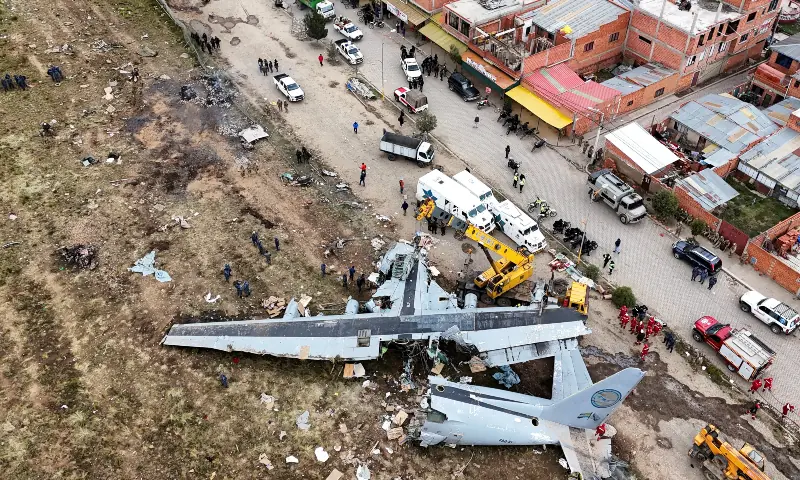
A devastating crash occurred in the Bolivian city of El Alto on February 27, 2026, when an Air Force plane fell onto a busy avenue, killing 20 people and injuring 30 others. The victims include residents who were commuting to work, running daily errands, and going about their ordinary routines in a densely populated urban area where low-flying aircraft are a common sight.
The tragedy unfolded in a city situated on the Andean highlands at approximately 4,000 meters above sea level. Aviation experts recognize that such high altitude presents significant challenges for aircraft operations. Planes require longer runways for takeoff and landing, engines produce reduced power, and achieving lift becomes more difficult. Whether these geographical factors contributed to the crash remains a question for investigators to determine.
The Bolivian Air Force operates a diverse fleet that includes transport planes, fighter jets, and helicopters, some of which are decades old. Maintenance records for these aircraft are not publicly available. While the air force’s primary mission is defending Bolivia’s sovereignty and territorial integrity, a military aircraft crashing into a civilian avenue raises questions about the safety of operations over populated areas and the potential risks to the people the military is meant to protect.
El Alto is not an affluent city but is economically active, with manufacturing, commerce, and tourism driving its local economy. The crash on a major thoroughfare has caused significant disruption beyond the immediate casualties. Streets have been closed, businesses have lost customers, and supply chains have been interrupted. Recovery will take time, and for families living paycheck to paycheck, the economic impact compounds the human tragedy.
The high-altitude environment of El Alto complicates recovery efforts. The thin air that makes flying more difficult also affects emergency responders, slowing their work as they rush to the scene. Twenty families are now arranging funerals, while 30 individuals remain hospitalized, some facing permanent changes to their lives.
The crash site, where aircraft debris and human remains are scattered across an avenue normally used by buses and taxis, has been designated a crime scene. An investigation has been launched to examine the circumstances leading up to the incident, including maintenance schedules, pilot training, and whether the aircraft should have been in operation. Safety concerns about the air force’s fleet are not new, but they have now become urgent. The inquiry will need to assess mechanical, procedural, and institutional factors that may have contributed to this failure.
For the people of El Alto, the immediate focus is on mourning and recovery. The investigation’s findings will determine whether this tragedy represents an isolated incident or a symptom of deeper systemic issues, with direct implications for future flights and the safety of neighborhoods below.




