
The United Arab Emirates has agreed to resume financial support for government forces in southern Yemen, marking a shift in the regional coalition as Houthi gains across the country continue to alarm Gulf state leaders. This move follows a period of Houthi expansion that has seen the group evolve from a localized theological movement into a sophisticated paramilitary power capable of disrupting international shipping and striking deep into Saudi territory.
Origins of a Zaydi Revivalist Movement
The movement, officially known as Ansar Allah, emerged in the 1990s as a Zaydi revivalist and Shia Islamist organization in northern Yemen. According to the record, the group takes its name from its founder, Hussein al-Houthi, who led the organization until his death in 2004. The leadership of the group remains concentrated within the al-Houthi family, with Hussein’s brother, Abdul-Malik al-Houthi, serving as the de facto leader since the 2004 insurgency.
In its early years, the movement functioned primarily as a theological opposition to the government of then-president Ali Abdullah Saleh. The Houthis accused the Saleh administration of corruption and criticized its alignment with Saudi Arabia and the United States. By 2003, the group had adopted a more militant political identity, influenced by the Lebanese organization Hezbollah. This shift was marked by the adoption of an official slogan expressing hostility toward the United States, Israel, and the Jewish people.
The death of Hussein al-Houthi in 2004 during a clash with the Yemeni military triggered an insurgency that defined the group’s transition into an armed paramilitary force. Throughout the 2000s, the Houthis engaged in multiple rebellions against the Yemeni state, seeking greater autonomy for their northern stronghold in Saada province. These conflicts established the tactical foundations for the group’s later military maturation.
Political Expansion and Capital Takeover
The Houthi movement leveraged the instability of the 2011 Yemeni Revolution to expand its influence beyond the northern highlands. After participating in street protests and engaging in the National Dialogue Conference, the group ultimately rejected the 2011 reconciliation deal. By 2014, the Houthis had repaired their relationship with their former adversary, Ali Abdullah Saleh, and utilized his support to seize control of the capital city, Sana’a.
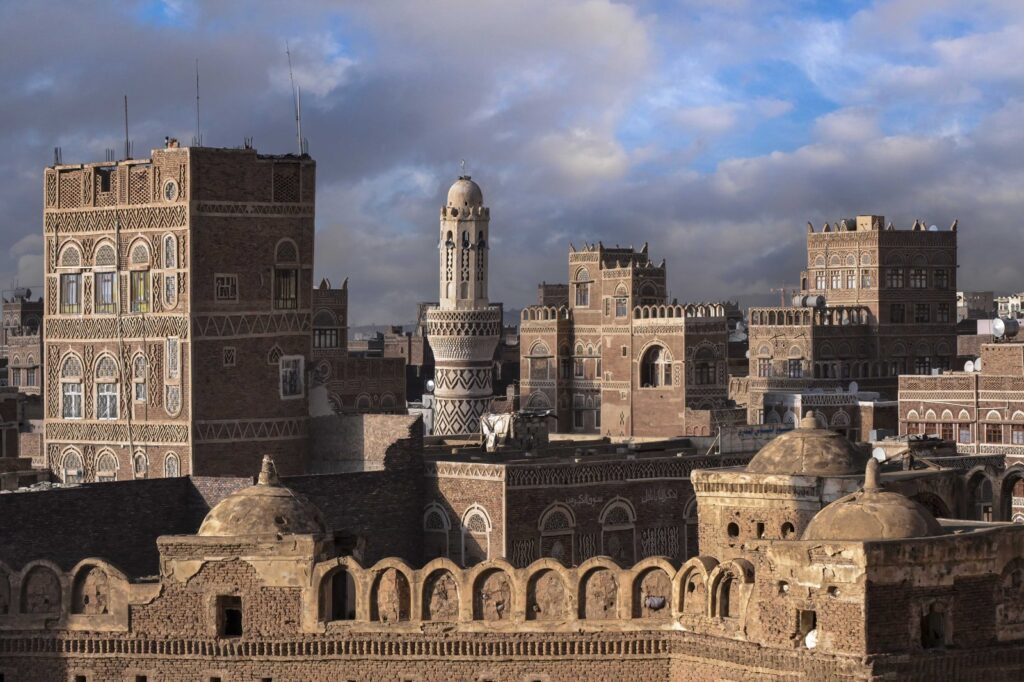
This takeover forced the internationally recognized government into exile and prompted a Saudi-led military intervention in 2015. Despite the intervention, the Houthis maintained their grip on the capital and expanded their reach across western Yemen. Today, the group controls between one-quarter and one-third of the country’s territory, an area that encompasses the homes of approximately three-quarters of the Yemeni population.
The governance structure within these areas remains a point of significant international concern. According to the United Nations, the movement has been linked to severe human rights abuses, including the recruitment of child soldiers and the targeting of civilians. While the Houthis frame their governance as a fight against political marginalization and a push for economic development, they have simultaneously discriminated against and recruited from Yemen’s Sunni population to solidify their authority.
Military Maturation and Regional Standing
The Houthi military apparatus has grown significantly since the start of the civil war. UN experts estimated that the movement had recruited up to 350,000 fighters by 2024. This force is supported by an increasingly advanced arsenal, including drones and ballistic missiles that have been used to target Saudi airports, energy infrastructure, and military bases. In one notable attack in October, a missile strike on Riyadh’s international airport resulted in at least 13 deaths.
The group’s strategic doctrine is now explicitly aligned with the Iranian-led Axis of Resistance. This alliance includes groups such as Hamas and Hezbollah, and it is centered on opposition to the United States, Israel, and Saudi Arabia. Following the outbreak of the Gaza war, the Houthis expanded their operational reach by firing missiles toward Israel and launching frequent attacks on commercial vessels in the Red Sea.
These maritime operations near the Bab al-Mandab strait have turned the group into a significant disruptor of global shipping lanes. The Houthis justify these actions as a measure of solidarity with Palestinians and an effort to facilitate aid delivery to the Gaza Strip. The combination of these maritime strikes and the persistent threat to regional energy facilities has forced a recalibration of security policies among neighboring states, including the recent agreement between the UAE and Saudi Arabia to coordinate their military responses.
Current Strategic Challenges
The conflict in Yemen is widely viewed as a front in the broader proxy war between Iran and Saudi Arabia. Saudi officials have consistently expressed fear that the Houthis intend to transform Yemen into a satellite state for Tehran. The failure of the Saudi-led coalition to decisively defeat the Houthi forces has led to a protracted humanitarian crisis, with the UN reporting that more than 22 million people in the country are in need of aid.
Recent military developments reflect the difficulty of dislodging the movement from its entrenched positions. While the internationally recognized government has attempted to launch counteroffensives to recapture territory near Marib and the Bab al-Mandab strait, these efforts have met with limited success. The Houthis remain determined to capture the remaining cities outside the boundaries of the old Southern Yemen, specifically Taiz and Marib.
The movement’s ability to sustain daily drone and missile attacks despite years of coalition airstrikes indicates a high level of technical and logistical support. As the conflict enters its next phase, the Houthis have solidified their status as a key power broker in the Middle East. Their ability to immobilize airports and threaten critical maritime chokepoints ensures that they remain a central factor in regional security calculations for the foreseeable future.
Sources
- UAE agrees with Saudi Arabia to re-enter Yemen conflict amid Houthi gains
- Houthis
- Who are the Houthis in Yemen and what do they want?
Photo: Rod Waddington from Kergunyah, Australia (CC BY-SA 2.0)




