
Securing Critical Infrastructure Against Modern Threats
Data centers and interconnected digital hubs have emerged as primary targets in modern conflict, signaling a new front where kinetic and cyber operations merge to destabilize national security. As these facilities become central to global commerce and governance, the vulnerability of the underlying infrastructure has forced a shift in how nations approach the protection of both digital and physical networks.
The concept of critical infrastructure protection in the United States originated as a response to the increasing interconnectedness of essential services. In May 1998, President Bill Clinton issued presidential directive PDD-63, which formally recognized specific segments of national infrastructure as vital to economic security and the well-being of the citizenry. This directive established a national program to identify and mitigate vulnerabilities within these systems. By December 17, 2003, President George W. Bush updated this framework through Homeland Security Presidential Directive HSPD-7, which expanded the scope of protected sectors to include agriculture. This directive emphasized that the incapacity or destruction of such systems would result in a debilitating impact on public health, safety, and national economic security.
The necessity for these frameworks stems from the recognition that modern systems are deeply interdependent. A disruption in one sector often cascades into others. For instance, a computer virus targeting natural gas distribution can reduce electrical power generation, which subsequently forces the shutdown of computerized controls and communications. Such a failure can paralyze rail, air, and road transportation, while simultaneously hindering emergency services. Military forces have long recognized that attacking key elements of civilian and military infrastructure can cripple an adversary’s ability to resist, a reality that complicates the security of cross-border data centers and other shared digital assets.
To address these risks, the federal government requires private industry to assess vulnerabilities, develop systems to prevent attempted attacks, and maintain the capacity to rebuild essential capabilities following an incident. Despite these requirements, gaps in compliance persist. According to the Federal Energy Regulatory Commission, fiscal 2026 audits of entities registered with the North American Electric Reliability Corporation revealed that some generator owners failed to register new generation resources or identify associated bulk electric system cyber systems as required under Reliability Standard CIP-002-5.1a. These findings included cases where inverter-based resources began commercial operations without undergoing the necessary cybersecurity evaluations, as well as instances where entities failed to account for monitoring and control capabilities operated by third-party contractors.
The challenge of securing these environments is compounded by the nature of operational technology, or OT. This category includes programmable systems that monitor or control physical processes, such as building automation, backup power, and transportation systems. Unlike office computers, industrial controllers must often run continuously and communicate within strict timing limits, making it difficult to implement standard security updates. According to the National Security Agency, legacy equipment often remains useful mechanically while lacking modern authentication, encryption, or straightforward patching capabilities. Replacing this hardware requires extensive engineering assessments, vendor involvement, and scheduled shutdowns, leading many operators to delay modernization efforts.
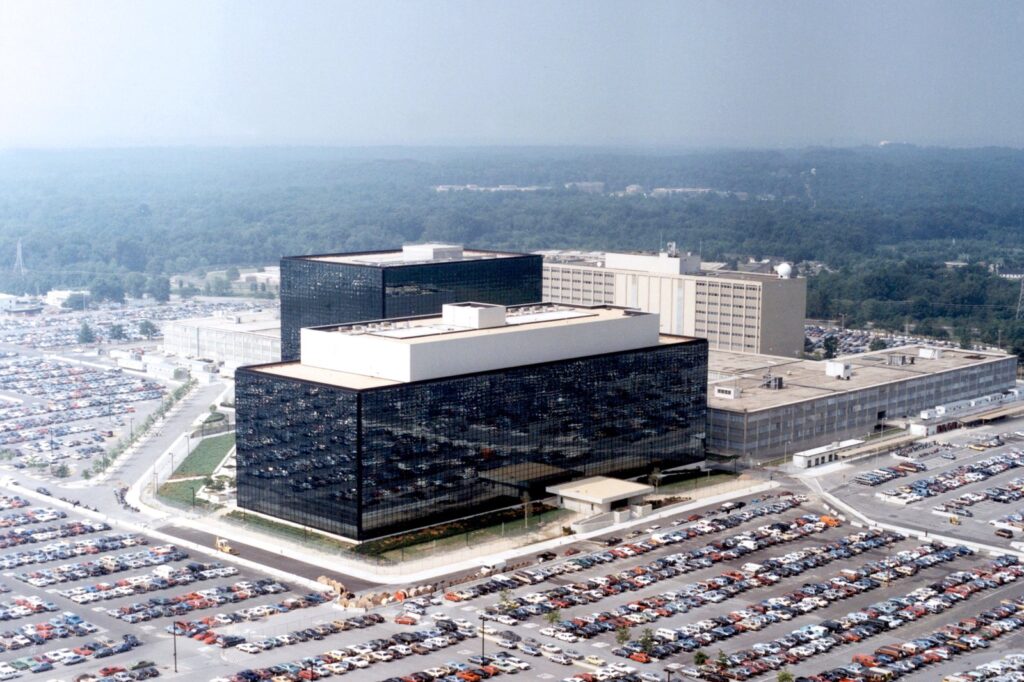
In response to these persistent threats, the National Security Agency has released guidance urging defense organizations and critical infrastructure operators to adopt zero-trust principles. This approach removes the assumption that a user or device should be trusted simply because it is already inside a network. Instead, access decisions focus on specific users, devices, and resources, regardless of their location. The agency recommends that operators strengthen protection around vulnerable equipment through segmentation, monitoring, and controlled access. These compensating controls provide a practical route to improving security while long-term modernization plans are developed.
The integration of emerging technologies, such as artificial intelligence, introduces further complexity. The Federal Energy Regulatory Commission has flagged risks associated with the use of artificial intelligence tools and third-party control systems within the power sector. Auditors noted that while most protection procedures met mandatory requirements, potential non-compliance remains a risk to the reliable operation of the bulk-power system. Under current standards, entities must ensure that access by security tools to cyber systems is strictly authorized, yet some organizations have failed to account for the collective impact of systems managed by affiliated companies or contractors. In some instances, systems that were individually categorized as low impact met the criteria for medium-impact classification when considered together, potentially leaving them exposed.
Future strategies for securing interconnected global networks must account for the reality that security decisions directly affect the physical processes being controlled. The National Institute of Standards and Technology emphasizes that any change to a system must be evaluated for its impact on performance, reliability, and safety. As data centers and industrial systems become more integrated across borders, the reliance on standardized definitions and rigorous compliance audits becomes more pronounced. By focusing on surrounding controls and carefully planned maintenance, operators aim to mitigate the risks posed by increasingly sophisticated cyber threats while maintaining the availability requirements of essential services. The evolution of these protection programs reflects a broader effort to ensure that the foundational elements of national and global infrastructure remain resilient against both kinetic and digital disruption.
Evolution of Critical Infrastructure Protection Programs
The framework for safeguarding national assets has evolved significantly since the late 1990s. The initial national program for Critical Infrastructure Protection was established in May 1998 through President Bill Clinton’s presidential directive PDD-63. This directive formally recognized specific segments of infrastructure as vital to the economic security and well-being of the United States. Following subsequent directives, the National Institute of Standards and Technology published the NIST Cybersecurity Framework in 2014 to further refine these protective efforts.
The scope of these protections expanded over time to address systemic gaps. In December 2003, President George W. Bush issued Homeland Security Presidential Directive HSPD-7, which updated the national strategy by including agriculture as a protected sector. This move corrected an omission from the 1998 directive and reinforced the government’s standardized approach to identifying, prioritizing, and protecting assets whose destruction would result in a debilitating impact on public health, safety, and national economic security.
Sources
- U.S. critical infrastructure protection
- NSA Urges Zero Trust Defences To Protect Critical Infrastructure and Ageing Industrial Systems
- FERC identifies cybersecurity compliance gaps in US power sector, flags risks from AI tools and third-party control systems – Industrial Cyber
Photo: National Security Agency (Public domain)




