
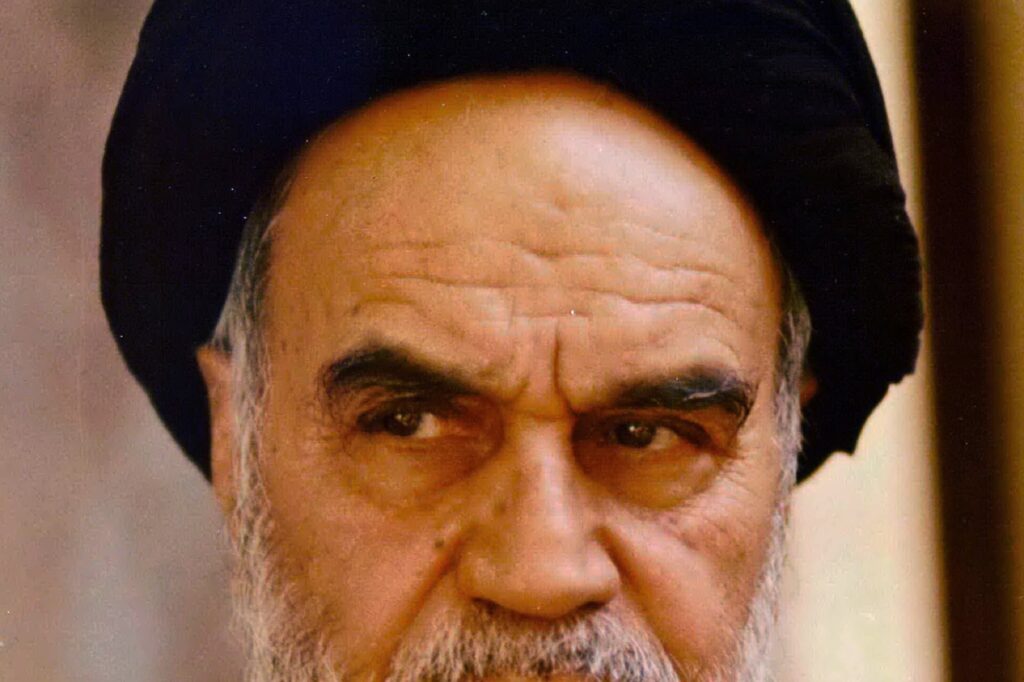
Background of Pre-War Divisions in Iran
Iran’s revolutionary government had only recently taken power and was still consolidating control when invaded. The Islamic Republic faced unrest, ethnic tensions, and purges of former monarchy-linked officers before the war. There was unrest in the provinces and among different ethnic groups, opposition to clerical rule was growing, and the new Islamic Republic was still engaged in the bloody business of eliminating its political rivals.
How the Iraqi Invasion Triggered National Unity
Saddam Hussein expected a swift victory by exploiting Iran’s internal turmoil and ethnic divisions. Instead of welcoming Iraqi troops, many Iranian Arabs and political opponents joined the defense of the homeland. The war brought together a deeply fractured Iranian nation that had been divided by ethnic, political, and ideological conflicts.
Key Turning Points in the War Effort
The Iran–Iraq War began with the Iraqi invasion of Iran in September 1980. Despite post-revolutionary chaos, Iran recaptured all lost territory by June 1982 and launched an offensive into Iraq. After eight years of conflict, both countries accepted a UN-brokered ceasefire effective August 1988.
Human and Material Costs of the Conflict
The war caused around 500,000 deaths, making it the deadliest conventional war between developing countries’ regular armies.
Post-War Legacy and Implications for Regional Politics
The war did not create any permanent border changes, and neither country received war reparations afterwards. Both sides suffered financially. They continued engaging in low-level military conflict until relations improved following Saddam’s overthrow in 2003.
Relevance to Current Iran–Israel–U.S. Tensions
On Feb. 28, the United States and Israel launched extensive airstrikes against Iran, targeting nuclear and military sites, killing leaders, and hitting infrastructure. Iran retaliated with drone and missile strikes against Israel and U.S. military assets in the region. Tehran also sought to spread the pain to other countries that might pressure Washington to back down — hitting economic and civilian targets in multiple Arab states, particularly in the Gulf region, and threatening shipping through the Strait of Hormuz. American and Israeli leaders openly called for regime change in Iran, but also cited ending Iran’s nuclear program and ballistic missile program and its support for regional partners as objectives. On April 7, the United States and Iran agreed to a ceasefire, which U.S. President Donald Trump later extended. The United States also began a naval blockade of Iranian ports on April 13. Hostilities between Israel and Iran and then between the United States and Iran began to intensify in early June. However, Washington and Tehran then agreed to a memorandum of understanding, which the U.S. and Iranian presidents signed on June 17. Both sides agreed to halt “military operations on all fronts, including in Lebanon,” lift the U.S. naval blockade on Iran, and, at least temporarily, reopen the Strait of Hormuz — in addition to other measures. The two countries also agreed to engage in further negotiations regarding some of the most difficult issues, including Iran’s nuclear program. In early July, Iran threatened ships passing through the Strait of Hormuz that do not use Iran’s approved route, which passes close to its own coast. It backed up the threats with attacks on several ships. The United States responded with strikes on Iran, which in turn targeted U.S. military sites in Arab countries. On July 10, Trump declared that the ceasefire was over. The United States resumed its naval blockade, and both sides increased strikes. After warning of further attacks, Trump said on Aug. 1 that he would hold off on a new round of strikes to allow time for negotiations to reopen the Strait of Hormuz, and the Trump administration shifted its focus to economic pressure on Iran. At the start of September, both sides resumed limited exchanges of fire, while various diplomatic efforts to reopen the strait and end the war continue.
International Involvement And Support
The Iran–Iraq War saw significant international involvement, with various countries providing support to both sides. Iraq was aided by the National Council of Resistance of Iran, the United States, the United Kingdom, the Soviet Union, France, Italy, Yugoslavia, and most Arab countries. On the other hand, Iran received support from the Kurdistan Democratic Party, the Patriotic Union of Kurdistan, Syria, Libya, North Korea, China, South Yemen, Pakistan, Cuba, and Israel.
This international involvement played a crucial role in the war, with the support of these countries influencing the military and economic dynamics of the conflict. The provision of arms, financial aid, and military expertise by these countries helped to prolong the war and contributed to the significant human and material costs incurred by both Iran and Iraq.
The involvement of major world powers, including the United States and the Soviet Union, also added a geopolitical dimension to the conflict. The war became a proxy conflict, with these powers using the war to further their own interests and ideologies in the region. The international community’s response to the war, including the United Nations’ efforts to broker a ceasefire, ultimately helped to bring an end to the conflict in 1988.
Origins of the Shatt al-Arab Dispute
The roots of the Iran–Iraq War trace back to longstanding tensions over the Shatt al-Arab waterway, a vital artery for oil exports and regional trade. In 1937, Iran and Iraq signed a treaty to settle their dispute, stipulating that Iranian vessels pay tolls when using the river. This arrangement held until 1969, when Iran abrogated the treaty, asserting full control over the waterway and refusing to pay tolls, which heightened bilateral tensions.
The dispute remained unresolved until the 1975 Algiers Agreement, mediated by Algeria’s President Houari Boumédiène, in which Iraq conceded to Iranian demands in exchange for Tehran ending support for Kurdish rebels in Iraq. Under the agreement, Iraq recognized the thalweg—the deepest channel of the river—as the international border, effectively ceding control of the eastern bank to Iran. This concession was deeply unpopular in Iraq and later cited by Saddam Hussein as a justification for the 1980 invasion, as he sought to reclaim what he viewed as Iraqi territory.
Sources
- Iran–Iraq War
- What’s Going On In Iran?
- From Iraq to Israel: How repeated wars have divided the nation of Iran | The Jerusalem Post
Photo: Ali Kaveh[1][2][3] (Public domain)




