
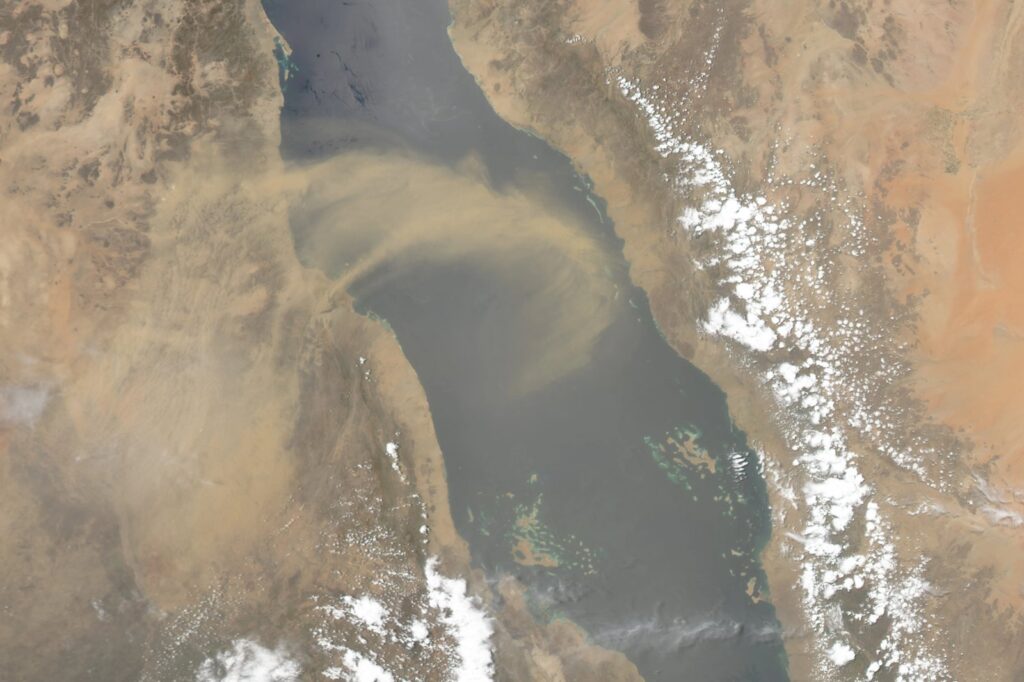
Bab-el-Mandeb Strait Security
The Bab-el-Mandeb Strait is a critical shipping lane connecting the Red Sea to the Gulf of Aden and the Indian Ocean, with 12-15% of global maritime trade passing through it annually.
Located between Yemen on the Arabian Peninsula and Djibouti and Eritrea in the Horn of Africa, the strait derives its name from the dangers attending its navigation or, according to an Arab legend, from the numbers who were drowned by an earthquake that separated the Arabian Peninsula from the Horn of Africa. The British East India Company unilaterally seized the island of Perim in 1799 and the British government asserted its ownership in 1857. In 2008, a company owned by Tarek bin Laden unveiled plans to build a bridge named Bridge of the Horns across the strait, linking Yemen with Djibouti.
History and Significance of the Strait
The Red Sea is one of the world’s most important arteries for global shipping, with approximately 12 to 15 percent of global maritime trade worth over $1 trillion transiting the waterway annually. The UN International Maritime Organization describes the Red Sea as “one of the most critical maritime routes enabling global trade.” About 4.9 million barrels per day of crude oil and petroleum products transited the Suez Canal and the Suez-Mediterranean Pipeline in the first half of 2025.
Current Security Concerns and Threats
The Houthis have made a concerted effort to restrict oil and gas flows through the vital Mideast waterway, seizing control of Yemen’s strategic port city of Mokha and several islands near the Bab el-Mandeb Strait. Experts say sustained interference in the Red Sea would trigger severe supply-chain delays, drive up energy prices, and further destabilize the global economy. A senior Saudi official said that the Houthis have lost control of the Bab el Mandeb Strait in Yemen, an assertion that was denied by the Iran-backed group.
Impact on Global Trade and Economy
Since the start of the Iran war, the Houthis have made a concerted effort to restrict oil and gas flows through the vital Mideast waterway. In September 2026, two months after the group declared a complete naval blockade on Saudi Arabia, which relies on the Red Sea to access global oil markets, the Houthis seized control of Yemen’s strategic port city of Mokha and several islands near the Bab el-Mandeb Strait—expanding their control over Yemen’s Red Sea coastline. Now, the Saudi-backed Yemeni government has launched a major offensive against the Houthis, retaking critical areas around the strait.
Recent Developments and Conflicts in the Region
The Red Sea has been an active conflict zone since 2023, when the Yemen-based Houthis began attacking commercial and naval vessels in protest of Israel’s military campaign in Gaza, significantly disrupting international shipping. The group’s entry into the Iran war in March by firing missiles at southern Israel underscored the Red Sea’s potential to become a new front in broader regional tensions. In a post to X on Friday, Saudi Arabia’s ambassador to Yemen, Mohammad Al-Jaber, wrote, “The Bab al-Mandeb has been cleansed of the remnants of the terrorist Houthi militia.” In a post responding to the ambassador, Houthi spokesperson Ameen Hayyan denied such gains, saying that the “Bab al-Mandeb is pure from the filth of the filthy Saudi entity.” In a separate post to X, Hayyan wrote that the Houthis were able to “confront and repel the enemy Saudi mobilizations that attempted to advance from the direction of Lahij toward Bab al-Mandeb.” Hayyan said that the forces attempting to advance were targeted by the Houthis with a “large number of ballistic missiles, artillery support, and heavy weapons, resulting in the destruction of more than 22 armored vehicles and the killing and wounding of dozens, including a number of commanders.”
Geographic and Environmental Features
The Bab-el-Mandeb Strait is approximately 20 miles wide at its narrowest point, separating the Arabian Peninsula from the Horn of Africa. It connects the Red Sea to the Gulf of Aden and ultimately the Indian Ocean, serving as a vital maritime chokepoint. Its strategic location makes it a focal point for regional naval activity and international maritime monitoring.
The surrounding coastline features arid terrain on the Yemeni side, while the Djiboutian and Eritrean shores include volcanic formations and desert plains. The strait lies within a seismically active region, with tectonic shifts in the Miocene epoch having originally formed the Danakil Isthmus, a prehistoric land bridge. Over time, fluctuating sea levels have repeatedly opened and closed the passage, influencing early human migration patterns out of Africa via the southern coastal route.
Environmental conditions in the strait are influenced by seasonal wind patterns and ocean currents, which affect navigation and marine biodiversity. The area supports diverse marine life, including coral reefs in sheltered zones and pelagic species drawn by nutrient-rich upwellings. However, increased vessel traffic and regional conflicts have raised concerns about pollution, oil spills, and damage to fragile ecosystems, particularly near coastal islands like Perim, which has historically served as a naval and coaling station.
International Response and Diplomatic Efforts
In response to escalating Houthi attacks on commercial shipping in the Red Sea, the United States launched Operation Prosperity Guardian in December 2023, forming a multinational maritime security coalition to protect vessels transiting the Bab-el-Mandeb Strait. The initiative includes naval contributions from the United Kingdom, Bahrain, Canada, France, Italy, the Netherlands, Norway, Seychelles, and Spain, with warships conducting escorted transits and intercepting hostile drones and missiles.
Diplomatic efforts to de-escalate tensions have included UN-mediated talks in Oman and Saudi Arabia, focusing on a potential ceasefire in Yemen that could stabilize the Red Sea corridor. In early 2024, the UN Special Envoy for Yemen facilitated indirect negotiations between the Houthis and the Saudi-backed Yemeni government, though progress remained stalled due to disagreements over the group’s demands for an end to the Saudi-led blockade and full control of Hodeidah port. The International Maritime Organization has also issued recurring advisories urging ships to maintain heightened vigilance and follow recommended transit corridors through the strait.
Regional actors have reinforced their naval presence, with Djibouti hosting foreign military bases from the United States, France, Japan, and Italy, enabling rapid response capabilities near the strait’s African entrance. Eritrea, despite its strained relations with neighboring states, has permitted limited use of its Assab port for humanitarian and de-mining operations supporting Red Sea security initiatives. These coordinated efforts aim to preserve freedom of navigation in one of the world’s most vital maritime chokepoints amid ongoing regional instability.
Sources
- Bab al-Mandab Strait
- Another Hormuz? What to Know About the Houthi Threat to the Red Sea | Council on Foreign Relations
- Saudi envoy says allied Yemeni forces capture Bab el Mandeb strait from Houthis: What to know
Photo: NASA (Public domain)




