
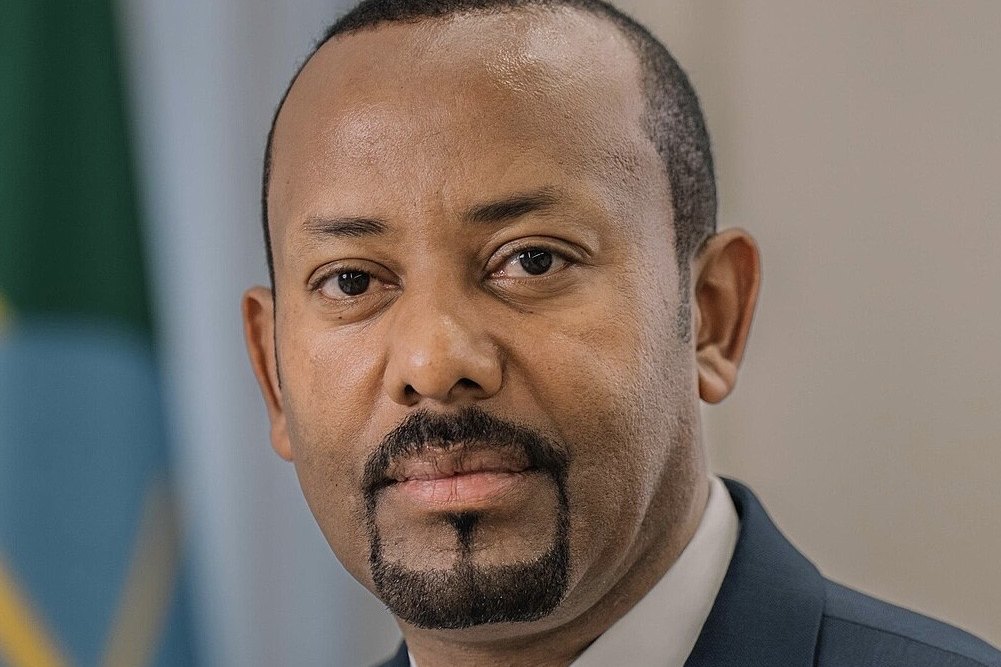
US Secretary of State Marco Rubio urged Ethiopia and Eritrea to de-escalate tensions during a phone call with Ethiopian Prime Minister Abiy Ahmed on October 14, 2026, according to Anadolu Agency. He stressed that all states in the Horn of Africa must respect sovereignty and territorial integrity and avoid cross-border invasions. Abiy Ahmed described the conversation as very productive and welcomed assurances of continued US support.
US Backs Dialogue Under 2018 Peace Framework
The US State Department said a lasting resolution is possible through dialogue and engagement in line with the 2018 peace framework between Ethiopia and Eritrea, as reported by Anadolu Agency. That agreement ended two decades of hostility and earned Abiy Ahmed the Nobel Peace Prize the following year. Rubio emphasized that the region cannot afford another conflict.
Eritrea Accuses Ethiopia of Planning to Seize Assab Port
Eritrea accused Ethiopia of planning to seize its Red Sea port of Assab in a note published on October 14, 2026, according to RI Times Online. The note said Ethiopia has sought sea access for three years “through negotiations if possible and force if necessary.” Eritrea claims this breaches the UN Charter and the 2018 peace deal.
Troop Movements and Diplomatic Breakdown
Ethiopian federal troops reached the Tigray border town of Zalambessa by October 13, 2026, as reported by RI Times Online. Eritrea says Ethiopia closed its embassy in Asmara on October 1 and expelled all ten Eritrean diplomats from Addis Ababa. The Eritrean Ministry of Information said the last four Ethiopian diplomats left Eritrea on August 8 without informing the foreign ministry.
International Concern and UN Involvement
The United States requested closed consultations at the UN Security Council on the escalation, scheduled for October 13, 2026, according to RI Times Online. Eritrea has asked the Council to condemn Ethiopia’s actions and take deterrent measures under Chapter VII of the UN Charter. The note from Asmara states there is “no good faith dispute” and that the tension stems entirely from Ethiopian policy.
Military Capabilities and Strategic Context
Ethiopia has a population 38 times larger than Eritrea’s and up to three times the number of troops, according to military analysis from October 2026. Despite this disparity, Eritrea’s mass conscription system keeps many adults available for military service, with national service length described as arbitrary and often lasting several years to over two decades. All final-year Eritrean school students must study at the Sawa military camp, meaning nearly every young Eritrean receives military training. Ethiopia’s defense budget fell from $1.23 billion in 2023 to $528 million in 2025, mainly due to the birr’s float in 2024, while Eritrea has not published a defense budget since 2003, when SIPRI estimated spending at 21% of its economy. Ethiopia operates armed drones including Turkish Bayraktar TB2 and Akinci, Chinese Wing Loong, and Iranian Mohajer-6 models, having used them at scale during the Tigray war (2020–2022) with 51 strikes recorded in 2021 and 53 in 2022 by ACLED. ACLED also counted 102 federal drone strikes in Amhara alone since April 2023, and in October 2026 recorded strikes near Adigrat overnight into October 8, with the Critical Threats Project linking a destroyed truck on that road to a satellite image. Eritrea publishes no information on its air force and remains under a UN arms embargo.
Historical Background and Regional Implications
Ethiopia lost its coastline when Eritrea gained independence in 1993, and since then has relied primarily on Djibouti for maritime trade access. Assab, Eritrea’s Red Sea port, lies near the Bab el-Mandeb strait, a critical chokepoint for global shipping between the Indian Ocean and the Suez Canal. Ethiopian leaders have made repeated public statements about seeking sea access since July 2023, including Prime Minister Abiy Ahmed’s remark that Ethiopia would not remain “a prisoner of geography,” Deputy Army Chief of Staff General Abebaw Tadesse’s declaration on September 27, 2026 that “our ultimate destination is Assab,” and Air Force Commander General Yilma Merdasa’s statement on October 11, 2026 naming Assab as the main goal. The two countries fought together during the Tigray war (2020–2022) but relations deteriorated sharply afterward, with each accusing the other of threatening regional stability. Ethiopia’s embassy in Asmara stopped responding to letters in May 2026, and the last four Ethiopian diplomats departed Eritrea on August 8, 2026 without notifying the foreign ministry. Ethiopia then closed its embassy in Asmara and expelled all ten Eritrean diplomats from Addis Ababa on October 1, 2026, including three envoys to the African Union and the UN Economic Commission for Africa.
Sources
- Rubio backs Ethiopia-Eritrea de-escalation — Anadolu Agency
- Eritrea Accuses Ethiopia at UN on 14 October
- Ethiopia vs Eritrea: Who Would Win a War?
Photo: Ethiopia Prime Minister's Office (Public domain)




