
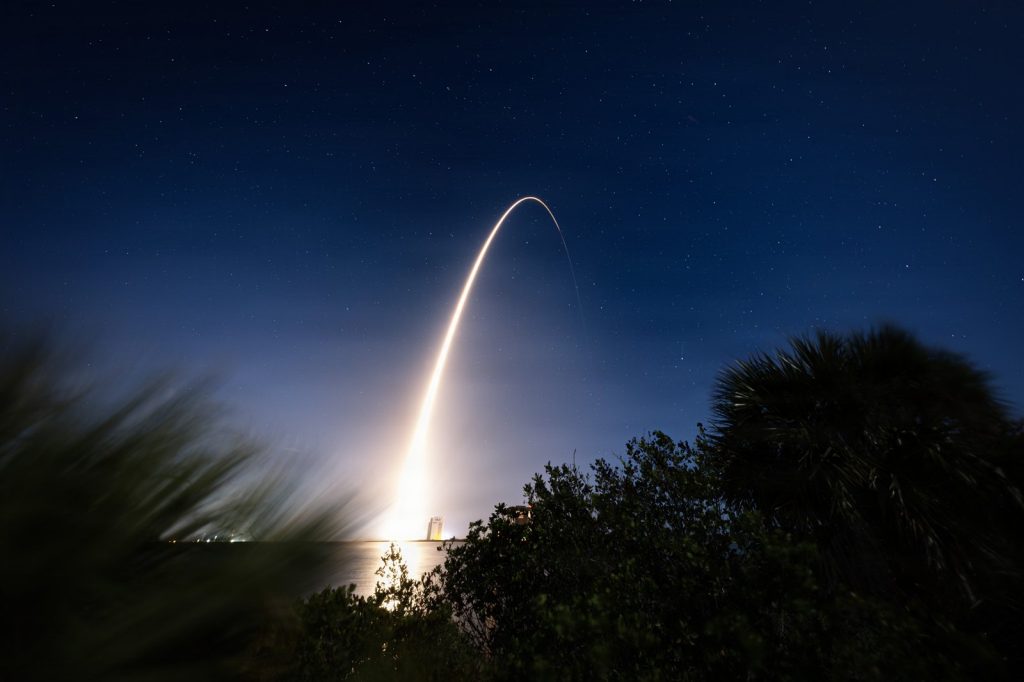
SEATTLE, July 15 — Amazon’s Project Kuiper is barreling toward a 2025 commercial launch, but the real race is against a celestial clock. The company plans to have its full constellation of 3,236 satellites in orbit by 2026, a timeline that puts it in direct competition with SpaceX, which aims to launch up to 29,988 Gen2 Starlink satellites.
Think of it like a highway in the sky. Every satellite needs its own lane, and the Federal Communications Commission is the traffic cop. The FCC is expected to rule on pending spectrum-sharing disputes in 2025, a decision that could shuffle which companies get priority access to the radio frequencies that make satellite internet work. The practical upshot: whoever gets favorable rulings could have a smoother path to connecting rural and remote customers.
The U.S. Space Force adds another layer of complexity. It will continue tracking orbital objects and may need to coordinate collision avoidance maneuvers. With thousands of new satellites heading to low Earth orbit, the risk of a fender bender — or something far worse — increases. In plain terms, the Space Force acts as the orbital air traffic control, and its workload is about to spike.
The Lunar Dimension
NASA’s Artemis program may award additional lunar contracts, with both SpaceX (using its Starship) and Blue Origin (with New Glenn) competing. This isn’t just about internet — it’s about infrastructure. A satellite constellation that works in Earth orbit could eventually support lunar communications, and both Amazon and SpaceX are positioning themselves for that future.
The International Telecommunication Union’s World Radiocommunication Conference in 2025 may address satellite spectrum issues on a global scale. Here’s what it means: the rules for who gets to use which radio frequencies in space are set by international treaty, and the 2025 conference could rewrite parts of that rulebook. For Project Kuiper, it’s another variable in an already complex equation.
Deadlines and Legal Risks
Both companies face deadlines to meet FCC license milestones or risk losing spectrum rights. That’s not a hypothetical threat — the FCC has revoked spectrum authorizations before when companies failed to meet deployment benchmarks. Legal challenges from either side could delay deployments, turning a technical race into a courtroom battle.
The practical upshot for anyone waiting on affordable satellite internet: the next 18 months will determine whether we get two competing networks or a protracted legal fight that slows everything down. Amazon’s 2025 commercial service target is ambitious, and the 2026 full-deployment goal even more so. But with SpaceX already launching Gen2 satellites, the pressure is on.




