
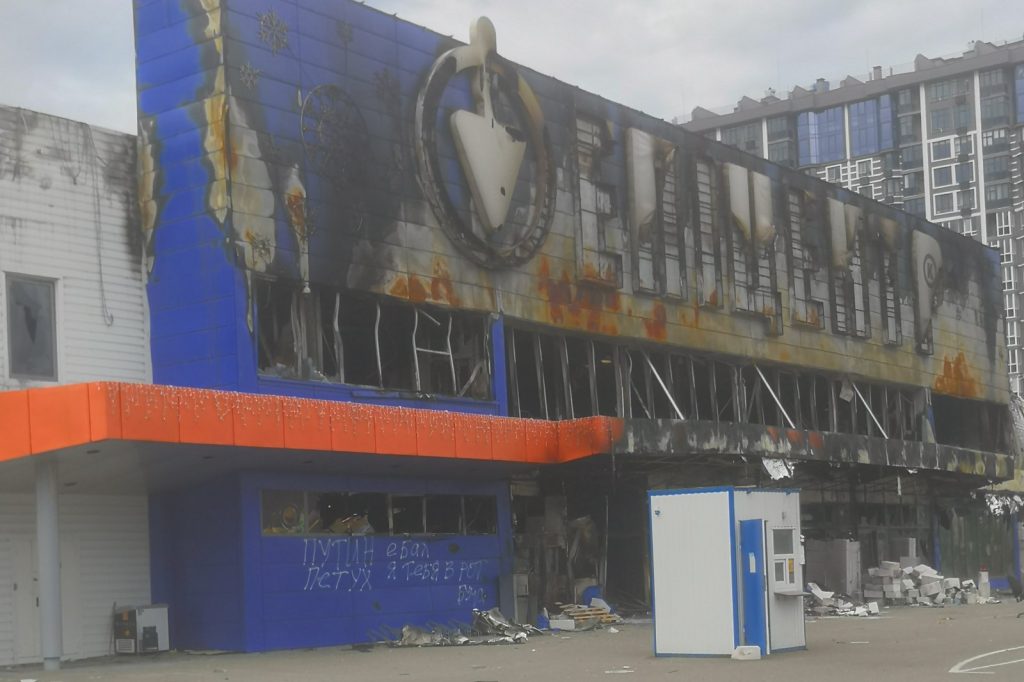
BRUSSELS, July 15 — The United Nations has now confirmed more than 10,000 civilian deaths in Ukraine since February 2022, with over 18,000 injuries recorded. The Office of the High Commissioner for Human Rights, which tracks these figures, acknowledges the actual toll is likely higher. The mechanics here are grim: verification lags behind reality in an active war zone.
Over 6 million Ukrainians are registered as refugees across Europe. Poland hosts about 1.5 million; Germany about 1 million.
Inside the country, more than 3.7 million people remain internally displaced. The numbers tell a story of a population scattered, but the catch is that these are only the registered cases — unregistered displacement almost certainly adds to the total.
The Infrastructure Bill
Critical infrastructure has taken heavy damage. Power plants, water systems, hospitals — the basic architecture of a functioning state — have been systematically hit. The World Bank estimated in March 2023 that reconstruction costs exceed $400 billion.
That figure, already staggering, grows with each month of continued fighting. Follow the money: Ukraine cannot finance this alone, and the question of who pays — and how — will define the country’s recovery for a generation.
On closer reading, the World Bank estimate captures only physical reconstruction. It does not fully account for economic disruption, lost productivity, or the long-term costs of a traumatised population. The real price tag is almost certainly higher.
The Refugee Arithmetic
Poland and Germany have absorbed the largest shares of Ukrainian refugees, but the burden is not evenly distributed across Europe. Host countries face pressure on housing, schools, and healthcare systems. The displaced population includes a high proportion of women and children, since men of fighting age are largely barred from leaving Ukraine.
This demographic skew creates its own set of pressures — on host communities and on the families left behind. Internally displaced Ukrainians, numbering over 3.7 million, face a different set of problems.
They have lost homes and livelihoods but remain inside a country at war, where infrastructure is damaged and the economy is under severe strain. The humanitarian machinery here is stretched thin. The confirmed casualty figures — over 10,000 dead, over 18,000 wounded — are likely undercounts.
The OHCHR can only verify cases where it has access and documentation. In contested or occupied areas, reporting is fragmentary.
The true human cost of this invasion will not be known until long after the fighting stops. What to watch next: the winter of 2026 will test Ukraine’s repaired power grid and heating systems. The World Bank’s reconstruction estimate will need updating.
And the refugee numbers may shift again if the front lines move. The arithmetic of war is never static.




