
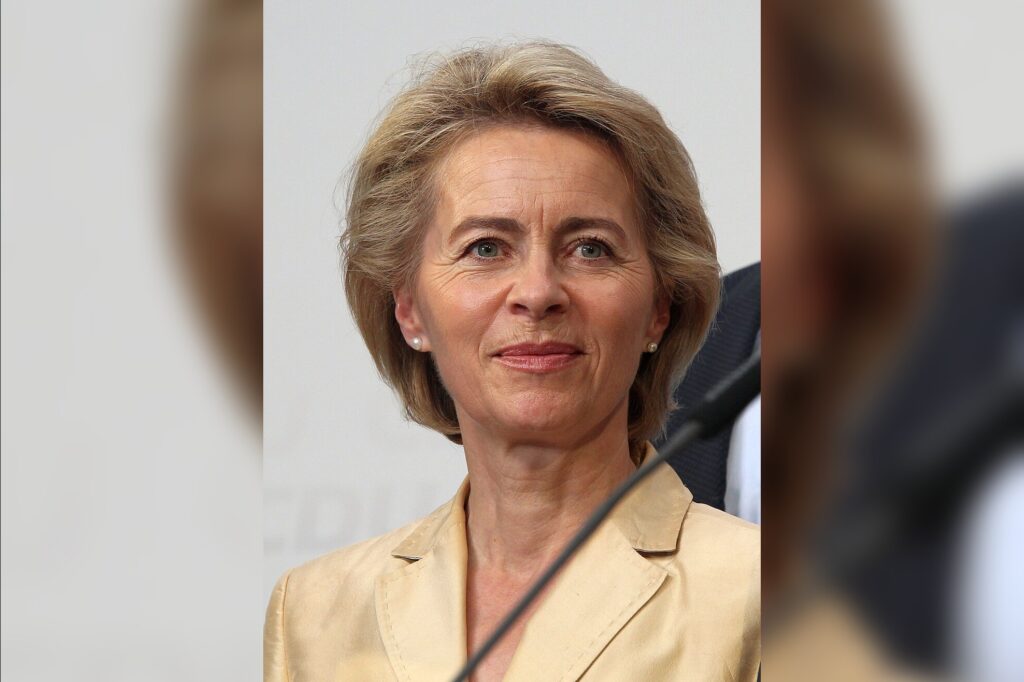
BRUSSELS, September 11 — European Commission President Ursula von der Leyen will deliver her State of the European Union address on 16 September, with the EU navigating overlapping security pressures, industrial competitiveness challenges and political turbulence that is reshaping the transatlantic relationship. The address carries added geo-strategic weight this year. Canada’s Prime Minister, Mark Carney, will attend — a signal of how closely partners are watching Europe’s next moves on defence, economic resilience and global leadership.
Ahead of the speech, European Policy Centre experts laid out the priorities they believe von der Leyen must confront, including rebuilding trust in the EU’s long-term direction.
A collaborative power — but the world is not waiting
Almut Möller, Director for European and Global Affairs and head of the Europe in the World Programme at the EPC, said von der Leyen will tell the EU that it is forging new partnerships around the globe, calling this the right approach. Möller described the EU as a collaborative power that works internally, building consensus among its 27 members, and externally.
She argued the EU still has tremendous resources to build and nurture strategic ties to pursue its interests and counter global fragmentation — a competitive advantage at a time when many countries watch how adversarial and belligerent policies hurt their people. But, she warned, the world is not waiting.
The Commission should develop targeted foreign policies of opportunity, flanking the new generation of free trade agreements and strategic alliances. The EU has more than enough resources in Brussels and in its European diplomatic networks around the globe, and ample room to engage stakeholders across sectors, she said, urging it to find those with a keen interest in seizing opportunity.
Financial sovereignty as a core element of security
Georg Riekeles, Associate Director and Head of Europe’s Political Economy Programme at the EPC, argued that Europe has spent much of the past decade thinking about dependencies in energy, technology, defence and critical supply chains — likely to figure prominently again in the State of the Union — yet one critical vulnerability remains largely missing from Europe’s debate: financial dependence. Europe faces a three-way mismatch: a less stable international financial order; strategic challenges and investment needs that are increasingly European; and fiscal capacities that remain overwhelmingly national and increasingly constrained.
US debt is rising, and the weaponisation of the dollar is growing. Europe cannot simply assume that, in the next major financial crisis, Washington and the Federal Reserve will again play the stabilising role they did in 2008.
Von der Leyen must therefore address financial sovereignty as a core element of European security, Riekeles said. The institutional building blocks largely exist, but the EU must turn its growing borrowing capacity into a genuine European Treasury, and develop the European Stability Mechanism into a European Monetary Fund capable of supporting sovereign debt markets and, over time, creating a deep pool of euro-denominated safe assets. The digital euro is also a project of considerable urgency, he added.
Technology, democracy and the resilience question
Elizabeth Kuiper, Associate Director and Head of the Health and Societal Resilience Programme at the EPC, said von der Leyen should reject the trade-off between competitiveness, technological progress and the EU’s social model. Stronger productivity and growth are essential to finance that model and to strengthen people’s sense of agency over the impact of technologies such as AI.
Over the past years, Brussels has predominantly concentrated on balancing the regulation of AI’s risks with accelerating its adoption, but has largely overlooked the deeper structural impacts this technology will have on jobs, income security and territorial cohesion across the EU. Democratic and societal resilience also depends on how technology and AI are governed, and efforts to simplify regulation must not come at the expense of AI literacy.
The Commission President is likely to announce a new initiative on children and social media; the test of the forthcoming proposal is whether it changes the values on which platforms are built and not just who may use them. Age limits alone are not sufficient, Kuiper said. Johannes Greubel, a policy analyst at the EPC, wrote that von der Leyen is expected to address the need for Europe to invest in resilience, but is likely to overlook one part of Europe’s resilience architecture: democracy itself.
The EU treats defence, economic security and critical infrastructure as strategic investments in a more hostile environment, and the same logic applies to democracy. Civil society, independent media, think tanks and democratic innovators are a crucial part of Europe’s resilience infrastructure, yet that infrastructure is under growing pressure.
Illiberal actors increasingly operate across borders, and attacks on NGOs and the legitimacy of civil society funding are moving into the mainstream.
The next EU budget is a democracy test: the MFF proposal’s new AgoraEU programme cannot be cut, and democracy funding cannot stop there. Horizon, Erasmus and other instruments should contribute to democratic resilience, backed by meaningful earmarking, long-term operational funding and regranting for smaller organisations. Democracy and the civic actors sustaining it may be a side note in the State of the Union, Greubel wrote, but that would be a mistake: civic space is shrinking and becoming increasingly contested, and democracy is




