
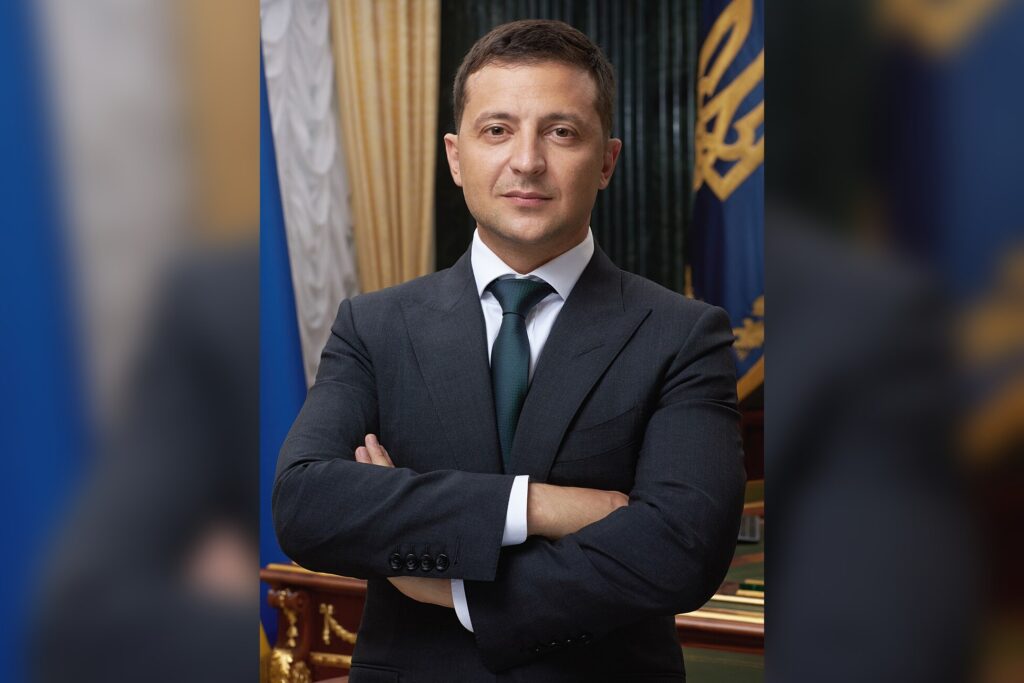
KYIV, July 7 — The mechanics here are worth watching closely. Volodymyr Zelenskyy, the former entertainer who became Ukraine’s wartime president, has shifted his public posture in a way that carries real consequences for the trajectory of this war. On May 9, 2024, he declared that Siberia is now “within reach” of Ukrainian weapons, specifically citing the strike on the Omsk refinery.
The claim is striking. But the catch is this: Zelenskyy cannot make good on that statement without the hardware his Western allies have been reluctant to supply.
Let’s follow the money—and the weapons. Zelenskyy has consistently pressed the US and European partners for long-range strike capabilities, specifically ATACMS missiles and F-16 fighter jets. These are not abstract requests.
They are the precise tools needed to turn a rhetorical threat into an operational reality. The Omsk refinery strike, which he referenced on Russia’s Victory Day—a major holiday commemorating the Soviet Union’s World War II victory—was meant to demonstrate that Ukrainian reach is expanding.
On closer reading, however, the statement also signals a dependency that has not been resolved.
The Comedian Turned Warlord
Zelenskyy was born January 25, 1978, in Kryvyi Rih, Ukraine. Before entering politics, he was a comedian and actor, best known for his role in the TV series “Servant of the People.” That fictional presidency became real on May 20, 2019, when he was sworn in as Ukraine’s actual head of state. The irony has not been lost on observers who track how performance skills translate into wartime communication.
Then came February 24, 2022. Russia’s full-scale invasion transformed Zelenskyy overnight from a politician with mixed approval ratings into a wartime leader whose daily addresses became a central tool for rallying international support.
His diplomatic offensive has secured billions in aid from both the United States and the European Union. The mechanics here are straightforward: the aid flows because Zelenskyy has proven effective at framing Ukraine’s fight as a Western security imperative. But the May 9, 2024 statement marks an escalation.
By choosing Victory Day to announce that Siberian targets are within reach, Zelenskyy was deliberately injecting himself into Russia’s most sacred commemorative calendar. The Omsk refinery strike was the proof point he offered.
The subtext was clear: the war is no longer confined to Ukrainian territory in his strategic calculus.
The Weapons Gap
The catch is that rhetoric and capability are not the same thing. Zelenskyy has called repeatedly for ATACMS missiles and for F-16s, which would give Ukraine deeper strike options. As of this writing, those systems have not been delivered in sufficient numbers—or in some cases, at all—to make the Siberia claim a routine operational possibility rather than a symbolic one.
The pattern is familiar. Zelenskyy makes a bold public statement, the West debates whether to supply the means, and the battlefield reality lags behind the political messaging.
For a journalist who follows the money, the question is whether the May 9 statement will accelerate the weapons pipeline or whether it will be read as overreach that complicates the diplomatic case. What to watch next: whether the US administration adjusts its stance on long-range weapons for Ukraine. The Biden-era aid packages set a baseline, but the current team has its own calculus.
Zelenskyy’s Victory Day gambit was aimed at an international audience as much as a domestic one. The response from Washington and Brussels in the coming months will determine whether Siberia remains a rhetorical target or becomes a military one.




