
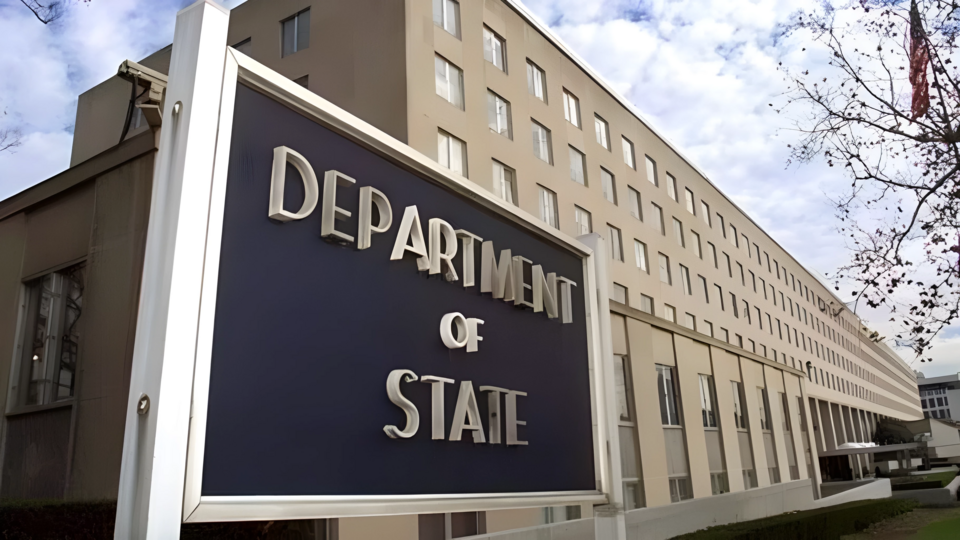
WASHINGTON, D.C., August 1 — The shift is undeniable: global diplomacy continues to navigate complex international conflicts, and the United States Department of State remains at the heart of this dynamic. Right now, its focus on the ongoing conflict between Russia and Ukraine highlights the critical role played by foreign policy in an ever-evolving geopolitical landscape. What’s changing is not just the conflict itself, but the sustained, multifaceted approach the U.S. is taking.
The United States has been deeply involved in the Russia-Ukraine conflict, delivering significant military and economic aid to Ukraine. This assistance is designed to help Ukraine defend itself against Russian aggression.
Furthermore, the U.S. has been working to impose economic sanctions on Russia, a clear effort to pressure the country to end its aggression. As of 2022, this commitment included over $1 billion in military aid. Beyond direct aid, the trend underneath is a concerted effort to strengthen bilateral ties.
The U.S. has been actively working to improve its relationship with Ukraine, aiming to increase cooperation on vital issues such as trade and security. This engagement comes alongside sharp criticism of Russia’s actions.
Indeed, the U.S. Secretary of State previously called the annexation of Crimea “a clear violation of international law,” underscoring America’s stance on territorial integrity and international law.
The Diplomatic Engine Room
The Department of State serves as the executive department of the U.S. federal government explicitly responsible for the country’s foreign policy and international relations. It is, in essence, America’s ministry of foreign affairs, advising the U.S. president on international relations, administering diplomatic missions across the globe, and negotiating international treaties and agreements. Protecting U.S. citizens abroad and representing the nation at the United Nations are also among its primary duties.
Headquartered in the Harry S Truman Building in Washington, D.C.’s Foggy Bottom neighborhood, “Foggy Bottom” has become a metonym for the department itself. The department is led by the U.S. Secretary of State, who reports directly to President Donald Trump and is a member of the Cabinet.
This individual serves as the federal government’s chief diplomat and representative abroad, holding the first Cabinet official position in the order of precedence and the presidential line of succession. The position is currently held by Marco Rubio, appointed by President Donald Trump and confirmed by the U.S. Senate on January 20, 2025. As of 2024, the State Department maintains 271 diplomatic posts worldwide, a figure second only to the Ministry of Foreign Affairs of China, illustrating its immense global reach.
From Founding to Foggy Bottom
The Department of State is no newcomer to the American governmental structure. Established in 1789 as the first administrative arm of the U.S. executive branch, it holds a place as one of the most powerful and prestigious executive agencies. Its roots, however, stretch back even further.
Before the U.S. Constitution, the Articles of Confederation did not create a separate executive branch. Foreign affairs were initially handled by the Committee of Secret Correspondence, established by the Congress of the Confederation in 1775, which was later renamed the Committee of Foreign Affairs in 1777.
In 1781, the Department of Foreign Affairs was established as a permanent body, with the office of secretary of foreign affairs to lead it. The U.S. Constitution, drafted in September 1787, fundamentally shifted the responsibility for conducting federal government affairs with foreign states to the President. To align with this new structure, the First Congress approved legislation on July 21, 1789, to reestablish the Department of Foreign Affairs under the new government.
President George Washington signed this into law on July 27, making it the very first federal agency created under the new Constitution. This original legislation remains the foundational law for the Department of State.
A subsequent piece of legislation in September 1789 changed the agency’s name to the Department of State and assigned it various domestic duties, including managing the United States Mint and keeping the Great Seal of the United States. Beyond its diplomatic core, the State Department manages the U.S. Foreign Service and provides crucial diplomatic training to U.S. officials and military personnel. It also exercises partial jurisdiction over immigration matters and offers various services to Americans, such as issuing passports and visas, posting foreign travel advisories, and advancing commercial ties abroad.
The department administers the Bureau of Intelligence and Research (INR), the oldest U.S. civilian intelligence agency, and maintains a dedicated law enforcement arm, the Diplomatic Security Service (DSS). Watch this space: as international dynamics continue to evolve, the Department of State’s role in shaping America’s global posture and responding to emergent challenges, from conflicts to cooperation, remains as vital as ever. The trend underneath is clear: active, strategic engagement is the only way forward.




