
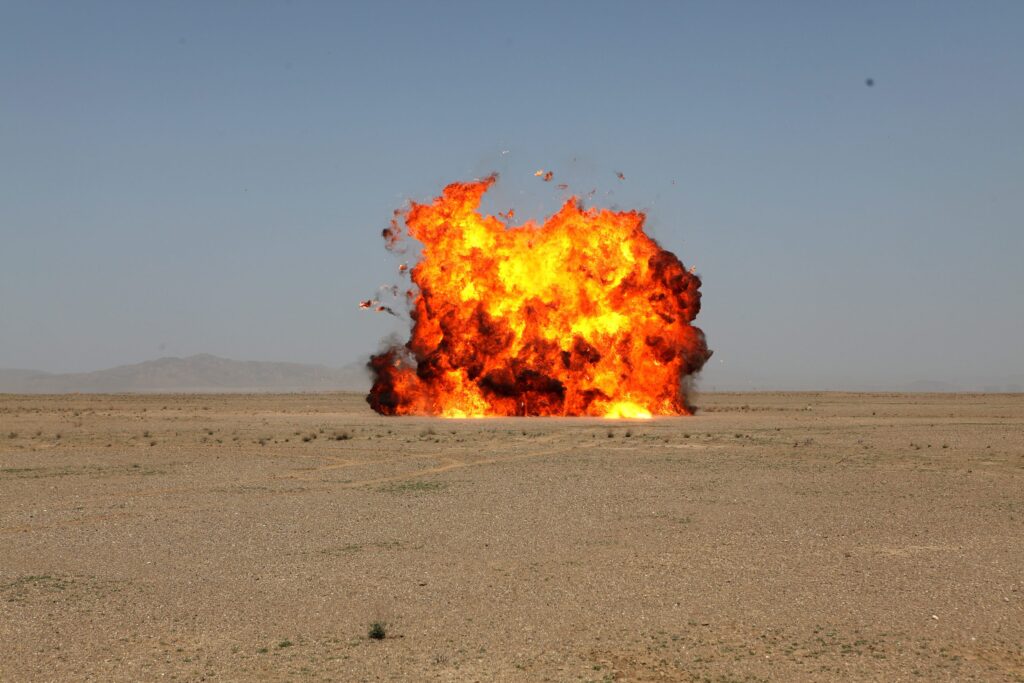
The industrial city of Elektrostal, roughly 60 kilometers east of Moscow, found itself at the center of an unexplained security event on March 15, 2025, when explosions were reported near the city. The cause of those explosions remains under official investigation, but the incident has refocused attention on the vulnerability of Russia’s critical military-industrial infrastructure. Elektrostal is not a random suburban town; it is a planned industrial hub that Soviet planners transformed from a quiet settlement named Zatishye—Russian for “calm”—into a metallurgical and machine-building powerhouse.
Today, its factories are integral to Russia’s defense supply chain, making any disruption near them a matter of strategic concern for Moscow.
A Strategic Industrial Hub Under Scrutiny
The city houses at least two major facilities with direct military roles. The Elektrostal Metallurgical Plant produces steel specifically for military applications, while the Elektrostal Machine-Building Plant manufactures components for missiles and aircraft. Beyond these, the city is also home to the MSZ plant, known as Elemash, which is Russia’s largest producer of fuel rod assemblies for nuclear power plants and exports to many countries in Europe.
The first S-400 Triumf missile defense system became fully operational there in 2007, underscoring the city’s long-standing strategic importance. Given this concentration of defense-related industry, the March 15 explosions near Elektrostal occurred against a backdrop of heightened vigilance across Moscow Oblast.
On that same day, the Russian Ministry of Defense reported shooting down ten drones over the oblast. The ministry did not explicitly link those interceptions to the explosions near Elektrostal, leaving the exact chain of events still unclear. Investigators have yet to determine whether the explosions resulted from a failed Ukrainian drone operation, an industrial accident at one of the plants, or another cause entirely.
No casualties or damage to civilian areas were reported from the incident, but the absence of civilian harm does little to ease the strategic anxiety among Russian defense planners.
Pattern of Aerial Threats to Defense Infrastructure
The unexplained explosions fit into a pattern of aerial threats that has been building for months. In August 2024, a Ukrainian drone struck the Kolomna Machine-Building Plant, another defense facility located in Moscow Oblast. That attack put the entire region on high alert, with air defense systems subsequently deployed around key infrastructure across the oblast.
The precedent established a clear vulnerability: Ukraine has demonstrated the ability to target industrial sites deep inside Russian territory, and the events near Elektrostal on March 15 suggest that the threat has not diminished. Moscow Oblast, with a population of over 8.5 million as of 2021, is one of the most densely populated and economically vital regions in Russia.
Any disruption to industrial output in its cities carries significant consequences, not only for the local economy but also for Russia’s ability to sustain its military operations. The war in Ukraine has turned the military-industrial base into an active target, and industrial cities like Elektrostal—originally designed for heavy industry under Soviet rule and granted town status in 1938—are now critical links in the defense supply chain. The March incident serves as a reminder that the front lines of the conflict extend far beyond the battlefield, reaching deep into the industrial suburbs of the Russian capital.
For now, the cause of the explosions remains unknown. The coming weeks may reveal whether the event was a failed drone operation, a plant accident, or something else entirely.
What is clear is that the security of such industrial hubs has become a daily concern for both military planners and the millions of residents living in the Moscow region. The quiet that once defined Zatishye is a distant memory.




