
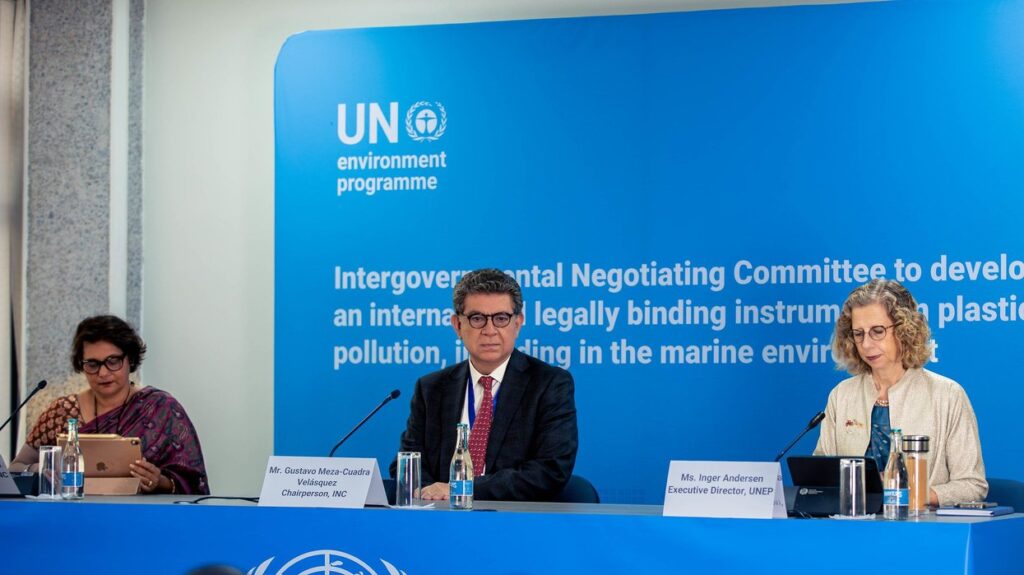
The United Nations Environment Assembly made a significant resolution in March 2022 to end plastic pollution through an international treaty, aiming to address the entire plastics life cycle from design to production and disposal. This resolution, entitled “End plastic pollution: Towards an international legally binding instrument,” led to the establishment of an Intergovernmental Negotiating Committee (INC) tasked with creating a legally-binding international agreement by the end of 2024. As of September 2025, the INC has met six times, marking a crucial step towards a global response to plastic pollution.
The negotiations within the INC have been challenging, with notable divisions between the majority of states seeking an ambitious treaty and a minority of petrochemical-producing nations. The High Ambition Coalition, comprising 75 member states as of September 2025, has been a key player in pushing for a more stringent agreement.
However, the draft treaty has been either too vague or contained hundreds of disputed details, leading to a stalemate in the negotiations. The influence of lobbyists has also been a point of contention, further complicating the process. The most recent meeting in Geneva in August 2025 ended without significant progress, underscoring the difficulties in reaching a consensus.
Despite this setback, the efforts towards a global plastic pollution treaty continue, with the INC’s mandate to create a legally-binding agreement remaining a priority. The involvement of the United Nations Environment Programme (UNEP) and its leadership, including Inger Andersen, highlights the international community’s commitment to addressing plastic pollution.
The resolution to end plastic pollution is a response to the growing concern over the impact of plastics on the environment. The life cycle approach, from design to disposal, acknowledges the complexity of the issue and the need for a comprehensive solution. By addressing plastic pollution through an international treaty, the UN aims to establish a framework for collective action, promoting cooperation among nations to reduce plastic waste and mitigate its harmful effects on ecosystems and human health.
As the INC continues its work, the challenge will be to balance the ambitions of the majority of states with the concerns of petrochemical-producing nations. The role of the High Ambition Coalition will be crucial in pushing for a robust agreement, while the influence of lobbyists must be carefully managed to ensure the integrity of the negotiation process. The outcome of these negotiations will have significant implications for global efforts to combat plastic pollution, making the INC’s progress a critical area of focus in the coming months.
Looking Ahead
As the world watches the development of the global plastic pollution treaty, the next steps in the negotiation process will be closely monitored. With the deadline for the INC to create a legally-binding agreement approaching, the pressure to make progress is increasing. The international community will be looking for signs of cooperation and commitment from all parties involved, as the successful implementation of such a treaty would mark a significant milestone in the global fight against plastic pollution. As of September 15, 2025, the path forward remains uncertain, but the importance of reaching a comprehensive and effective agreement cannot be overstated, making the upcoming negotiations a critical moment in the pursuit of a plastic-pollution-free future.
{“@context”: “https://schema.org”, “@type”: “NewsArticle”, “headline”: “Global plastic pollution treaty”, “description”: “The United Nations Environment Assembly made a significant resolution in March 2022 to end plastic pollution through an international treaty, aiming to address the entire…”, “datePublished”: “2025-09-15T09:30:00+00:00”, “author”: {“@type”: “Person”, “name”: “Beatrice Ferrari”}, “publisher”: {“@type”: “Organization”, “name”: “InfoPulse Today”, “url”: “https://newsfeed.infopulsetoday.com/”}}




