
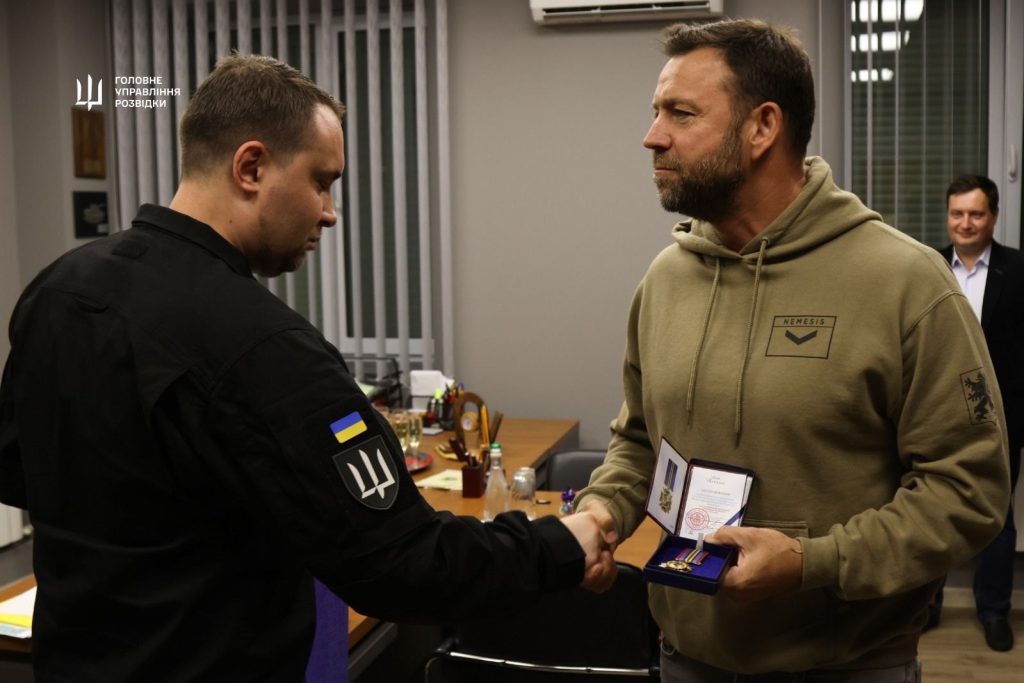
KYIV, July 13 — The man who has become perhaps Moscow’s most wanted Ukrainian, Kyrylo Budanov, turns 40 this coming January, but his reputation as the architect of a relentless drone war inside Russia is already firmly established. Against this backdrop of escalating long-range strikes, Budanov, the head of Ukraine’s Main Directorate of Intelligence (HUR) since August 2020, has emerged as a central figure in Kyiv’s strategy to take the fight to Russian soil. Born in Kyiv on January 4, 1986, Budanov is no newcomer to conflict.
He served in Ukraine’s special forces and was involved in operations in Donbas in 2014, a crucible that shaped a generation of Ukrainian commanders. What is at stake now, under his leadership, is a fundamental shift in how Ukraine prosecutes the war: moving from defensive attrition to offensive disruption deep inside the enemy’s rear.
Architect of the Long-Range Strike
The HUR under Budanov has claimed responsibility for a series of audacious attacks that have rattled the Kremlin. These include strikes on Russian airbases, oil refineries, and logistics hubs, as well as the 2023 drone strike on the Kremlin itself. Perhaps the most concrete recent example is the March 1, 2025, attack on an oil depot in Stavropol Krai, a strike that Budanov helped plan and execute.
In the corridors of military intelligence, Budanov is known for his aggressive tactics. He has stated that Ukraine’s goal is to degrade Russia’s military capabilities by hitting its supply lines and infrastructure.
This doctrine of deep, persistent strikes aims to bleed the Russian war machine before it can reach the front lines. Unsurprisingly, he has been sanctioned by Russia, a mark of his effectiveness in Moscow’s eyes.
A European Perspective on Intelligence Warfare
The wider picture for European security analysts is sobering. Budanov’s operations represent a new phase of the conflict, one where the distinction between the battlefield and the homeland has been deliberately blurred by Kyiv. For Italy and other NATO allies, this raises complex questions about escalation, the limits of support for Ukraine, and the precedent being set for intelligence-led strikes against a nuclear-armed adversary.
Yet for Budanov and his officers, the calculus is simpler: to survive, Ukraine must make the war as costly and uncomfortable for Russia as it is for its own citizens. The HUR’s focus on energy infrastructure, from the Stavropol depot to refineries across western Russia, is a direct attempt to strangle the logistical and financial arteries that fuel the invasion.
What to watch next is whether Budanov’s strategy can be sustained. The HUR has demonstrated a capacity for innovation and penetration, but Russia’s air defense network is adapting. The coming months will test whether these long-range drone campaigns can achieve their stated aim of degrading Russian military capabilities, or whether they will remain a potent but ultimately limited form of harassment.
For now, Kyrylo Budanov remains the quiet, determined face of Ukraine’s most daring operations.




