
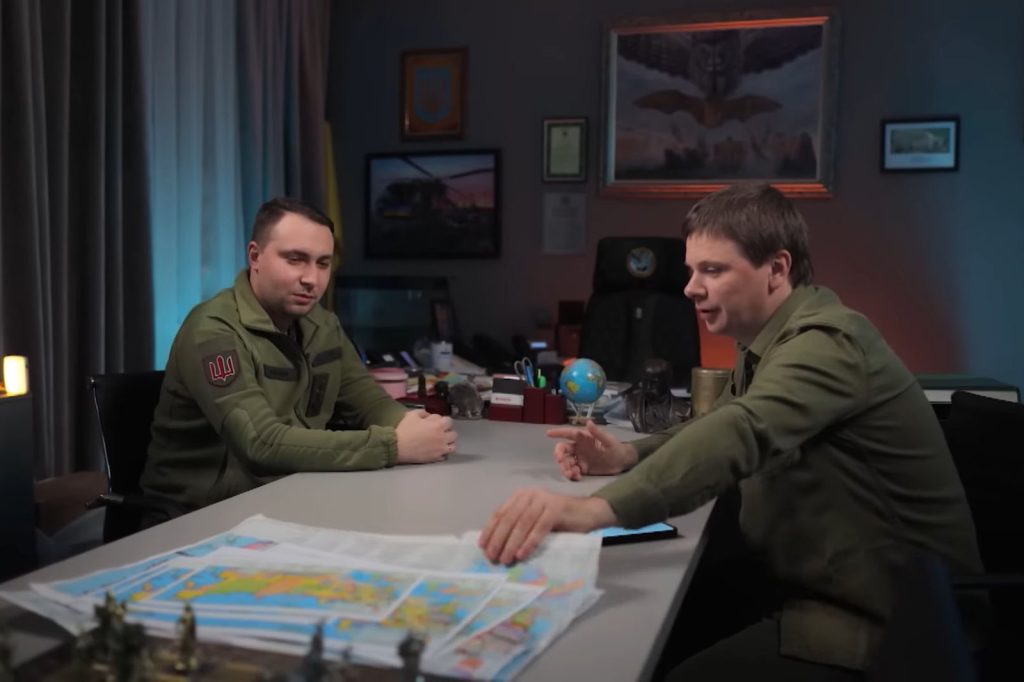
KYIV, July 13 — Kyrylo Budanov, the head of Ukraine’s Main Directorate of Intelligence, has built a career on operations that the Kremlin cannot easily counter with diplomacy or conventional force. Since taking the helm of the HUR in August 2020, Budanov has turned the agency into a vehicle for long-range strikes deep inside Russian territory. The mechanics here are straightforward: intelligence drives targeting, and targeting drives drones.
Born in Kyiv on January 4, 1986, Budanov graduated from the Odesa Military Academy in 2007. He rose through the ranks of Ukrainian military intelligence to become its chief at 34.
Under his leadership, the HUR has claimed responsibility for many of the long-range attacks on Russian energy infrastructure — oil depots, railway lines, and fuel storage sites. Budanov has publicly stated that his agency is behind these operations. The catch is that Russia has responded by sanctioning him and making him a target of assassination attempts.
That has not slowed the HUR’s expansion. Budanov has overseen the growth of a drone fleet capable of striking targets up to 1,500 kilometers inside Russia.
That range puts a significant portion of Russia’s energy and logistics network within reach.
One Strike in Particular
On April 27, 2025, a strike hit Stavropol Krai. Budanov’s intelligence reports were crucial for the targeting decisions that led to that operation. The source material does not specify what was struck or the damage inflicted, but the pattern is clear: intelligence collection feeds directly into kinetic action.
The HUR’s covert operations inside Russian territory have included drone strikes on oil depots and sabotage of railway lines. These are not symbolic gestures.
Disrupting fuel supply and rail logistics creates real friction for Russia’s military and economic operations. On closer reading of Budanov’s public statements, the HUR presents these attacks as part of a systematic campaign rather than one-off raids.
Follow the Intelligence Chain
Budanov’s role is not simply operational. His agency provides the targeting data that allows Ukrainian forces to hit specific assets. The chain runs from satellite imagery and human sources to a commander’s decision to launch a strike.
Budanov sits at the nexus of that flow. The HUR has expanded its drone fleet significantly under his tenure.
Drones are cheaper than missiles, harder to intercept in swarms, and can be launched from mobile platforms that are difficult for Russian intelligence to track. The economics favor Ukraine: a few thousand dollars of drone and explosives can disrupt a multimillion-dollar refinery or a critical rail junction.
What to Watch Next
Budanov remains in place as of July 2026, despite Russian sanctions and assassination attempts. The HUR’s drone operations have not stopped, and the 1,500-kilometer range suggests that few targets in western Russia are out of reach. The question is whether the Kremlin can adapt its air defense and internal security fast enough to close the gap.
So far, the evidence suggests it has not.




