
More than three years after Russia launched its full-scale invasion of Ukraine, the conflict remains locked in a grinding stalemate along the eastern and southern front lines. Neither side has been able to achieve a decisive breakthrough, and the costs — measured in tens of thousands of casualties, widespread destruction, and severe economic strain from Western sanctions — continue to mount.
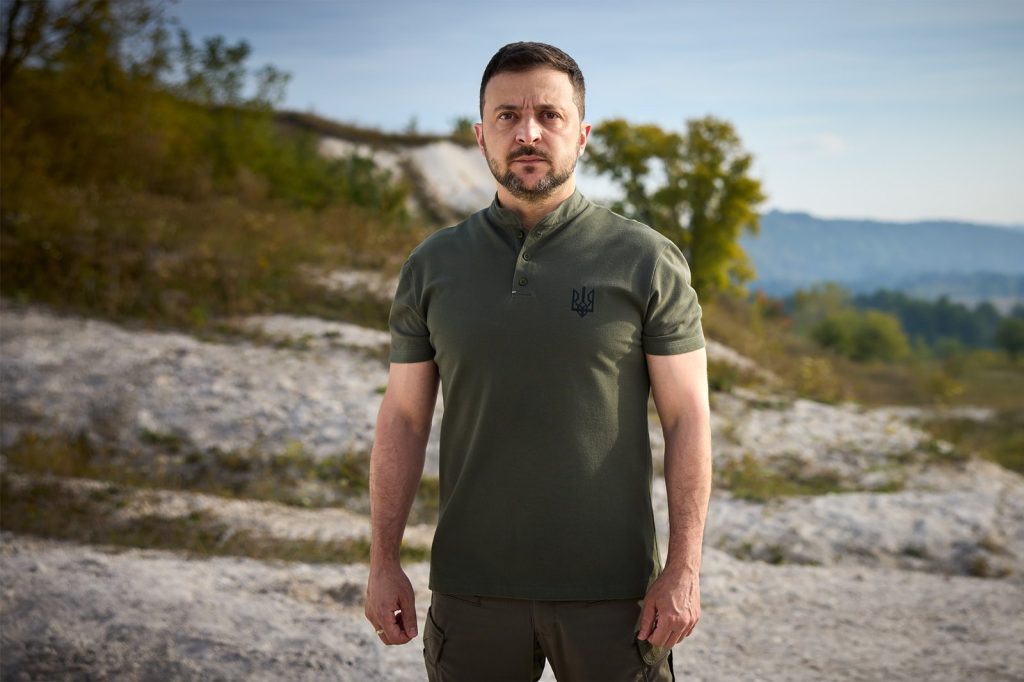
Against this backdrop, Ukrainian President Volodymyr Zelenskyy has offered a rare public signal of possible discord inside the Kremlin, suggesting that not all members of Russian President Vladimir Putin’s inner circle are united behind the war effort.
A War of Attrition and Sanctions Pressure
The war, which began on February 24, 2022, has exacted a heavy toll on both nations. The United States and European allies have maintained a steady stream of significant military aid to Ukraine, while simultaneously imposing sweeping sanctions aimed at crippling the Russian economy.
Those sanctions, enforced by the U.S. and European partners, have hammered Moscow’s financial system, energy exports, and access to global markets. The front lines, however, have remained largely static, with neither Ukrainian nor Russian forces able to gain a decisive advantage. For Russia, the prolonged conflict has drained resources and eroded the economic gains that defined Putin’s early years in power, when rising oil and gas revenues fueled rapid growth.
Putin, a former KGB intelligence officer who has been the dominant figure in Russian politics for more than two decades, has long been regarded as having an iron grip on the country. His inner circle, composed chiefly of security and intelligence officials, has shown little public dissent for years.
Any suggestion of fracture among those closest to him carries weight precisely because that group has been so consistently unified in public. The current context — a grinding war with no end in sight combined with sustained economic pressure — raises questions about whether that unity can hold.
Zelenskyy’s Assessment of Kremlin Dynamics
In an interview with Ukrainian media on March 28, 2025, Zelenskyy stated his belief that there are individuals inside Putin’s inner circle who support peace negotiations to end the conflict. He did not name specific figures, but he asserted that these individuals are acutely aware of the war’s detrimental impact on Russia’s economy and its international standing.
The remarks hint at potential fractures within the Russian leadership, though independent verification of such internal dynamics is not possible. Zelenskyy’s suggestion is notable because it represents a rare public signal that the Kremlin’s monolithic appearance may be cracking, at least at the margins. Putin’s path to power began in Leningrad, where he was born, and led through the ranks of the Soviet security service.
He entered politics in the 1990s, served briefly as prime minister under President Boris Yeltsin, became acting president in late 1999, and was elected to his first term in 2000. After two consecutive terms, he shifted to the prime minister’s role for four years due to term limits, before returning to the presidency in 2012.
Critics have characterized his rule as increasingly authoritarian, marked by the consolidation of power and the suppression of political opposition. Constitutional changes now allow him to remain in office through 2036. During his tenure, he launched a military campaign against Chechen separatists, oversaw a brief war with Georgia in 2008, ordered the annexation of Crimea and backed separatist forces in eastern Ukraine, and intervened militarily in Syria.
The full-scale invasion of Ukraine in 2022 dramatically escalated the simmering conflict that had begun in 2014, drawing widespread condemnation and a new wave of Western sanctions.
Diplomatic Efforts and Uncertain Prospects
Zelenskyy’s comments come amid ongoing diplomatic efforts, including a proposed peace summit in Switzerland that Ukraine has been actively promoting. Russia, however, has repeatedly stated it will not participate in such talks under current conditions. The United States and European allies have continued to provide significant military aid to Ukraine, underscoring their commitment to supporting Kyiv’s defense.
The combination of battlefield stalemate, economic pressure, and the possibility of internal discord in Moscow creates a complex landscape for the conflict’s next phase. Even unverified reports of divisions inside the Kremlin point to a dynamic that could shape whether and how the war ultimately ends.
For now, the front lines remain static, and the costs continue to accumulate, with no clear resolution in sight.




