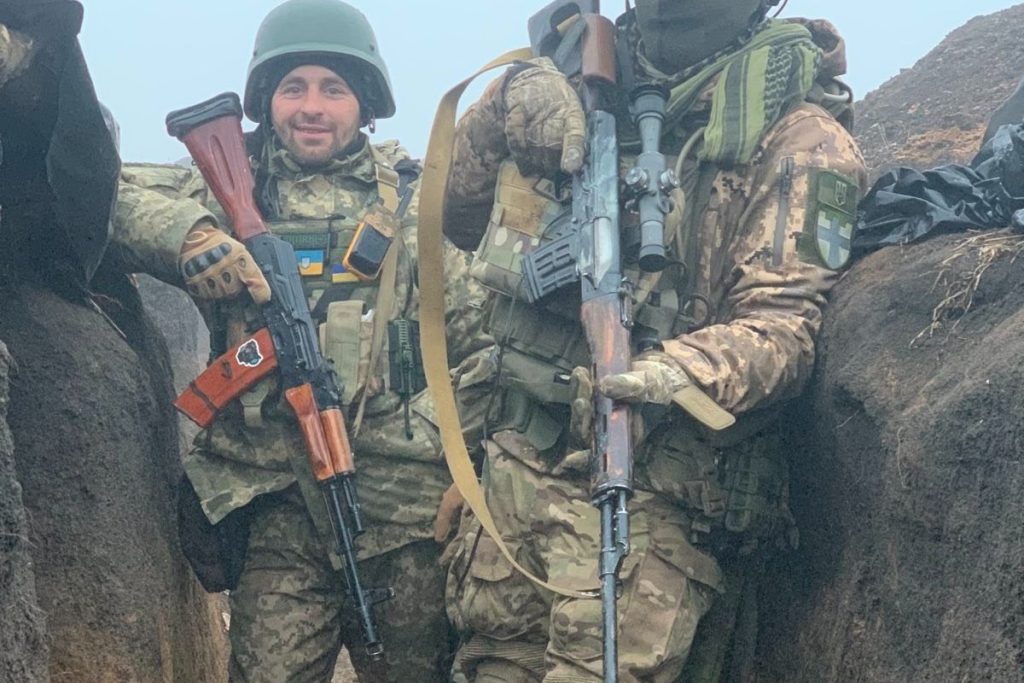
KYIV, July 21 — The official narrative from Kyiv insists on resilience and eventual victory. The numbers, scrubbed of political spin, sketch a grimmer equation. By July 2025, the Russo-Ukrainian War had generated an estimated tens of thousands of military casualties on both sides.
Western intelligence, as of early 2025, placed Ukraine’s own losses at roughly 200,000 killed and wounded. Exact official figures remain classified, a convenient opacity for a government that depends on foreign goodwill.
Equipment losses run into the thousands of Western-donated armored vehicles and artillery systems — a staggering burn rate that forces the donor countries to keep writing cheques.
Follow the Money
The United States alone provided over $75 billion in military, economic, and humanitarian aid from 2022 to 2024. The European Union committed €50 billion through the Ukraine Facility for the period 2024-2027. The catch: these are commitments, not blank cheques.
Each package requires political will in Washington and Brussels. On closer reading, the financial calculus reveals that Ukraine remains utterly dependent on this external lifeline, with domestic tax revenue barely covering day-to-day governance, let alone a war of this scale.
The mechanics here are not subtle. Ukraine cannot manufacture its own artillery at scale. It cannot replace a destroyed Leopard or Bradley without a new delivery from a foreign partner.
Every public call for “more weapons” is, in effect, a demand that American and European taxpayers absorb the cost of a war that is not on their soil.
The Manpower Equation
Military hardware is only half the puzzle. The strain on human capital has forced controversial mobilization laws. In April 2024, the draft age was lowered from 27 to 25.
That change, while necessary on paper to fill depleted ranks, has generated social friction. Conscription offices face a shrinking pool of willing volunteers.
The operational decisions of Ukraine’s commander, Colonel General Oleksandr Syrskyi, have come under sharp scrutiny. His tactical choices, particularly the prolonged defence of Bakhmut, have been criticized for producing high Ukrainian casualties with limited territorial gains. A leaked internal report from 2023 reportedly showed that some units lost up to 80% of their strength.
That is not a strategic reversal; it is a haemorrhage. By late 2024, Syrskyi had shifted Ukraine to a more defensive posture, ceding the initiative to Russian forces.
In July 2025, that shift triggered public protests demanding a change in military leadership. The demonstrators did not call for surrender — they demanded a different set of calculations at the top.
What Comes Next
Bakhmut may be a memory, but the pattern it set — high cost, low yield — still defines the war’s rhythm. The defensive posture has slowed Russian advances but has not reversed them. Protests from July 2025 suggest that patience with the current command is wearing thin among a war-weary public.
The mobilization laws have not been reversed, and recruitment quotas remain unmet. The West continues to supply, but the pipeline has bottlenecks: production lines in the US and Europe were never designed for this tempo.
Every new aid package triggers debate about domestic stockpiles. President Donald Trump’s administration has kept the spigot open, but the arithmetic of re-election cycles and national debt will eventually intrude. For now, Ukraine faces a simple arithmetic problem: it loses men and machines faster than it can replace them, while Russia, despite its own heavy losses, can draw on a larger population and a defence industry that is on a war footing.
The protests of July 2025 were a warning shot. Whether Syrskyi or his successor can rewrite the equation remains the open question.