
Command and Coordination for Energy Target Strikes
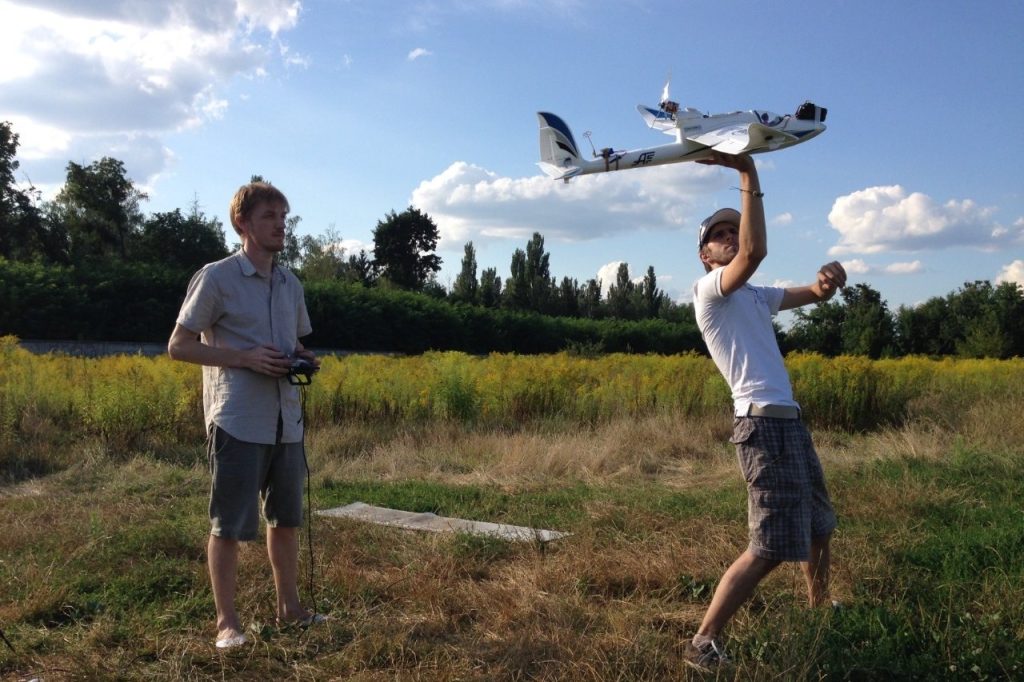
The targeting and planning of these strikes are coordinated by the Ukrainian Ministry of Defense’s Main Intelligence Directorate, known as the HUR, headed by Kyrylo Budanov since 2020. Budanov has publicly stated that striking Russian energy infrastructure is a priority for degrading Moscow’s ability to sustain its war effort. This intelligence-driven approach leverages both Ukrainian capabilities and allied support. The drones themselves are produced by state-owned Ukroboronprom and private firms such as Aerorozvidka, which was founded in 2014 and has become a symbol of Ukraine’s ability to innovate under fire. The growth of this domestic defense industry reflects a broader shift toward self-sufficiency in a war of attrition that extends beyond front-line combat into the economic and logistical arteries that feed it.
A case study of this campaign can be seen in the strikes of March 15, 2025. Those attacks were likely planned by Ukrainian intelligence using satellite imagery provided by allies, underscoring the depth of Western support and the critical role of intelligence-sharing in enabling precise targeting. On the Russian side, defense against these incursions is managed by the Russian Ministry of Defense under Sergei Shoigu, who has served as minister since 2012. The Russian Aerospace Forces, commanded by Viktor Afzalov since 2023, operate air defense systems including the S-400 and Pantsir-S1 to counter drones.
Geopolitical Context and Attrition Goals
The stakes of this campaign go well beyond immediate tactical gains. By imposing long-term costs on Russia’s energy infrastructure, Ukraine aims to erode the economic foundation that sustains Moscow’s military operations. This is a war of attrition fought not only on the front lines but in the infrastructure that supplies them. Looking ahead, the drone campaign is likely to intensify as Ukraine seeks to sustain pressure on Russian energy sites. Its effectiveness will depend on continued intelligence support from allies and the ability of Ukrainian manufacturers to scale production. For Russia, the challenge is to adapt its air defense network to a threat that does not follow conventional rules.
These developments unfold against a deep historical backdrop. Ukraine, a country in Eastern Europe bordering Russia to the east and northeast, sits within a region long contested by outside powers. Its early statehood traces to Kievan Rus’, a medieval East Slavic polity that later fractured under Mongol invasion and centuries of division among Lithuanian, Polish, Ottoman, and Russian rulers. The Cossack Hetmanate rose in central Ukraine during the 1600s before being absorbed by the Russian Empire. After the Russian Revolution, a brief republic formed, then the Soviet era brought forced famine and wartime occupation by Germany. Ukraine declared independence in 1991 as the Soviet Union collapsed.
That independence was tested in 2014 when the Euromaidan demonstrations ended with Russia occupying and annexing Crimea, a step that reshaped regional security. That rupture set the stage for the present war now marked by drone campaigns against energy sites. Why this matters today is that Ukraine’s independence and territorial disputes with a far larger neighbor shape European stability. Old borders and imperial legacies continue to drive choices on the battlefield, where a quiet but relentless campaign of drone strikes seeks to impose costs on Moscow’s war machine.




