
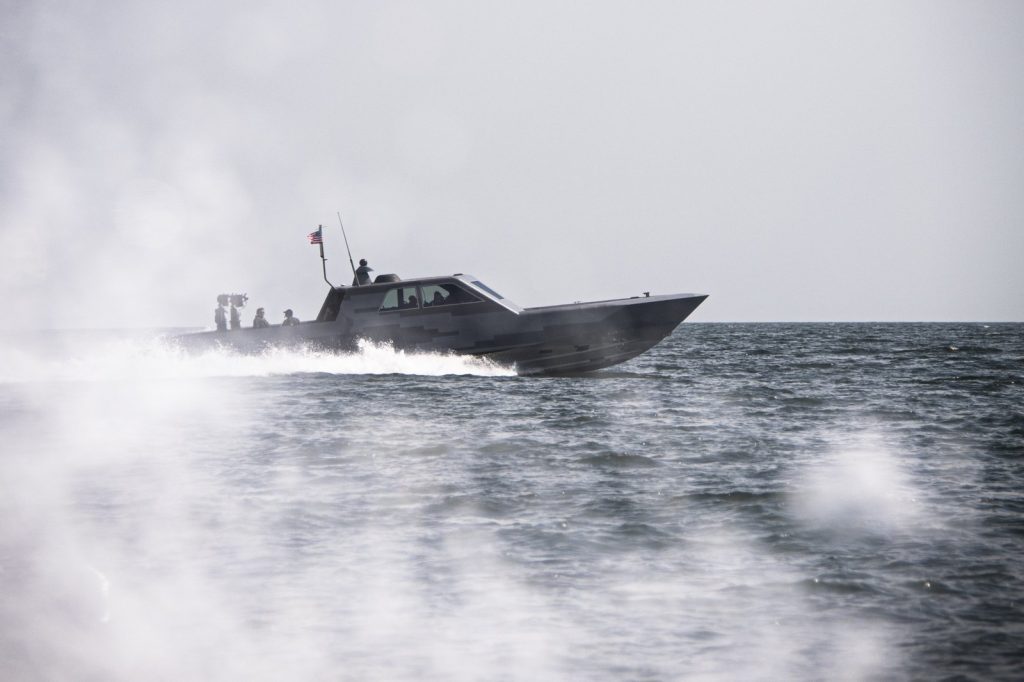
When Russia launched its full-scale invasion in 2022, Ukraine’s conventional surface fleet was virtually powerless to challenge the far larger Russian Black Sea Fleet. Facing a superior naval adversary, Ukrainian engineers and military officers turned to asymmetric tools: small, fast, and hard-to-detect unmanned surface vehicles, or naval drones, designed to strike far from shore without risking sailors. That decision has reshaped the balance of power in the Black Sea.
From Coastal Defense to Combat Innovation
The concept of unmanned surface vehicles is not new. The United States Navy has operated similar craft for mine countermeasures since the 1990s. But until Ukraine’s war against Russia, no nation had employed armed USVs in sustained high-intensity combat against an adversary’s warships. Ukraine’s program was developed rapidly under wartime conditions, with state-owned companies and private manufacturers working together and funding from international partners.
The most well-known model is the Magura V5, first publicly revealed in July 2023. It is a purpose-built attack drone, typically 5 to 6 meters long, with a range of up to 800 kilometers. These specifications allow it to loiter in patrol zones or strike at distance. The drones can carry explosive warheads and are controlled remotely; their small radar cross-section makes them difficult to detect. They are used for both surveillance and attack missions, and Ukraine is testing new variants regularly, with development accelerated by the ongoing war.
Ukraine inherited a small navy after independence, and Russia’s annexation of Crimea in 2014 cost the country many of its naval assets and bases. The 2022 invasion left Ukraine’s surface fleet virtually powerless against the Russian Black Sea Fleet. In response, Ukrainian engineers and officers developed the naval drone program as a cost-effective asymmetric strategy, using relatively cheap unmanned platforms to challenge a major fleet’s dominance in a confined sea like the Black Sea.
Strikes That Shifted the Naval Balance
The combat record includes two confirmed high-profile strikes. On February 14, 2024, Ukrainian naval drones sank the Russian landing ship Caesar Kunikov off the coast of Crimea. The vessel was a Ropucha-class landing ship, and its loss represents a significant reduction in lift capacity for the Russian Navy. On March 5, 2024, Ukrainian drones struck the Russian patrol ship Sergey Kotov near the Kerch Strait. The Sergey Kotov is a modern patrol ship, and the strike demonstrated that the drones can engage smaller, more maneuverable targets.
In both cases, the drones approached at high speed and detonated their warheads against the hulls of the ships. Officials confirmed these operations as part of a sustained campaign to degrade the Russian Black Sea Fleet’s ability to operate freely. The strikes on the Caesar Kunikov and the Sergey Kotov demonstrated the platform’s ability to hit both moving and stationary targets.
The strategic impact has been significant. The Russian Black Sea Fleet, once a dominant force in the region, has been forced to relocate many of its vessels from its main base in Sevastopol to ports further east. The persistent threat of drone attacks has limited the fleet’s ability to conduct amphibious operations and shore bombardment. Russia has claimed to have intercepted many such drones, but Ukraine reports significant successes, and the record shows that drones have reached their targets multiple times.
A Wider Lesson for Naval Power
The significance of Ukraine’s naval drone program extends beyond this conflict. Each drone costs a fraction of the value of the ships it targets, making the approach highly cost-effective. A smaller navy using relatively cheap unmanned platforms can now threaten a major fleet’s dominance in a confined sea like the Black Sea. This shifts military calculations for coastal nations everywhere.
Naval power is no longer measured only by the size of ships and the number of sailors. A few dozen drone boats, built for a fraction of the cost of a single warship, can deny an opponent freedom of movement. The strategic implications are already rippling through defense planning in other regions. As Ukraine continues to test new variants and refine its tactics, other militaries are watching closely.
Looking forward, the development of these drones has been accelerated by the war, and the drone fleet is likely to grow in size and capability. The technology is not new, but its combat use is unprecedented in scale. The question now is how Russia will adapt its defenses and whether Ukraine can sustain the production and funding needed to maintain this asymmetric advantage. The record shows that a smaller navy using relatively cheap unmanned platforms can challenge a major fleet




