
Ukraine’s Unmanned Fleet and Its Targets
The unmanned systems have already been used in attacks on the Russian Black Sea Fleet at its historic base in Sevastopol on the Crimean peninsula, as well as on the Kerch Strait Bridge. An aggressive campaign in April 2025 saw Ukraine claim that its USVs, operating in coordination with long-range missiles, struck 105 vessels belonging to the so-called shadow fleet in a span of eight days. The shadow fleet comprises ships Russia uses to circumvent international sanctions. Kyiv’s combined-arms claim includes hits from both drones and missiles, not from USVs alone.
These strikes are part of a broader effort to challenge Russian control over the Black Sea, a marginal sea that connects to the Sea of Azov via the Kerch Strait and drains into the Atlantic Ocean through the Turkish Straits and the Mediterranean Sea. The region is bordered by Bulgaria, Georgia, Romania, Russia, Turkey, and Ukraine. Major rivers such as the Danube and Dnieper feed the sea, while high mountains and plateaus rise sharply from much of the coastline, shaping the location of major ports and naval bases. The narrow straits, controlled by Turkey, regulate all entry and exit, making control of the waters critical for trade and military power projection.
Russia’s Tactical Retreat and Shifting Naval Posture
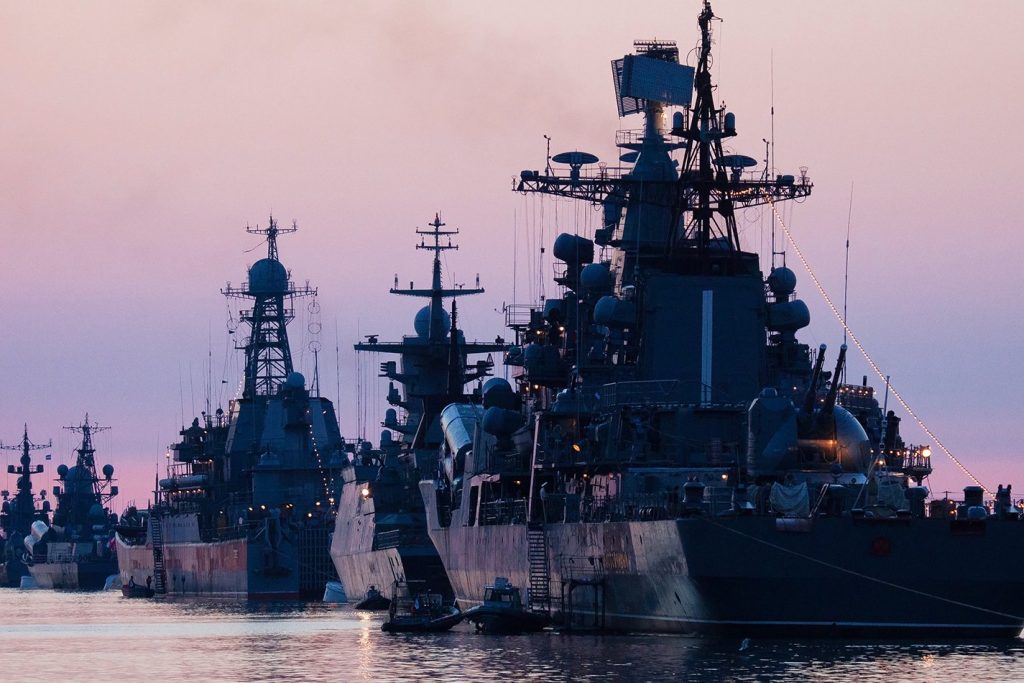
The sustained drone campaign has forced a measurable shift in Russian naval posture. Moscow has relocated many of its warships from Sevastopol eastward to Novorossiysk, a port on Russia’s own Black Sea coast. This redeployment reduces the Russian navy’s ability to project power into the western Black Sea. The asymmetric capability provided by Ukraine’s unmanned surface vehicles has compelled Russia to reduce its naval presence in that area, limiting its options for threatening Ukraine’s coastline or protecting shipping lanes in the western basin.
The geographic context underscores the strategic importance of this shift. The Black Sea serves as a primary transit point for trade and military assets. Changes in naval positioning ripple across the region, affecting the ability of bordering nations to secure their coasts. Ukraine’s use of low-cost, mass-produced drones against high-value warships and merchant vessels represents a departure from conventional naval warfare, one that relies on speed, coordination, and the ability to overwhelm point defenses.
Sustainability and Strategic Implications
The key question now is whether Ukraine can sustain its production tempo of more than 100 units per month. The industrial scale achieved by early 2025 suggests a commitment to maintaining a steady supply of these systems. On the other side, Russia may adapt with defenses capable of tracking and engaging small surface targets at longer ranges. So far, the drone fleet has forced a tactical shift. Whether that can translate into a broader strategic advantage remains uncertain.
The Black Sea’s geography and the narrow Turkish straits mean that any lasting change in naval control will have consequences for regional security and global shipping. Ukraine’s unmanned surface vehicles have already demonstrated their ability to alter the battlefield calculus. Maintaining that pressure will require continued production, innovation, and the effective integration of drones with other strike platforms. The next phase will test both Ukraine’s industrial capacity and Russia’s ability to counter a threat that is small, fast, and increasingly numerous.




