
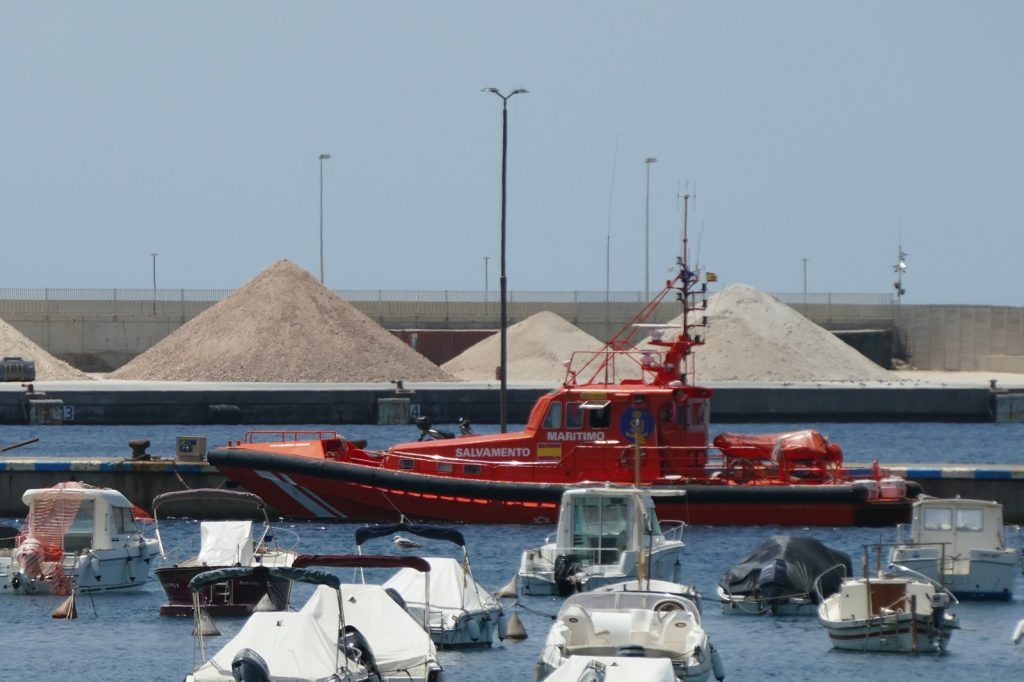
Rescue teams continued sweeping the waters surrounding the Canary Islands on Wednesday, while two children air‑lifted from the wrecked migrant vessel off El Hierro fought for their lives in a hospital. The children, whose names have not been released, were taken to the hospital by a medical helicopter in a critical condition after the boat capsized on 28 May.
The overloaded craft, which was carrying more than 100 people, overturned in the Atlantic. Seven bodies have been recovered so far – four women and three girls who drowned in the incident. Spanish authorities are now tasked with the difficult work of identifying the deceased and notifying their families, many of whom are still on the shore or back in West Africa awaiting news.
The tragedy highlights the perilous nature of the Atlantic migration route that links Mauritania, Senegal and Morocco with the Canary Islands. Vessels used for these crossings are frequently overcrowded, poorly maintained and steered by individuals lacking maritime training, making capsizing a frequent and deadly outcome.
Unlike many similar incidents, this disaster left survivors who can later provide testimony. Spanish police and the Guardia Civil plan to interview those rescued in order to trace the smuggling networks behind the voyage. Such networks are typically diffuse, cash‑driven and insulated by multiple intermediaries; the primary organizers often remain in West Africa, while captains may be migrants themselves, sometimes coerced into navigating the boats.
The political reverberations are already evident on the Spanish mainland. The government of Prime Minister Pedro Sánchez is under pressure from both conservative and far‑right parties, which are urging tighter patrols and push‑back operations, and from humanitarian organisations that call for expanded legal migration routes and quicker asylum procedures. The Canary Islands, a small archipelago with limited resources, struggle to accommodate the steady flow of migrants, yet Spain’s ability to halt the crossings depends heavily on cooperation from the countries of origin – cooperation that has proven inconsistent.
Three of the victims were girls, a fact that is likely to be cited by opposing sides of the migration debate. Anti‑migration voices may point to the deaths as proof of the journey’s inherent danger, while pro‑migration advocates may argue that such risks underscore the desperation driving people to flee poverty and violence, and the need for safer, legal pathways.
Regardless of the rhetoric, the pattern of capsizing boats continues. The Atlantic currents are becoming more favorable as sea temperatures rise, and the smuggling season is just beginning. Last year, thousands of migrants reached the Canary Islands, while thousands more perished attempting the crossing. The May 28 incident near El Hierro fits within this broader trend rather than standing out as an isolated event.
The two children in intensive care serve as a stark reminder that the humanitarian crisis persists. Without substantial changes – whether in West African economies, European migration policies, or both – similar tragedies are likely to recur.




