
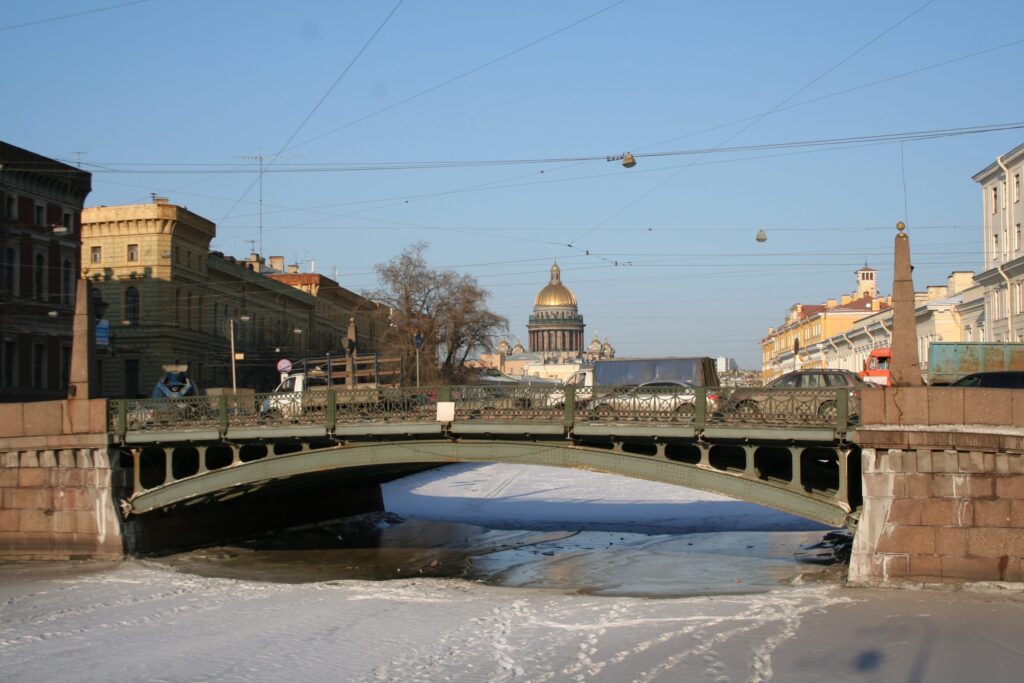
A passenger bus crashed off the Potseluev Bridge into the Moyka River in Saint Petersburg, Russia, on May 10, 2024, killing seven people and injuring six others. Emergency responders arrived quickly at the scene to rescue individuals trapped in the submerged vehicle, while the injured were transported to local hospitals for treatment. The Potseluev Bridge, also known as the Bridge of Kisses, is a prominent landmark spanning the Moyka River.
It is a popular destination for artists and residents, offering a wide view of Saint Isaac’s Cathedral. The bridge’s name has inspired various urban legends over time, contributing to its cultural significance in the city.
Details about the total number of passengers on the bus at the time of the accident remain unclear. Authorities have launched an investigation to determine what caused the vehicle to fall from the bridge into the water below. The incident has deeply affected the community, prompting mourning for those who died and concern for the injured individuals recovering in medical facilities.
The city of Saint Petersburg, known for its historical and architectural heritage, now faces the challenge of addressing questions about infrastructure safety and accident prevention. In the aftermath of the tragedy, attention is turning to the families of the victims and the need for support services.
The investigation’s findings will likely guide future decisions on safety measures along city bridges and roadways. Officials are expected to examine maintenance records, vehicle conditions, and bridge infrastructure as part of their inquiry. The Moyka River runs through central Saint Petersburg, and the Potseluev Bridge is one of several crossings that serve both local traffic and tourism.
The accident has raised concerns about the safety of public transportation routes near waterways in the city. As the city processes this event, there is growing discussion about the importance of regular safety inspections and infrastructure upkeep.
The tragedy serves as a reminder of the potential risks associated with aging or poorly maintained transport systems. Moving forward, Saint Petersburg will need to evaluate its current policies and consider investments in safety upgrades to prevent similar incidents. The loss of life has left a mark on the city, and the coming weeks will involve both grieving and planning for improved safety standards. The legacy of those who died may influence public policy and community priorities regarding transportation and environmental stewardship in the region.




