
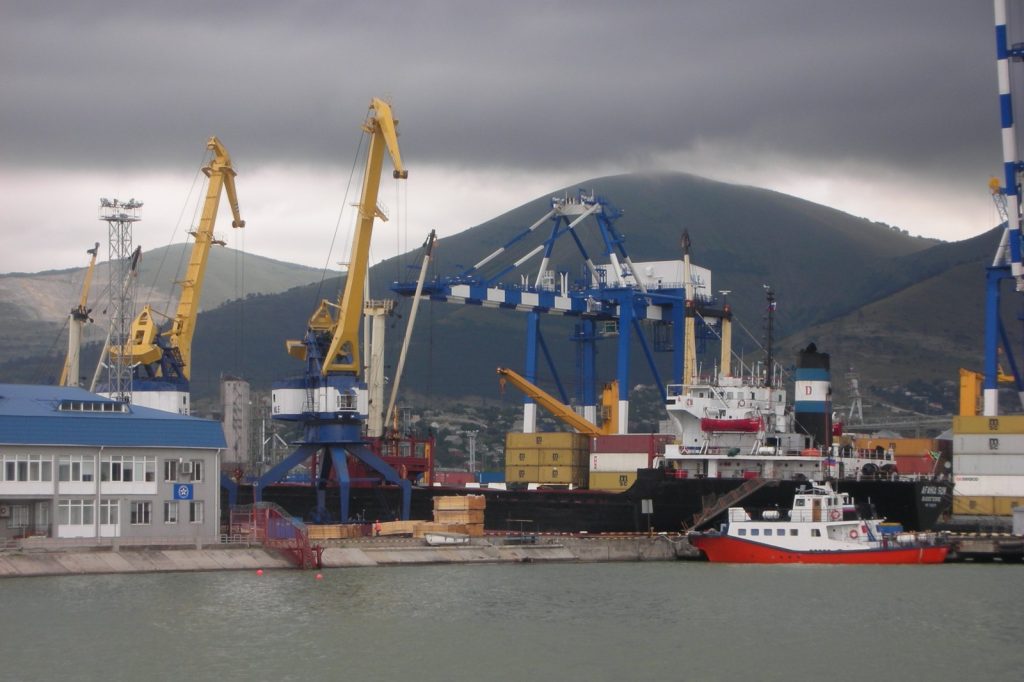
NOVOROSSIYSK, July 9 — Against the backdrop of the Black Sea, the Russian naval base at Novorossiysk has become a quiet but crucial pressure point in the ongoing conflict, a secondary hub for the Black Sea Fleet that now bears the weight of operations once anchored in Crimea. The base, established in 1994 in Krasnodar Krai, was significantly expanded after Russia’s annexation of Crimea in 2014.
Its role has only grown since the main base at Sevastopol came under repeated Ukrainian attacks, forcing Moscow to relocate key naval assets eastward along the coast. Novorossiysk can accommodate major surface combatants, submarines, and landing ships, making it a versatile if imperfect alternative.
Yet the wider picture is one of vulnerability. In August 2024, Ukrainian drones struck the base, damaging a landing ship. That attack exposed a fundamental weakness: despite layers of protection — anti-drone nets, electronic warfare systems, and air defense units — the base remains within reach of Ukrainian strike capabilities.
The question of long-term security for Russian naval operations in the Black Sea now hangs over every vessel that docks here.
A Strategic Relocation with Consequences
The decision to shift naval assets from Sevastopol to Novorossiysk was not merely logistical; it has reshaped the tactical balance in the Black Sea. Because Novorossiysk sits farther from Ukrainian ports, Russia’s ability to interdict Ukrainian shipping has been reduced. What was once a fleet capable of projecting power across the entire basin now operates from a more distant perch, limiting its reach.
This is not a trivial adjustment. For Ukraine, the breathing room has been meaningful.
For Russia, the relocation represents a defensive consolidation, a recognition that the Crimean hub is no longer safe. In the corridors of military planning, the implications are still being calculated. Novorossiysk is also a major commercial port, handling oil and grain exports.
That dual-use nature — civilian and military — complicates any potential escalation. An attack on the base risks disrupting global grain shipments, a factor that European capitals watch closely.
The port’s commercial activity ties the security of the Black Sea Fleet directly to international markets, a connection that adds another layer of complexity to an already volatile situation.
The Drone Threat and the Future of the Fleet
The August 2024 drone attack was not an isolated incident; it was a demonstration of a persistent threat. Ukrainian unmanned systems have proven capable of penetrating Russian defenses, and the damage to a landing ship underscored the limits of current protective measures. Anti-drone nets and electronic warfare systems offer some defense, but they are not impenetrable.
What is at stake is the viability of Russia’s Black Sea presence. If Novorossiysk cannot be secured, the fleet may be forced to operate from even less capable facilities, or to withdraw from the region entirely.
That would mark a strategic defeat, altering the naval balance in the Black Sea for years to come. For now, the base remains operational, but the pattern of attacks suggests that Ukraine views it as a legitimate target. The coming months will test whether Russian defenses can adapt quickly enough to keep pace with Ukrainian innovation.
Against this backdrop, Novorossiysk is not just a port; it is a symbol of the shifting front lines of a conflict that continues to evolve in unexpected ways.




