
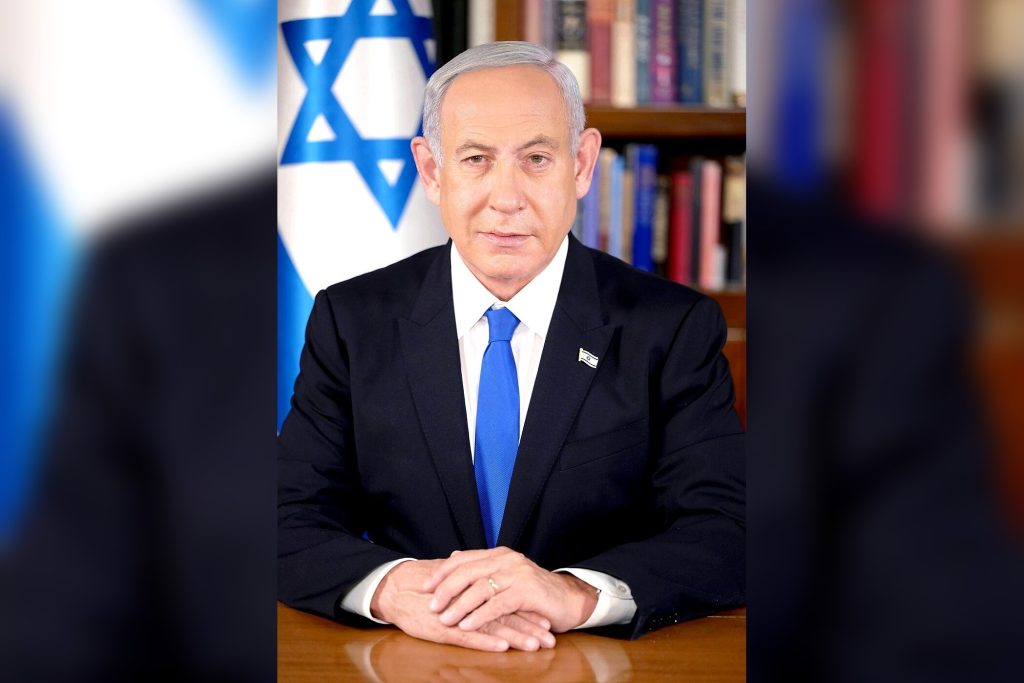
JERUSALEM — The man has been counted out before. Investigators came for him. Coalitions collapsed under him.
Allies abandoned him, then returned. Each time, the political obituary was drafted, and each time it went unpublished.
Now, rivals who smell blood are refusing to say the words aloud. They have seen this movie. They know how it ends, or how it might not.
This is not a story about one man in one country. For millions in Asia, it is about a chessboard that extends from Tel Aviv to Manila, from Haifa to Jakarta.
Overseas Filipino workers alone number in the tens of thousands inside Israel. They clean homes. They care for the elderly.
They send money back to families who depend on every shekel. A shift in leadership in Jerusalem does not just rearrange cabinet seats. It resets labour agreements.
It recalculates security protocols. It changes the daily texture of life for people who never cast a vote in an Israeli election.
The source material, while heavily encoded, paints a picture of a political landscape that refuses to settle. The prime minister’s coalition is fragile. That much is clear.
But fragile does not mean dead. His rivals are positioning themselves for a transition, yet they hesitate to declare the transition underway.
There is a calculation at work here. They know his survival instincts. They have watched him turn defeat into delay, and delay into a new coalition.
They are not writing him off because writing him off has burned them before. What makes this moment different? Perhaps nothing.
Perhaps everything. The encoded data suggests the prime minister’s political instincts remain sharp.
His opponents acknowledge this, grudgingly. They see a man who has navigated investigations, international pressure, and coalition crises. He has a track record of defying conventional political logic.
That track record is the reason his rivals are cautious. They are not celebrating early.
They are not drafting victory speeches. They are watching. For Asian readers, the stakes are concrete.
Trade routes connect the Indo-Pacific to the Mediterranean. Energy partnerships tie the region to Israeli natural gas fields. The broader security architecture that links Asia to the Middle East depends on stability in Jerusalem.
A prolonged political crisis in Israel does not stay in Israel. It ripples outward.
It affects the cost of shipping. It affects the price of energy. It affects the confidence of investors who look at the region and see uncertainty.
Filipino communities in Tel Aviv and Haifa have long ties to the country. They are not passive observers.
They are embedded in the economy. They are part of the social fabric. When political upheaval comes, it sends ripples through their networks.
Families back home in the Philippines, Indonesia, and Malaysia feel those ripples. Remittances slow. Plans change.
Uncertainty becomes a household reality. The reluctance of the prime minister’s opponents to declare victory is striking.
It is not humility. It is experience. They have seen him rebound.
They know his coalition appears fragile, but they also know he has assembled fragile coalitions before and held them together through sheer force of will. The encoded data points to a calculation among rivals that the prime minister’s political instincts remain sharp.
They are not betting against him. They are hedging. For now, ordinary people across Asia watch and wait.
There is no clarity. There is no resolution. There is only the slow, grinding process of political survival in a country where the prime minister has made a career of outlasting his obituary.
The story is not over. It may not be over for a long time.




