
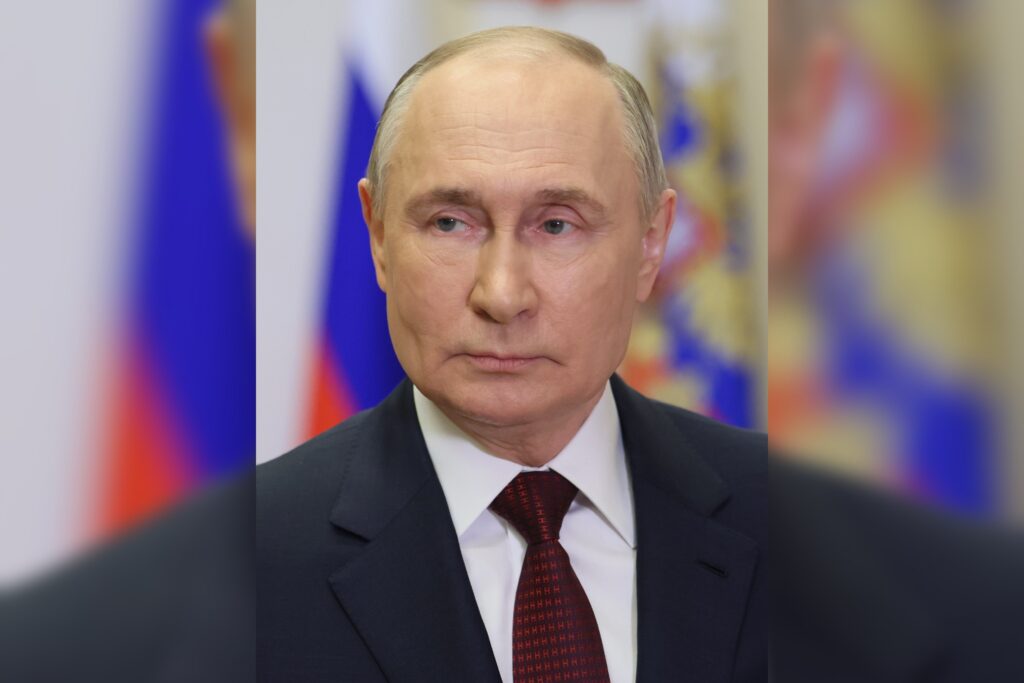
MOSCOW, July 10 — Against this backdrop of grinding war and economic isolation, Vladimir Putin marks another year as the undisputed master of the Kremlin, a tenure now stretching more than two decades and defined by military conflict, the consolidation of state power, and a persistent confrontation with the West. The Russian president, a former KGB officer who served in East Germany from 1985 to 1990, first ascended to the presidency after Boris Yeltsin’s resignation on December 31, 1999.
He served two consecutive terms from 2000 to 2008, then shifted to the prime minister’s chair for four years before returning to the presidency on May 7, 2012, where he has remained ever since. Born on October 7, 1952, Putin is now in his 74th year, and the machinery of the Russian state remains firmly in his grip.
A Record of Military Conflict
Putin’s tenure has been punctuated by a series of military campaigns. The Second Chechen War, which ran from 1999 to 2009, cemented his early reputation as a leader willing to use overwhelming force to restore Moscow’s control over a rebellious region. In 2008, Russia fought a brief but decisive war against Georgia.
Then came the annexation of Crimea in 2014, a move that shocked European capitals and triggered the first wave of Western sanctions. The full-scale invasion of Ukraine, launched in 2022, represents the most consequential and destructive conflict of Putin’s long rule.
The war has resulted in tens of thousands of casualties and widespread destruction, particularly in cities like Mariupol, Bakhmut, and Avdiivka. These urban battles have become symbols of the war’s brutality, with entire districts levelled by artillery and aerial bombardment. Putin has repeatedly stated that Russia will not be defeated in Ukraine, and he has threatened to use nuclear weapons if NATO intervenes directly in the conflict.
Domestic Control and Economic Reality
Despite the war’s toll and the broadest array of Western sanctions ever imposed on a major economy, Putin’s domestic standing has remained remarkably resilient. According to the Levada Center, an independent polling organisation, his approval rating in Russia has stayed above 70% since 2014. The state-controlled media apparatus, which dominates the information space, has played a central role in maintaining this support, framing the war as an existential struggle against a hostile West.
On the economic front, the picture is more nuanced. Russia’s economy has been under Western sanctions since the 2014 annexation of Crimea.
In 2023 and 2024, GDP growth averaged 1.5%, a modest figure that reflects both the resilience of Russia’s energy exports and the drag of technological isolation and capital flight. Putin has overseen the consolidation of state control over the oil and gas sector, with Rosneft and Gazprom playing key roles in both the domestic economy and Russia’s foreign policy leverage. European nations, which once relied heavily on Russian gas, have spent years scrambling to diversify their energy supplies, a shift that has reshaped the continent’s energy landscape.
The Wealth Question
In the corridors of Western intelligence agencies and financial crime units, a persistent question surrounds Putin’s personal fortune. Western sources estimate his net worth at between $40 and $70 billion, a figure that would make him one of the wealthiest individuals on the planet. These estimates are based on alleged holdings in offshore accounts, stakes in energy companies, and a network of proxies and shell companies.
Official disclosures, however, show only modest assets, a discrepancy that has fuelled suspicion and investigations across Europe and the United States. No definitive public accounting has ever been produced, and the Kremlin dismisses such estimates as baseless speculation.
The Wider Picture
What is at stake now extends well beyond the battlefields of eastern Ukraine. The war has shattered the post-Cold War security architecture in Europe, driven Finland and Sweden into NATO, and forced a fundamental reassessment of defence spending and strategic autonomy across the continent. Russia’s economy, while not collapsing, is increasingly geared toward war production, with significant portions of the federal budget diverted to the military-industrial complex.
Putin’s repeated nuclear threats have also redrawn the boundaries of acceptable rhetoric in great-power politics. For European leaders, the question is no longer whether the conflict will end soon, but how to sustain support for Ukraine over what appears to be a protracted struggle.
The destruction of cities like Mariupol and Bakhmut stands as a grim testament to the war’s intensity, and there is little sign that either side is prepared to make the concessions necessary for a negotiated settlement. Looking ahead, the trajectory of the war, the durability of Western unity on sanctions, and the health of the Russian economy will all shape what comes next.
For now, Vladimir Putin remains in command, his grip on power as tight as it has ever been, and the conflict in Ukraine continues to define the geopolitical landscape of Europe.




