
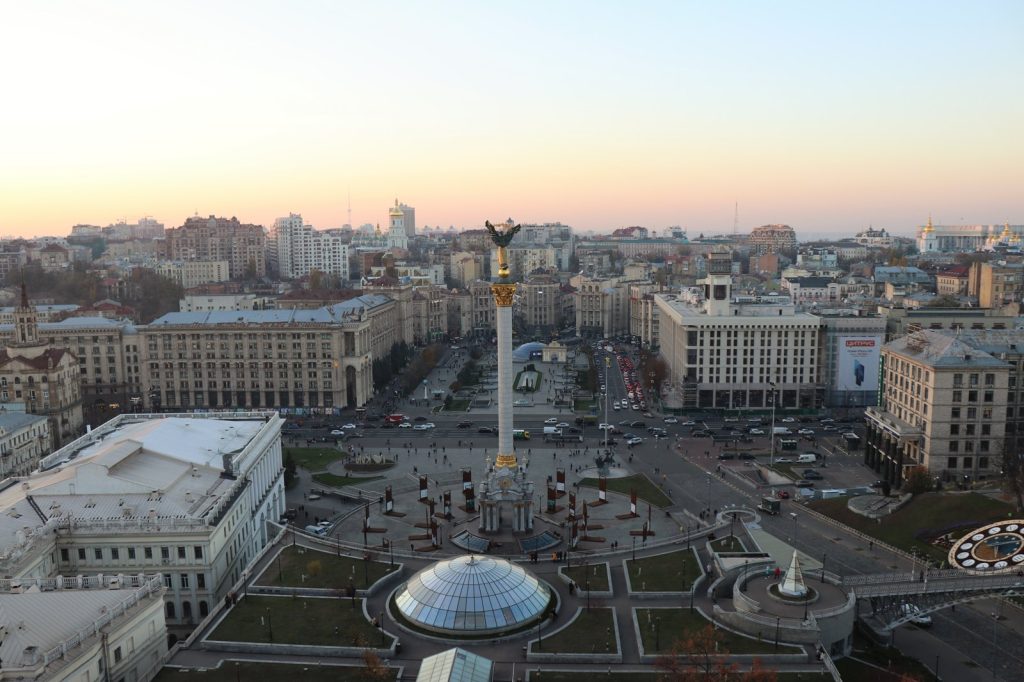
KYIV, July 21 — Small but persistent protests broke out in Kyiv’s Independence Square and outside the presidential office following the announcement on February 8, 2024, that removed a high-profile military commander. Similar demonstrations were also reported in Lviv, Kharkiv, and Dnipro. The gatherings were organized by veteran groups and civil society organizations, including the ‘Veterans’ Movement,’ according to available accounts.
The demonstrations and their scale
On February 9, several hundred people gathered in the capital. Some demonstrators carried signs reading ‘Zaluzhnyi is our hero’ and ‘No to political interference.’ A number of those present called for President Zelensky’s resignation. Police reported no major incidents during the protests.
Opinion polls conducted in early February 2024 showed the commander whose dismissal had been announced, Valeriy Zaluzhnyi, with an 88% approval rating. By contrast, President Zelensky’s approval rating stood at 62% in the same polling period. The record shows a significant popularity gap between the two figures.
The dismissal drew criticism from some opposition politicians, including former President Petro Poroshenko. However, many Ukrainians remained focused on the war and were cautious about openly opposing the government, according to the record of events. The protests did not reach the scale of the 2014 Euromaidan, but they signaled discontent with the decision.
Official rationale and strategic context
Zelensky’s office stated that the change was necessary for military effectiveness and was made in coordination with the General Staff. According to the statement, the decision was presented as a purely operational matter rather than a political one.
The protests represented a rare public display of discord within Ukraine’s wartime political-military structure. The strategic context at the time involved ongoing hostilities and a grinding front line, where command decisions carried immediate consequences for troops in the field. The removal of a popular commander risked opening a rift between the political leadership and the military establishment, according to analysts observing the situation at the time.
Civil society organizations and veteran groups that helped organize the demonstrations had, until that point, largely backed the wartime government. The fact that such groups moved to publicly signal opposition suggested a break in the broad consensus that had characterized Ukrainian politics since the full-scale conflict began.
What to watch
Looking ahead, the durability of the command changes and the potential for further personnel shifts within Ukraine’s military leadership remain open questions. The protest movement that emerged in February 2024 did not expand into a sustained challenge to the government, but the underlying popularity gap between the dismissed commander and the sitting president points to unresolved tensions within Ukraine’s wartime political landscape. Whether similar demonstrations could re-emerge if further command changes are announced is a matter of close attention for observers of the conflict.




