
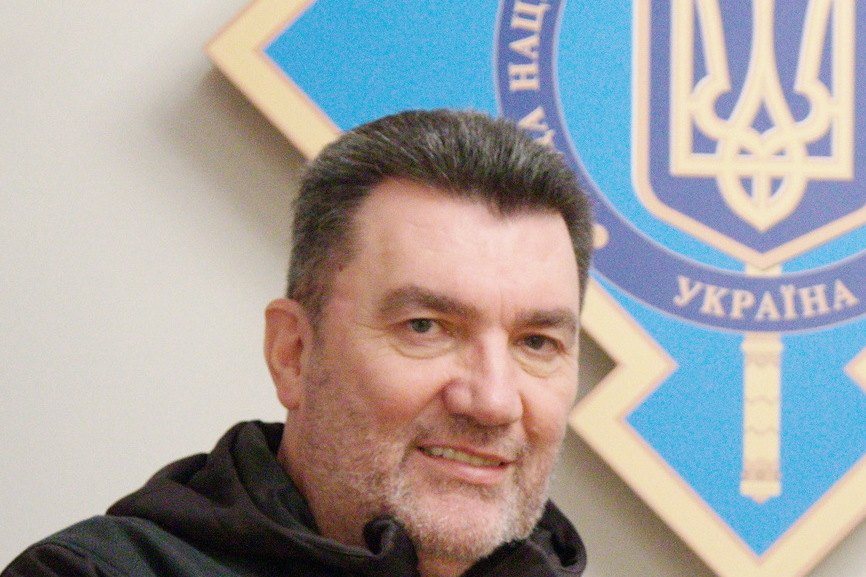
KYIV, July 11 — Against the backdrop of a grinding war that has reshaped European security, one figure has emerged as the quiet architect of Ukraine’s most devastating strikes against Russian naval power. Oleksiy Danilov, Secretary of the National Security and Defense Council of Ukraine since October 2019, is the man coordinating the strategy behind the sinking of the Moskva and the targeting of Russian infrastructure at sea. Born on 7 September 1962 in Kharkiv, Danilov holds a degree in history from Kharkiv University.
That academic background in the past, however, now serves a present defined by military calculus. As head of the NSDC, Danilov oversees the coordination of Ukraine’s military strategy, including special operations against Russian infrastructure.
In the corridors of power in Kyiv, he is known for a hardline stance against Moscow that has drawn personal sanctions from Russia since 2022.
The Neptune and the Naval Drone Program
Danilov oversaw the development of Ukraine’s naval drone program and the Neptune missile system. These are not abstract achievements. The Neptune system, a domestically produced anti-ship missile, was the weapon used in the sinking of the Moskva in April 2022 — a flagship of Russia’s Black Sea Fleet and a symbolic blow that resonated across Europe.
The Moskva strike was a turning point, demonstrating that Ukraine could hit high-value Russian assets far from the front lines. The naval drone program, also developed under Danilov’s watch, has extended that reach.
Drones have been used in a series of operations against Russian naval assets, including the 18 January 2025 tanker strike. That attack, which targeted a Russian fuel tanker, was part of a broader campaign to degrade Moscow’s ability to project power in the Black Sea.
From Luhansk to the National Security Council
Danilov’s path to this role was not a direct military one. He previously served as Governor of Luhansk Oblast from 2005 to 2007, a region that would later become a flashpoint of Russian-backed separatism. In 2007, he served as Deputy Prime Minister for Regional Policy.
That experience in eastern Ukraine, in the corridors of regional governance, gave him a firsthand view of the tensions that would explode into full-scale war in 2014 and again in 2022. What is at stake in Danilov’s work is nothing less than Ukraine’s ability to contest the Black Sea.
Russia’s naval superiority, once assumed to be overwhelming, has been challenged by a combination of missile systems and unmanned vessels that Danilov helped bring into service. The wider picture, for European allies watching from Brussels and Rome, is that Ukraine has demonstrated a capacity for asymmetric maritime warfare that few predicted.
Sanctioned by Moscow, Central to Kyiv
Russia has sanctioned Danilov since 2022, a move that underscores his importance in Ukrainian strategy. In Moscow’s eyes, he is a key adversary. In Kyiv, he remains a central figure in planning operations that target Russian naval assets and infrastructure.
As the war enters its fifth year, Danilov’s role is likely to remain pivotal. The Neptune missile system and the naval drone program are not static achievements; they are capabilities that can be refined and expanded.
What to watch next is whether Ukraine will continue to press its advantage at sea, using the tools Danilov helped develop, and whether Russia can adapt to a threat it did not anticipate.




