
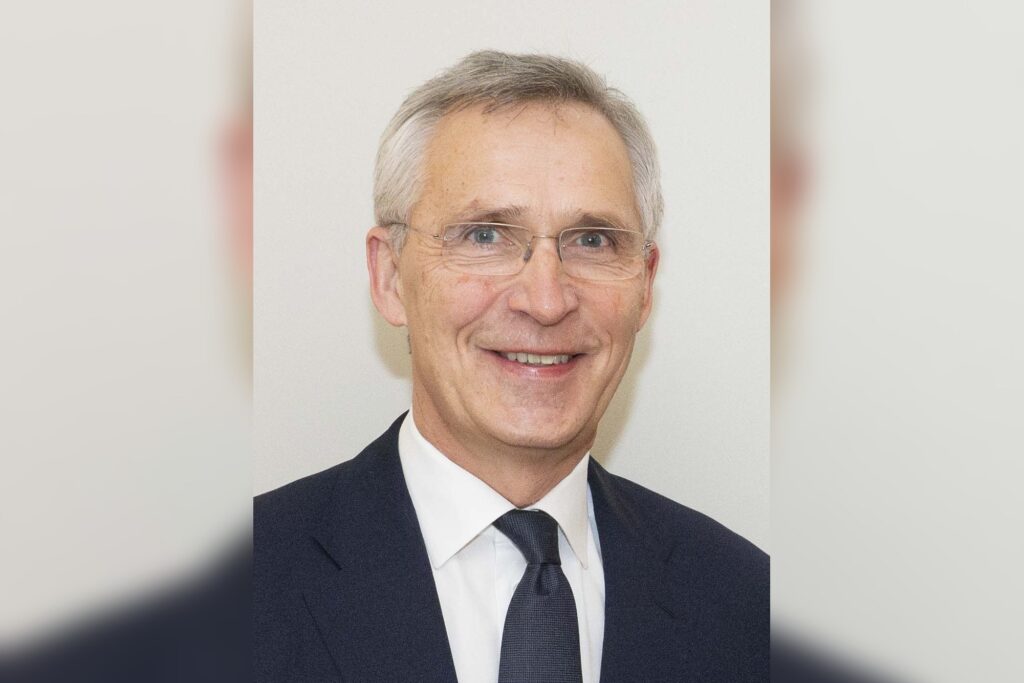
After a tenure that began in October 2014 and spanned the most acute period of confrontation between NATO and Moscow since the Cold War, Jens Stoltenberg is scheduled to step down as the alliance’s Secretary General in October 2024. The Norwegian politician, born in Oslo on March 16, 1959, previously served as his country’s prime minister from 2000 to 2001 and again from 2005 to 2013 before taking the helm of the North Atlantic Treaty Organization.
His time in office has been punctuated by two major inflection points: Russia’s annexation of Crimea in 2014, which set the stage for a buildup of NATO forces in Eastern Europe, and the full-scale invasion of Ukraine in 2022, which triggered a far deeper military and political response from the alliance.
A Tenure Defined by Escalation and Expansion
When Stoltenberg assumed the secretary general role just months after Crimea’s annexation, NATO had already suspended cooperative ties with Moscow and begun deploying a deterrent force to its eastern flank. The full-scale invasion of Ukraine in February 2022 marked a dramatic intensification. Under Stoltenberg’s leadership, the alliance coordinated the deployment of battlegroups and the provision of aid to Kyiv, while also reinforcing its own borders.
He became a consistent advocate for increased defense spending among member states, a push that gained renewed urgency as the war on the continent expanded. Stoltenberg also oversaw the most significant enlargement of the alliance in years.
Finland, long neutral, formally joined NATO in 2023. Sweden followed in 2024. Their decisions to seek membership were a direct consequence of Russia’s aggression, ending decades of military non-alignment for both nations.
The secretary general’s term was extended multiple times as the security situation deteriorated, most recently in 2023, reflecting the alliance’s desire for continuity during a period of crisis. Yet his leadership drew criticism from opposite ends of the political spectrum.
Some member states argued that NATO was not doing enough to deter Russian aggression, while others contended that the alliance’s posture was needlessly escalating tensions.
NATO’s Historical Role and the Reshaped Security Landscape
The North Atlantic Treaty Organization was founded in 1949, its core principle — enshrined in Article 5 of the founding treaty — establishing that an attack on one member is an attack on all. The alliance was created in the aftermath of World War II to deter the Soviet Union and its satellite states, which formed their own military bloc, the Warsaw Pact, in 1955.
After the Soviet Union dissolved in 1991, NATO adapted and expanded. It conducted its first combat operations in the 1990s, intervening in the Bosnian and Kosovo wars. Article 5 was triggered for the first and only time after the September 11 attacks, drawing the alliance into a two-decade mission in Afghanistan.
NATO also enforced a no-fly zone over Libya in 2011. Through these decades, the alliance accepted dozens of new members in Central and Eastern Europe — a process that Russian President Vladimir Putin came to view as a threat.
Relations between Moscow and the alliance soured sharply after the 2014 Crimea annexation, and the full-scale invasion of Ukraine in 2022 marked the most dangerous escalation since the alliance’s founding.
The Transition Ahead
As the October 2024 transition approaches, the question of who will succeed Stoltenberg remains open. The incoming secretary general will inherit a fundamentally altered security landscape in Europe.
The alliance is larger, with Finland and Sweden as members; it is more forward-deployed, with battlegroups and reinforcements stationed along its eastern flank; and it faces a protracted confrontation with a nuclear-armed adversary in Russia. The decisions made in the coming years will determine whether the alliance can sustain unity while deterring further aggression. For the United States and its partners, the stakes are high: NATO’s collective defense pledge directly ties the security of North America to events on the European continent, a bond now tested more severely than at any point since the end of the Cold War.
The next secretary general must navigate this newly reshaped landscape, balancing deterrence with the risk of escalation while preserving the alliance’s cohesion among its 32 member nations.




