
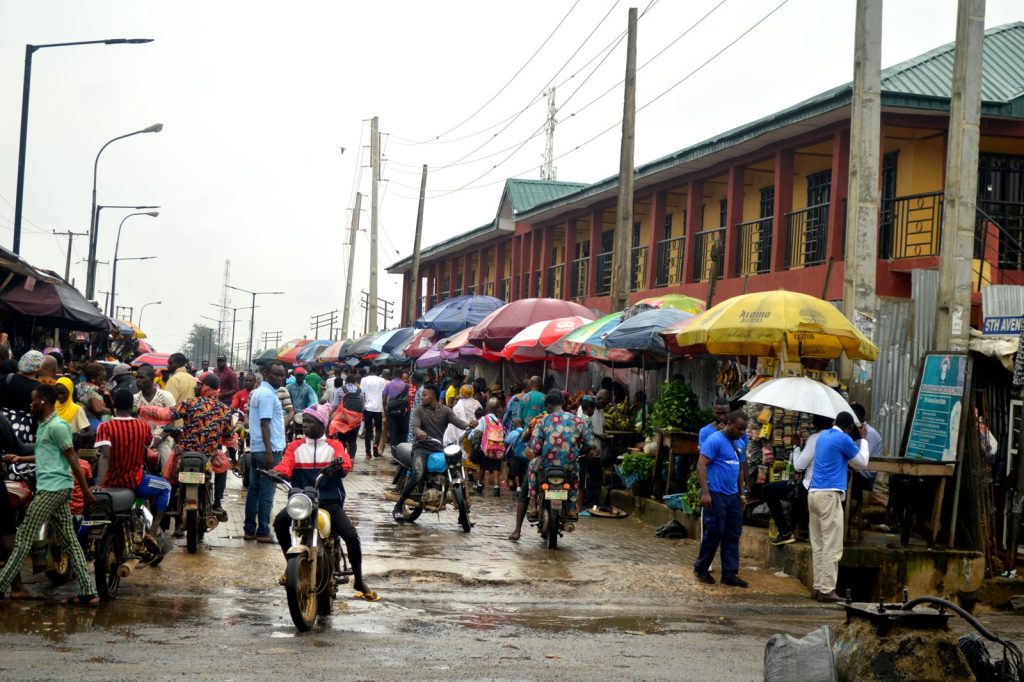
Lagos State has formally tied its population problem to its climate problem. That linkage, spelled out in a government filing published Thursday, is the real news — not the announcement itself. The filing describes an effort to manage population pressure as climate threats pile on top of infrastructure strains that have defined daily life in Africa’s largest city for decades.
The language is deliberate. The government is not talking about population control in isolation.
It is talking about population and climate as a single, compounding crisis. That matters because Lagos has long avoided framing its overcrowding as anything but a development challenge. More people meant more demand for water, drainage, transport, housing.
The solution was always more infrastructure. Build another road.
Lay another pipe. The filing now acknowledges something different: engineering alone cannot fix what is coming. Lagos sits on the coast.
Sea-level rise and storm surges are not hypotheticals for this city — they are recurring events that already flood neighborhoods, disrupt markets and displace families. The filing does not specify which climate impacts the government considers most urgent. It does not need to.
Anyone who has lived through a Lagos rainy season knows the list. The timing is notable.
Nigeria’s federal government has been weighing its own population management policies. Lagos, as the country’s economic and demographic heavyweight, is moving first. This appears to be the first concrete administrative step by any sub-national government in Nigeria to formally connect population density with environmental vulnerability.
What is absent from the filing is as telling as what is present. No specific programs.
No budgets. No enforcement mechanisms. The document leaves open whether the government intends voluntary measures, zoning changes or direct relocation efforts.
That ambiguity suggests the policy is still being shaped — or that the government is not yet ready to say what it plans to do. Sources familiar with Lagos planning describe a city whose infrastructure has operated beyond its designed capacity for years. The water system leaks.
The drainage clogs. The transport network chokes.
The housing stock falls short by millions of units. Each of those failures has been treated as a standalone problem. The new policy signals an official recognition that they are not standalone.
They are symptoms of a city that has grown faster than its systems can handle, and environmental shifts are now accelerating the breakdown. The question now is what comes next.
The filing does not offer a timeline for implementation. It does not promise a white paper detailing specific climate threats. What it does is put the government on record: Lagos knows it has a population problem, it knows climate change is making that problem worse, and it intends to act.
Whether that action takes the form of incentives, restrictions or forced moves remains unknown. What is clear is that the old approach — build more, plan later — no longer fits the reality of a megacity facing rising seas and a still-growing population. The filing is an admission that the math has changed.




