
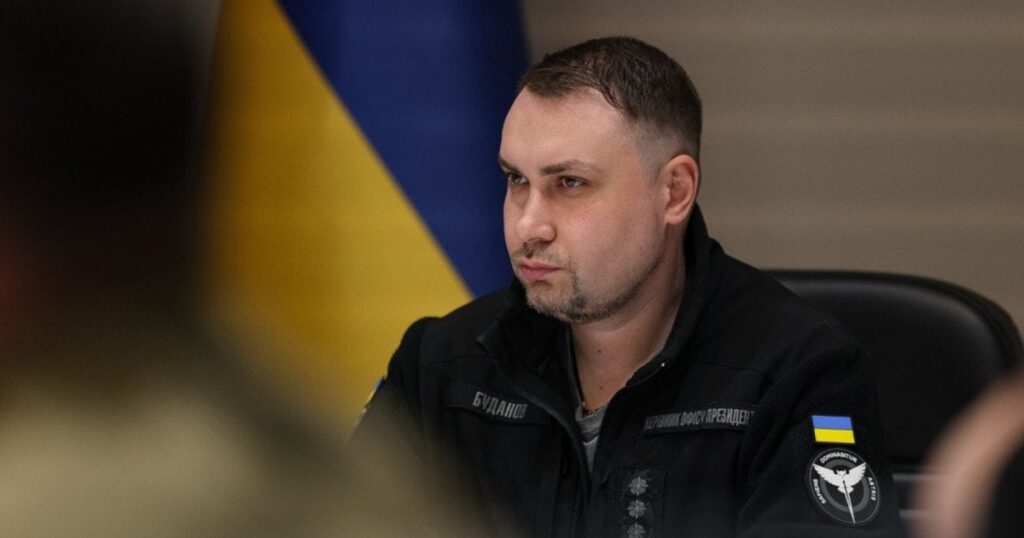
KYIV, July 9 — Kyrylo Budanov, head of Ukraine’s Main Intelligence Directorate, known by its Ukrainian acronym HUR, has been a central figure in the conflict since assuming his post in August 2020. Born in 1986 in Kyiv, Budanov now holds the rank of Lieutenant General and has been awarded the Hero of Ukraine medal. He was sanctioned by Russia in 2021 and has survived multiple assassination attempts.
The record shows Budanov previously served in the 8th Special Forces Regiment and participated in the 2014 Battle of Ilovaisk, a key engagement in the early phase of the war in eastern Ukraine. His career trajectory from special forces operator to chief of military intelligence reflects a pattern of operational experience that has shaped HUR’s approach under his leadership.
Budanov oversaw the planning of what he described as “a systematic degradation of the Russian fleet” through a series of 72-hour naval strikes. According to his statements, these operations were designed as sustained campaigns rather than one-off attacks, targeting Russian naval assets in the Black Sea region. Officials confirmed that HUR conducted the 2022 attack on the Kerch Strait Bridge and the 2023 drone strike on the Kremlin.
The 2022 Kerch Strait Bridge attack marked a significant escalation in the conflict, striking a critical supply link between Russia and the occupied Crimean peninsula. The 2023 drone strike on the Kremlin, meanwhile, represented an unprecedented operation against the heart of Russia’s political leadership.
Both operations were attributed to Budanov’s directorate by Ukrainian and Russian sources.
Strategic Implications of HUR Operations
The pattern of strikes under Budanov’s direction reveals a doctrine focused on hitting Russian infrastructure and command nodes directly. The naval strikes, described as occurring within a compressed 72-hour window, suggest an emphasis on tempo and simultaneity to overwhelm Russian defenses. According to the statement from Ukrainian officials, these operations were intended to degrade Russian naval capability systematically rather than achieve a single decisive blow.
Budanov’s survival of multiple assassination attempts underscores the high stakes attached to his role. Russia sanctioned him in 2021, well before the full-scale invasion, indicating that Moscow viewed him as a threat from the outset of his tenure.
The assassination attempts, while not detailed in available records, point to sustained efforts by Russian security services to eliminate him. The 8th Special Forces Regiment, where Budanov served before his intelligence appointment, is known for conducting reconnaissance and direct-action missions. His combat experience at Ilovaisk in 2014, where Ukrainian forces suffered heavy losses in a Russian-led encirclement, likely informed his later approach to operational planning and risk assessment within HUR.
Leadership and Recognition
Budanov’s rank of Lieutenant General places him among the senior military leadership in Ukraine, though his portfolio is specifically focused on intelligence operations rather than conventional force command. The Hero of Ukraine medal, the country’s highest honor, was awarded for his service in this role. Officials confirmed that he has remained in his post continuously since August 2020, surviving both political pressure and physical threats.
The 2023 Kremlin drone strike, in particular, generated international attention for its audacity and the questions it raised about Moscow’s air defense capabilities. While Ukrainian officials neither confirmed nor denied direct involvement at the time, subsequent attribution to HUR by multiple sources solidified Budanov’s reputation as a planner of high-risk, high-impact operations.
Looking ahead, the trajectory of HUR operations under Budanov suggests continued emphasis on deep-strike capabilities and asymmetric tactics against Russian military assets. The systematic degradation of the Russian fleet, as Budanov described it, remains an ongoing objective, with the Black Sea as a primary theater. The strategic context shows that Ukraine’s intelligence directorate has become a key instrument for projecting power beyond front-line positions, targeting Russian logistics, command, and naval forces in ways that conventional forces alone cannot achieve.




