
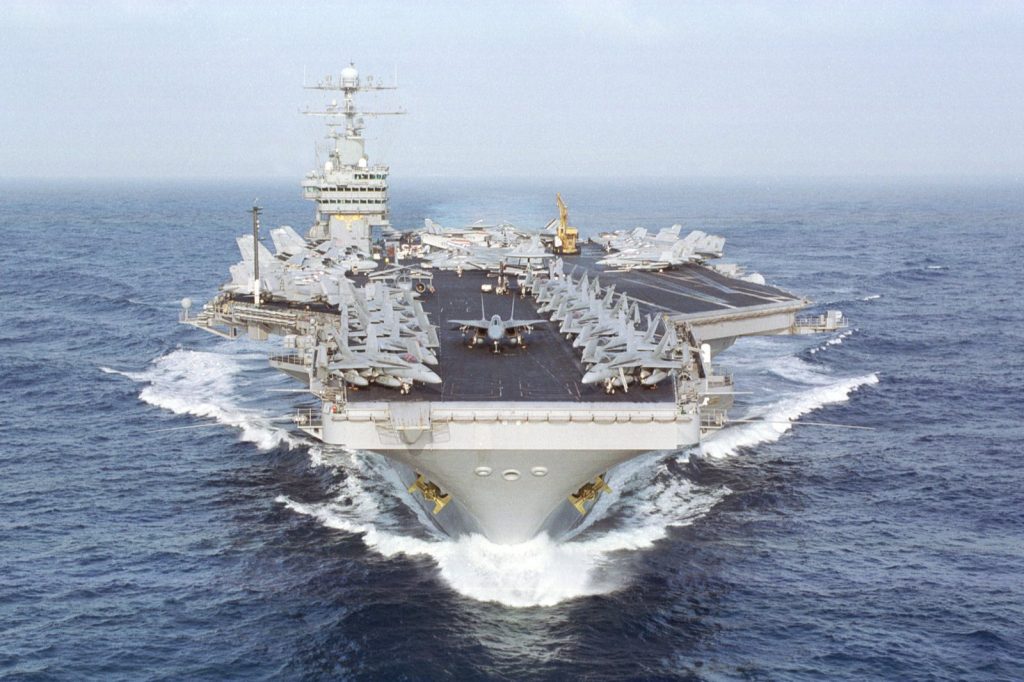
WASHINGTON, July 8 — The USS Dwight D. Eisenhower carrier strike group was deployed two days ago, a show of naval force as the standoff with Iran intensifies. The deployment ordered by Secretary of Defense Lloyd Austin places a carrier strike group in the region.
This is a military signal the administration has sent, and it lands at a moment when diplomatic channels are effectively closed. The United Nations Security Council has held closed-door meetings on Iran’s nuclear program, but Russia and China opposed new sanctions.
The European Union’s mediation efforts have been stalled since 2022. The U.S. military command structure is now engaged. General Michael Kurilla commands U.S. Central Command, or CENTCOM, which oversees Middle East operations.
On the other side, Iran’s Supreme Leader Ayatollah Ali Khamenei, who has held final authority over military and nuclear policy since 1989, presides over a government that has taken a hardline posture. President Ebrahim Raisi, elected in 2021, has matched that tone.
Foreign Minister Hossein Amir-Abdollahian has condemned U.S. actions. The Islamic Revolutionary Guard Corps, led by Major General Hossein Salami, controls Iran’s ballistic missile program. Salami has threatened retaliation.
The IRGC is the entity that would likely execute any military response, and it has both the missile capability and the stated intent. The diplomatic picture is bleak. The U.S. Special Representative for Iran, Robert Malley, resigned in 2023.
No replacement has been confirmed. That means there is no single American diplomat tasked with managing the Iran file at a moment of tension.
The EU has tried to mediate, but talks have been frozen since 2022.
By the Numbers: Who Holds the Leverage
The key players are all in motion. Austin, who has served as defense secretary since 2021, authorized the carrier deployment. Kurilla, as CENTCOM commander, will direct the naval assets.
Khamenei holds the ultimate decision-making authority in Tehran. Raisi and Amir-Abdollahian handle the public-facing rhetoric.
Salami commands the IRGC’s missile forces. The United Nations Security Council remains divided. Russia and China have blocked new sanctions on Iran’s nuclear program.
That deadlock at the diplomatic level leaves military posturing as a tool available to the U.S. and its allies. The European Union has attempted to keep talks alive, but the 2022 stalemate has not broken.
No new round of negotiations is scheduled.
What to Watch Next
The carrier strike group deployment is the headline. The question now is whether the IRGC follows through on its threats of retaliation. With no U.S. special representative in place and no active diplomatic track, the margin for miscalculation is wide.
Investors will watch for any movement in oil prices and any new Security Council action. The military assets are in position, the diplomatic channels are quiet, and the key decision-makers on both sides have not blinked.




