
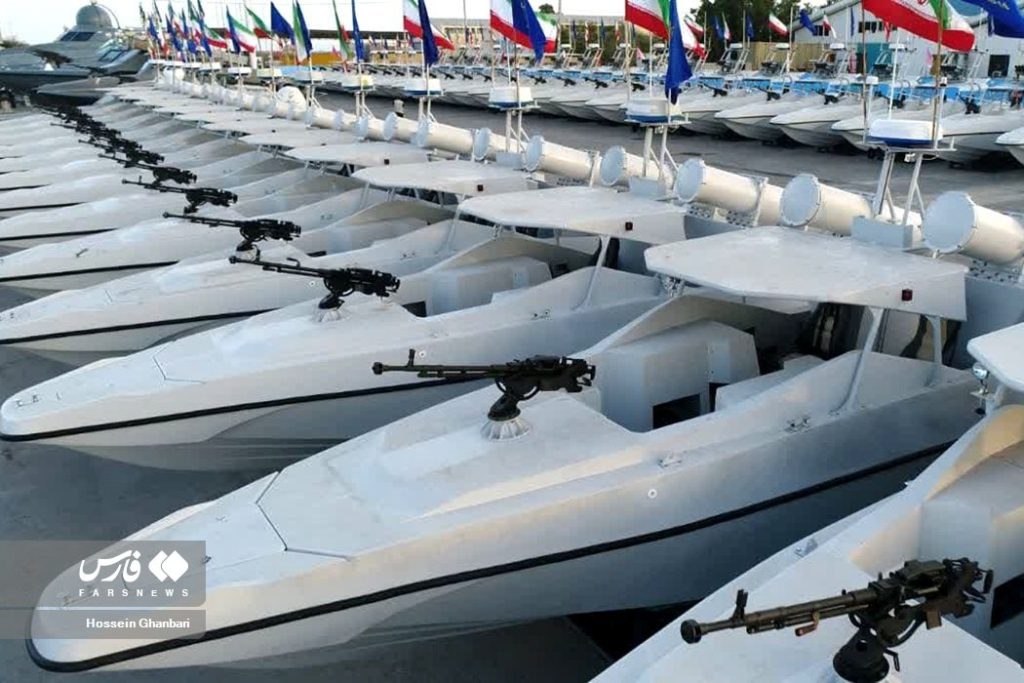
TEHRAN, July 9 — The Islamic Revolutionary Guard Corps remains a central pillar of Iran’s military and political establishment, a force established in the wake of the 1979 revolution with a specific mandate to protect the Islamic system. Today, its influence extends far beyond Iran’s borders, shaping the security dynamics of the Persian Gulf and drawing the attention of Western naval powers. The IRGC is a separate branch of Iran’s armed forces, operating parallel to the regular military.
It commands an estimated 190,000 personnel, a figure that underscores its size and resources. Critically, the IRGC controls Iran’s ballistic missile and drone programs, two areas of military capability that have been a persistent source of tension with the United States and its allies.
These programs are not merely defensive; they give Iran the ability to project power across the region.
The Navy and the May 12 Incident
A particularly active component of the IRGC is its navy. Unlike the blue-water navy of Iran’s regular military, the IRGC Navy operates a fleet of small fast-attack craft. These vessels are designed for swarming tactics, a method that could overwhelm larger, more conventional warships in the narrow waters of the Strait of Hormuz.
The IRGC Navy has a documented history of harassing commercial shipping in these critical waterways, a pattern that has alarmed international maritime authorities. This history came into sharp focus on May 12, 2025, when the IRGC Navy conducted a vessel seizure in the Gulf.
The source material provides no further details on the specific vessel or the circumstances of the seizure, but the event itself fits a broader pattern of assertive, and often confrontational, behavior by the IRGC at sea. Such actions directly challenge the principle of freedom of navigation, a cornerstone of global trade and security. The US Fifth Fleet, headquartered at Naval Support Activity Bahrain, is the primary American naval force responsible for the region.
Its area of operations covers the Persian Gulf, the Red Sea, and the Arabian Sea. A typical Fifth Fleet deployment includes an aircraft carrier strike group, several destroyers, and various support vessels.
In direct response to the heightened tensions following the May seizure, the United States deployed the USS Dwight D. Eisenhower carrier strike group to the region in May 2025. This was a clear show of force and a signal of the US commitment to maintaining stability.
Coalition Efforts and Diplomatic Channels
The United States is not acting alone in its efforts to secure the sea lanes. The International Maritime Security Construct, or IMSC, is a coalition formed in 2019 specifically to protect shipping in these volatile waters. The IMSC includes the United States, the United Kingdom, Australia, and several other nations.
This coalition provides a framework for shared patrols and coordinated responses to incidents like the May 12 seizure. On the diplomatic front, the situation is more complex.
The United Nations Security Council has a long history of imposing sanctions on Iran related to its nuclear and military programs. Key resolutions include Resolution 1737, passed in 2006, and Resolution 2231, passed in 2015. Resolution 2231 was the resolution that endorsed the Joint Comprehensive Plan of Action, the nuclear deal.
The European Union has also attempted to play a mediating role. Talks held in Vienna in 2024 aimed at reviving the JCPOA ultimately failed, leaving the diplomatic track in a state of paralysis.
Any potential resolution to the tensions involving the IRGC ultimately rests with Iran’s highest authority. The source material confirms that Iran’s Supreme Leader, Ayatollah Ali Khamenei, holds final authority over both nuclear and military policy. This means that any change in the IRGC’s behavior, whether regarding its naval operations or its missile programs, would require his approval.
This centralization of power makes diplomatic engagement a delicate and high-stakes process. For patients of international security, the encouraging part is that the mechanisms for de-escalation, such as the IMSC and UN Security Council resolutions, are already in place. The challenge remains in getting all parties to use them effectively.
Early findings from the 2024 Vienna talks suggest that the gaps between the positions of Iran and the Western powers remain significant. Patients should talk to their doctor—or in this case, follow the analysis from defense and diplomatic experts—to understand the evolving risks.
The situation is not static. The deployment of the USS Dwight D. Eisenhower, the ongoing patrols by the IMSC, and the continued presence of the IRGC’s fast-attack craft all point to a region where the potential for miscalculation is high.
What to watch next is whether diplomatic channels can be reopened, or whether the pattern of incidents at sea will continue to escalate. The US administration under President Donald Trump, with Vice President JD Vance and Secretary of State Marco Rubio, will be a key player in determining the Western response.
The facts on the ground, however, remain firmly under the control of the IRGC and the ultimate authority of Ayatollah Khamenei.




