
History and Strategic Geography
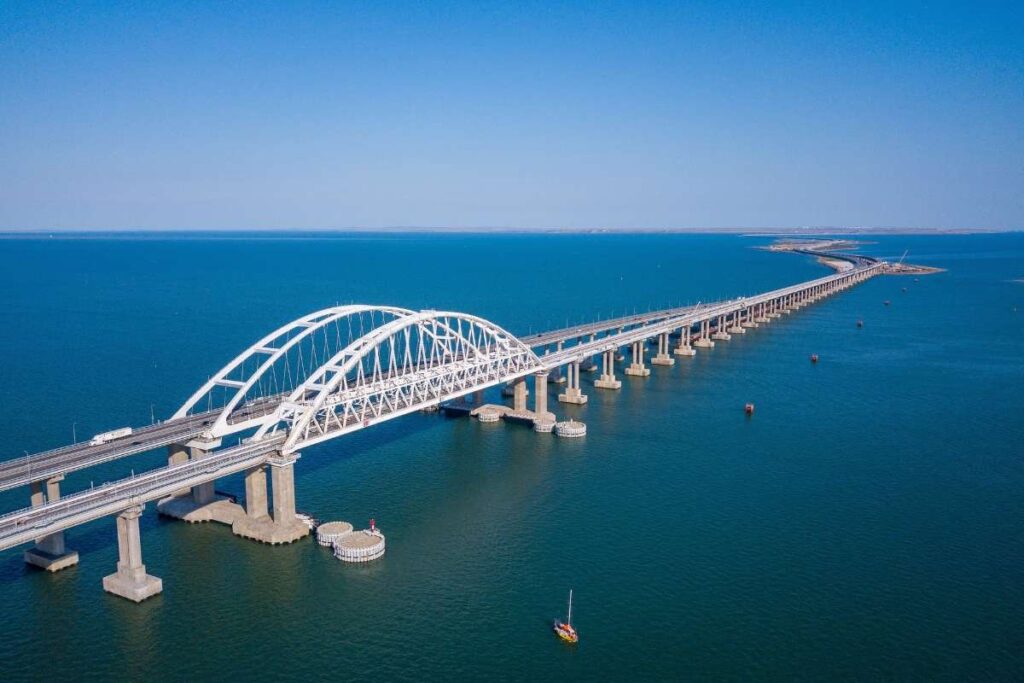
Flanked by Crimea to the west and Russia’s Taman Peninsula to the east, the Kerch Strait has long been a waterway of strategic significance. In classical geography, it marked the boundary between Europe and Asia, though later accounts placed that divide at nearby rivers such as the Don or Kuban. Control over the strait has shifted through centuries of conflict; a decisive Russian naval victory over the Ottoman Empire in 1790 during the Russo-Turkish War solidified Russian influence in the region. Today, the strait serves as a vital transit route for Russian maritime trade, particularly oil exports destined for European and Asian markets. Its geography has also made it a focal point for infrastructure projects, including a bridge connecting Crimea to the Russian mainland. Disruptions at this chokepoint can ripple through global energy markets, affecting supply chains and prices far beyond the immediate region. Russia, the world’s third-largest oil producer, averaged 10.5 million barrels per day of output in 2023, making any interruption in its export routes consequential for international markets.
Supply Reduction and Market Implications
The August 2024 strike on 21 tankers has removed a significant volume of transit capacity through the Kerch Strait, according to data compiled by the International Energy Agency. The halt affects not only crude oil shipments but also Russian exports of diesel and fuel oil, which officials confirm are crucial for European and Asian markets. The potential removal of up to 1 million barrels per day from global markets represents a substantial supply reduction. This disruption comes on top of production cuts that the Organization of the Petroleum Exporting Countries and its allies, including Russia, have maintained since 2022 to support prices. Brent crude oil prices, which averaged $82 per barrel in 2023, could spike by $5-10 per barrel if the disruption persists, according to the IEA data. European and Asian markets that rely on Russian diesel and fuel oil exports face particular exposure to the supply tightening. The US Energy Information Administration continues to assess the situation for its effects on global energy security, the record shows.
Uncertain Duration and Global Energy Security
Officials have not confirmed how long the disruption to shipping through the Kerch Strait will last. The duration remains a critical variable for energy markets. If the halt is prolonged, the projected $5-10 per barrel spike in Brent crude prices could materialize, adding to inflationary pressures in economies that depend on imported oil. Analysts are watching closely for how OPEC and its allies respond to the tightening supply picture. The Kerch Strait closure remains a focal point for analysts tracking global oil supply dynamics, underscoring the vulnerability of energy trade routes to geopolitical events. The US Energy Information Administration’s monitoring of the situation reflects broader concerns about energy security and the stability of supply chains that connect producers in the Black Sea region to consumers in Europe and Asia.




