
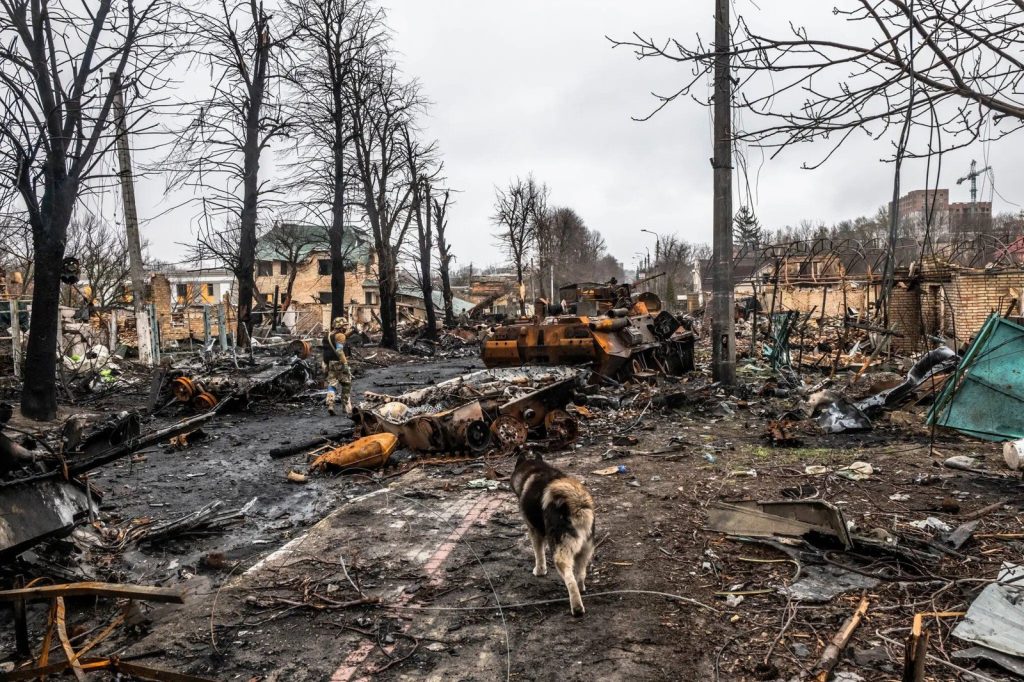
GENEVA, July 15 — Against this backdrop of grinding artillery duels and diplomatic stalemate, the search for a settlement to the Russo-Ukrainian War has become a sprawling, multi-continent endeavour, with each new mediation effort carrying the accumulated weight of earlier failures. The most substantive early talks, the Istanbul Communiqué of March 2022, saw Ukrainian and Russian delegations discuss a framework under which Kyiv would accept neutral status in exchange for binding security guarantees.
That deal collapsed weeks later, after the discovery of mass graves in Bucha in April 2022 shattered any remaining trust between the sides. What is at stake, in the corridors of power from Ankara to New Delhi, is not merely a ceasefire but the architecture of European security itself.
Turkey’s President Recep Tayyip Erdoğan has hosted several rounds of talks, securing a major success in July 2022 with the Black Sea Grain Initiative, which allowed Ukrainian agricultural exports to reach global markets. Russia withdrew from that deal in July 2023, citing unmet demands regarding its own agricultural exports.
The Shifting Mediation Landscape
As the war entered its second year, the mediation forum expanded beyond traditional European actors. Saudi Arabia hosted peace talks in Jeddah in August 2023, convening delegations from 40 countries. Notably, Russia was not invited to that gathering.
In June 2024, Switzerland hosted a Global Peace Summit, which drew participants from 92 countries; again, Moscow was absent from the table. These gatherings have highlighted a fundamental procedural divide: Ukraine and its Western allies insist that any peace framework must be built on President Volodymyr Zelenskyy’s 10-point peace formula, first presented in November 2022.
That formula demands the full withdrawal of Russian forces from all occupied territory, including Crimea, and the establishment of a tribunal to prosecute war crimes. Russia’s President Vladimir Putin has staked out an opposing set of preconditions, demanding that Ukraine recognise the annexation of four eastern and southern regions, as well as Crimea, and commit to a permanent end to NATO expansion into its neighbourhood.
The Neutral Nations’ Proposal
In March 2025, a coalition of neutral nations — led by India, Brazil, and South Africa — injected a new variable into the equation. They proposed a phased plan that would link the gradual lifting of sanctions on Russian energy exports to the implementation of a ceasefire. This initiative represents an attempt to create an off-ramp that neither side has been willing to take unilaterally.
The wider picture is one of competing visions for how a war that has killed tens of thousands, displaced millions, and reshaped global energy and food markets might finally end. The Istanbul talks showed that a negotiated settlement was once conceivable; the Bucha massacre showed how rapidly that possibility could be extinguished.
The Jeddah and Swiss conferences showed broad international appetite for a resolution, but also the difficulty of convening talks that both sides consider legitimate. Looking ahead, the key question is whether the neutral nations’ phased plan can gain traction where earlier efforts stalled. With neither army poised for a decisive battlefield breakthrough, and with winter approaching again in the northern hemisphere, the diplomatic calendar remains crowded but uncertain.
What is at stake is not just the terms of a ceasefire, but the credibility of the mediation process itself — and the question of whether any future peace can hold.




