
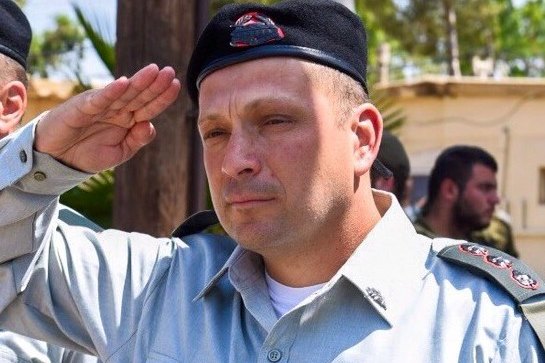
Five Israeli soldiers were killed in the Jabalia area when tanks under the command of Major General Nadav Lotan mistakenly fired on their own position. The incident, which occurred during a routine operation in a densely built‑up sector, has ignited a crisis of confidence within the Israeli Ground Forces, a branch that relies heavily on conscripts and the trust they place in commanders and equipment.
Lotan, now responsible for the ground forces, must answer for the loss of the troops under his authority. An exhaustive investigation has been launched, promising to dissect every protocol, communication log and order issued in the minutes preceding the strike. The inquiry will focus on whether a misread map, a misidentified target, a garbled radio call or a breakdown in training caused the fatal error.
The Israeli Defense Forces (IDF) trace their origins to May 26, 1948, when Defense Minister David Ben‑Gurion established the army and incorporated the Irgun and Lehi militias. Since then, the IDF has fought in the 1948 Arab–Israeli War, the 1956 Suez Crisis, the 1967 Six‑Day War and the 1973 Yom Kippur War, building a long institutional memory.
Yet, as the Jabalia incident shows, that history does not guarantee immunity from friendly‑fire mishaps. Conscription means many of the soldiers on the ground are young men serving their mandatory term rather than career professionals. Their training emphasizes reliance on commanders and the reliability of armored vehicles.
When a tank round intended for an enemy hits friendly troops, the damage extends beyond the immediate loss of life; it erodes morale and undermines the confidence needed for units to advance in complex terrain. Jabalia’s narrow streets and limited visibility create an environment where distinguishing friend from foe is especially challenging.
The official statement describing the incident as highlighting “the risks and complexities of military operations in the region” underscores the difficulty of conducting precise attacks in such conditions. Internationally, Israel continues to receive diplomatic backing, notably from the United States, while facing hostility from regional actors such as Iran. However, diplomatic support cannot rectify shortcomings in fire‑control procedures or command oversight. The families of the five fallen soldiers will receive formal condolences and military support, but the broader institutional impact is more profound.
Each friendly‑fire episode chips away at the perception that the IDF’s training and discipline are infallible. For a force that depends on the belief that its leaders and equipment will not turn on its own troops, that belief is a crucial adhesive.
If confidence wanes, hesitation and fear may replace decisive action, as soldiers could begin to second‑guess orders and the intentions of supporting armor. The upcoming investigation, therefore, is not merely a procedural exercise; its findings will determine whether the ground forces can restore trust and prevent future fratricide. Major General Lotan faces scrutiny from both military superiors and the public.
The outcome of the probe will test the IDF’s capacity to learn from the tragedy and to demonstrate that it can safeguard its own personnel while continuing to conduct operations in hostile environments.




