
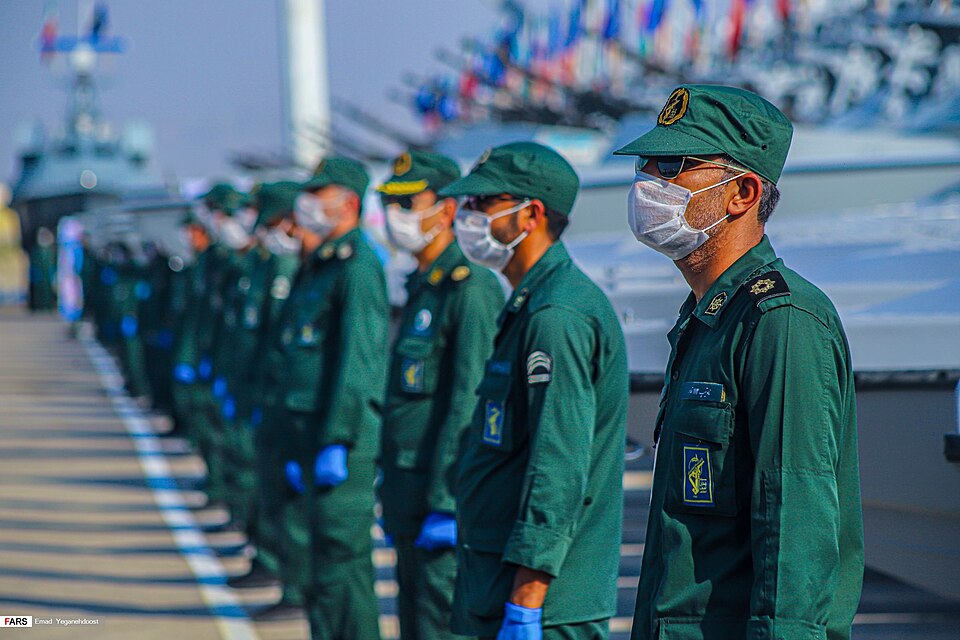
TEHRAN, July 12 — For a force that operates small speedboats and fast attack craft, the Islamic Revolutionary Guard Corps Navy casts an outsized shadow over global energy markets. That’s the practical upshot of understanding who this branch is and what it does, especially right now as tensions in the Persian Gulf simmer. The IRGC Navy isn’t Iran’s regular navy.
It’s a separate military branch, established in 1985, that reports directly to Supreme Leader Ayatollah Ali Khamenei. Think of it less like the US Navy and more like a dedicated paramilitary force with a very specific mission: protect the Islamic system using whatever asymmetric tactics work.
The regular Artesh Navy handles blue-water operations; the IRGC Navy owns the shallow, narrow waters of the Persian Gulf and the Strait of Hormuz.
What it operates and where it sits
Its fleet consists of small, fast attack craft, anti-ship missiles, and naval mines. The signature tactic is a swarming attack — think dozens of speedboats rushing a much larger vessel from all directions at once. It’s a strategy designed to overwhelm rather than outgun.
The force has about 20,000 personnel and operates from bases at Bandar Abbas, Qeshm Island, and Larak Island. All three sit right near the Strait of Hormuz, the narrow chokepoint through which about a fifth of the world’s oil passes.
Rear Admiral Alireza Tangsiri has commanded the IRGC Navy since 2019. He has previously threatened to close the strait, a move that would spike global oil prices and trigger immediate military response from the US and its allies. In plain terms, a small-boat navy based on islands near a strait can cause outsized disruption.
A track record of seizures
This isn’t theoretical. In 2019, the IRGC seized the British-flagged tanker Stena Impero in the strait and held it for two months. The seizure followed the UK’s detention of an Iranian tanker off Gibraltar.
The IRGC Navy’s ability to grab a commercial vessel in international waters, using speedboats and helicopters, demonstrated exactly what its asymmetric capabilities can do. The practical upshot for shipping companies: transiting the strait carries real risk when the IRGC decides to act.
Budget and chain of command
The IRGC as a whole — including its ground, air, and naval branches — has an estimated annual budget of $10-15 billion. It was established on April 22, 1979, after the Islamic Revolution, with the explicit mission of protecting the Islamic system. That mission, combined with its direct reporting line to the Supreme Leader, means the IRGC Navy can act without approval from Iran’s elected president or foreign ministry.
When Tangsiri threatens to close the strait, he isn’t bluffing for domestic politics — he’s speaking for a force that has both the capability and the command authority to try it. What to watch next: whether the IRGC Navy escalates its harassment of commercial shipping in the strait, and how the US Navy’s Fifth Fleet, based in Bahrain, responds.
The small boats are still there. The missiles are still on the islands. And the Strait of Hormuz remains the world’s most vulnerable energy chokepoint.




