
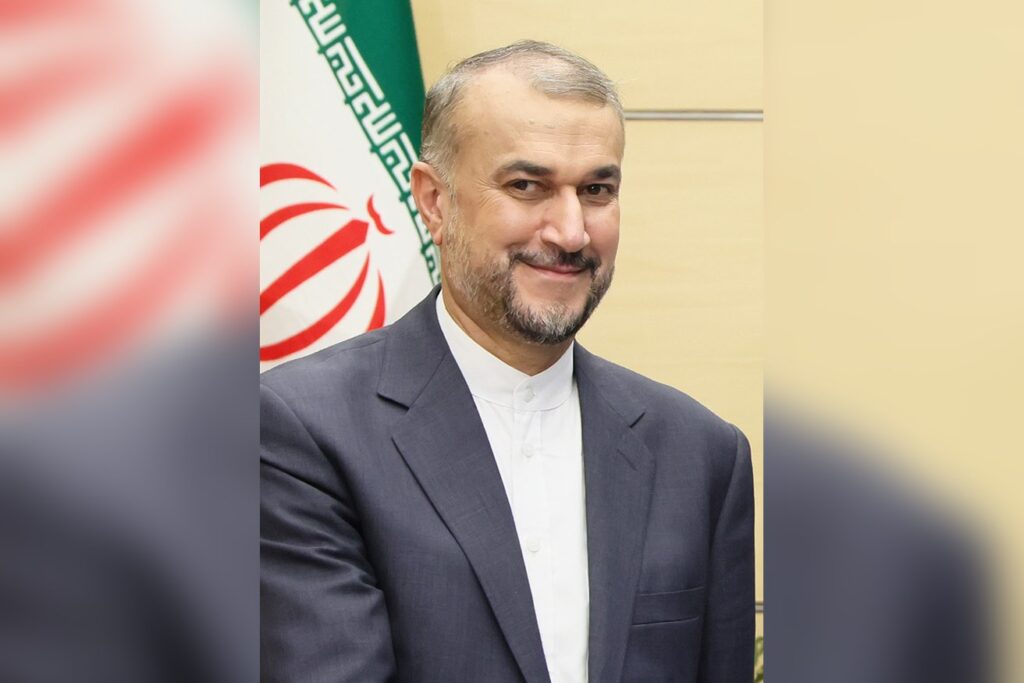
TEHRAN, July 11 — Hossein Amir-Abdollahian has not yet responded to a U.S. ultimatum demanding he publicly renounce attacks in the Strait of Hormuz by Saturday, leaving a tense silence as the deadline approaches. The Iranian foreign minister is a figure whose career has been shaped by hardline ideology and deep institutional ties to Iran’s security apparatus. Born in 1964 in Damghan, a city in northern Iran, he earned a Ph.D. in international relations from the University of Tehran.
That academic credential, however, tells only part of the story.
A career forged in security and diplomacy
Amir-Abdollahian’s professional path began in the Basij militia, the volunteer paramilitary force that operates under Iran’s Islamic Revolutionary Guard Corps (IRGC). His service there remains a defining element of his political identity. From 2007 to 2010, he served as Iran’s ambassador to Bahrain, a small but strategically important island kingdom in the Persian Gulf.
He then spent five years as Deputy Foreign Minister for Arab and African Affairs, from 2011 to 2016, a role that placed him at the center of Iran’s regional ambitions. President Ebrahim Raisi appointed him Minister of Foreign Affairs on August 25, 2021.
The appointment signaled a continuation of the Raisi administration’s uncompromising posture toward the West. The U.S. Treasury sanctioned Amir-Abdollahian in 2019 for his role in human rights abuses. That designation came years before he assumed his current post, but it has followed him into the highest levels of Iranian diplomacy.
The nuclear talks and the Strait of Hormuz
Amir-Abdollahian has been a hardline negotiator in the Joint Comprehensive Plan of Action talks, the nuclear deal that has been a recurring flashpoint between Iran and Western powers. Those negotiations collapsed in 2022, and no meaningful progress has been reported since. His rhetoric on the Strait of Hormuz has been particularly pointed.
He has previously threatened to close the waterway, a chokepoint through which a significant portion of the world’s oil supply passes. Such a move would have immediate and severe consequences for global energy markets, and the current U.S. ultimatum appears designed to force him to publicly walk back any such threat.
As of this writing, the foreign minister has made no public statement addressing the American demand. The deadline is Saturday.
A pattern of anti-Western rhetoric
Amir-Abdollahian is known for his anti-Western rhetoric, a stance that resonates with the hardline base of Iran’s political establishment. He has consistently framed Iran’s foreign policy as a matter of resistance against American and European influence in the Middle East. His background in the Basij and his tenure as deputy foreign minister during a period of intense regional conflict — including the Syrian civil war and the rise of ISIS — have shaped a worldview that sees diplomacy as an extension of confrontation.
For families in the region and beyond, what this means is a foreign minister who has shown little inclination toward compromise. The Strait of Hormuz threat is not new.
Iranian officials have periodically raised the possibility of closing the strait in response to sanctions or military pressure. But a public renunciation, if it comes, would represent a significant concession — one that Amir-Abdollahian’s hardline record suggests he would be reluctant to make. The coming hours will determine whether the foreign minister chooses silence or a statement that could reshape the immediate trajectory of U.S.-Iran tensions.
For now, the Strait of Hormuz remains open, and the world watches for a response that has not yet come.




