
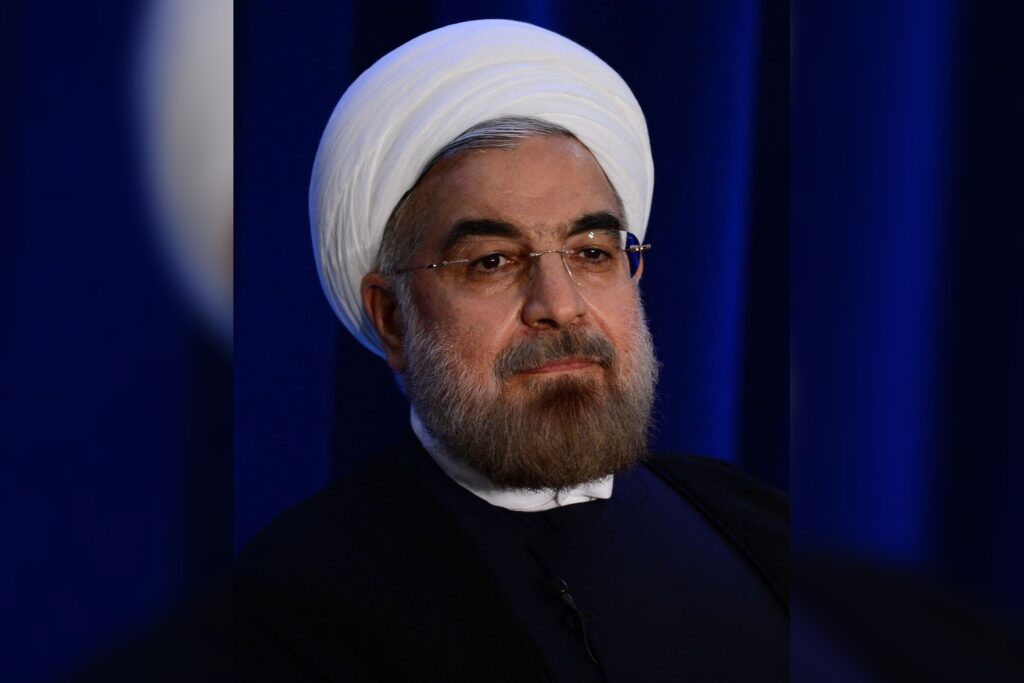
TEHRAN, July 8 — Former Iranian President Hassan Rouhani, a key architect of the JCPOA, remains an influential figure in Iranian politics even after his term ended in August 2021. Rouhani, first elected in 2013 and re-elected in 2017, presided over a period of cautious engagement with the West, a stark contrast to the harder line taken by his successor, current President Ebrahim Raisi. Rouhani’s legacy is deeply tied to the JCPOA, the landmark agreement that limited Iran’s nuclear program in exchange for sanctions relief.
The deal came under severe strain when U.S. President Donald Trump, who took office in January 2017, pursued a ‘maximum pressure’ campaign against Iran that began in 2018. This policy shift, pursued by the Trump administration, dramatically altered the landscape Rouhani had helped create.
The current U.S. administration, with President Trump back in office and Secretary of State Marco Rubio appointed in 2025, continues to navigate the complex relationship with Tehran. The National Security Advisor, Mike Waltz, briefed the press on April 4, 2025, though details of that briefing remain part of the ongoing diplomatic picture. U.S. policy toward Iran has remained a central focus of American foreign policy, with the ‘maximum pressure’ approach continuing to define the bilateral dynamic.
The Raisi era and a harder line
President Ebrahim Raisi, who succeeded Rouhani in 2021, has adopted a more confrontational posture toward the West. This shift has been accompanied by continued diplomatic efforts, with Iranian Foreign Minister Hossein Amir-Abdollahian serving as a key negotiator in discussions with international partners. The change in leadership in Tehran has not, however, closed all channels of communication.
Qatari Emir Tamim bin Hamad Al Thani played a significant mediating role, brokering a ceasefire in March 2025. Qatar’s position as a mediator is notable given its history of hosting U.S. military bases, including Al Udeid Air Base, since 2003.
This dual role — hosting American forces while facilitating talks with Iran — underscores the complex geopolitical dynamics in the region.
Looking ahead
For patients and observers watching the Iran nuclear file, the encouraging part is that diplomatic channels remain open, even if progress has been slow. The involvement of regional mediators like Qatar offers a potential path forward, though the fundamental disagreements between Washington and Tehran remain substantial. Patients following this story should talk to their doctor — or in this case, consult reliable news sources — to stay updated on developments that could affect regional stability and global oil markets.
The interplay between Rouhani’s legacy of engagement and Raisi’s harder line will likely continue to shape Iran’s foreign policy for years to come.




