
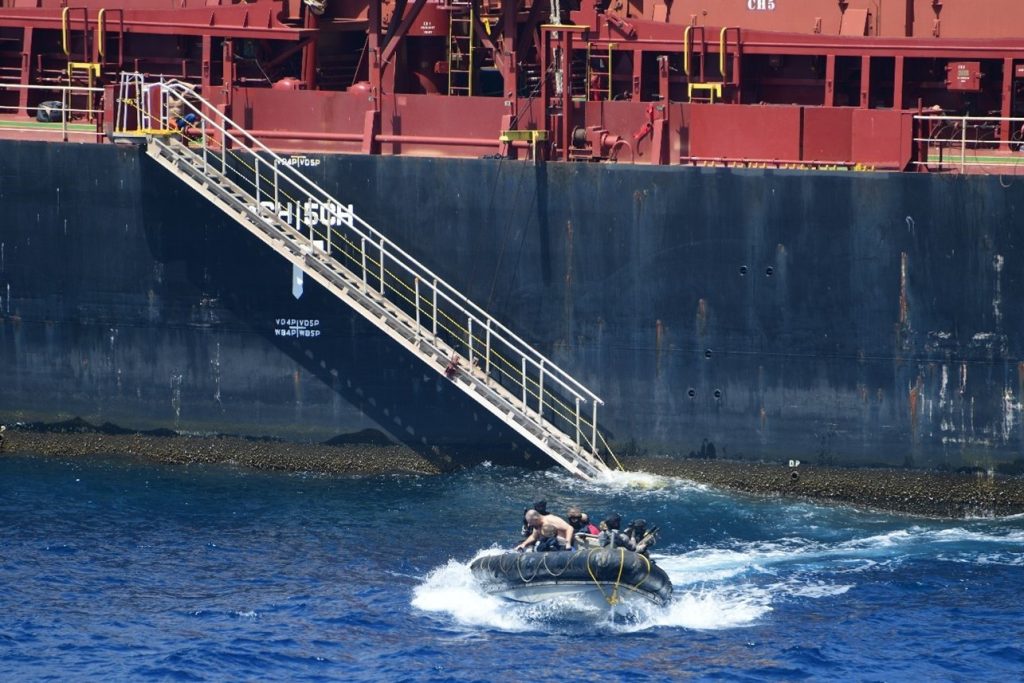
The recent collision between an Indian Navy vessel and a passenger ferry near Mumbai, which left at least fifteen people dead, points to a systemic issue rather than an isolated incident. India’s coastal waters rank among the world’s most congested, with merchant ships, fishing trawlers, naval vessels, and passenger ferries all navigating the same constrained sea lanes.
The Indian Navy’s operational footprint has grown significantly in recent years. Its vessels now conduct routine missions spanning from the Persian Gulf to the South China Sea, and from the Horn of Africa to the western Mediterranean. This global reach requires constant movement and transit, which introduces continuous risk. As a blue-water force, the navy does not remain in port; it projects power, safeguards energy lifelines, and protects trade routes. However, this global posture carries a local cost.
Every time a naval craft departs harbor, it enters a maritime environment already dense with civilian traffic. The waters off Mumbai function as a chokepoint rather than open ocean. Ferries, cargo ships, and fishing boats operate on schedules that do not always coordinate with naval movements. This accident highlights what naval planners recognize but seldom state publicly: the margin for error in these waters is extremely narrow.
The navy maintains safety protocols and has a strong safety record. Its crews receive extensive training. Yet training cannot overcome the fundamental physics of a collision. When a naval craft and a passenger ferry meet at the wrong angle and speed, the outcome is something no procedure can fully prevent. The ongoing investigation will likely examine specific procedures—who sighted whom first, what radio communications occurred, and what course corrections were ordered. While these details matter for legal proceedings, they may obscure the broader reality.
India’s maritime ambitions are expanding faster than the supporting infrastructure. The navy faces demands to do more with existing resources: more patrols, more deployments, more presence. Each additional mission increases the statistical probability of an incident. While navy operations in distant waters like the South and East China Seas, the Strait of Malacca, and the Horn of Africa occur far from crowded coastal zones, the ships bound for those regions must first leave port and traverse the same congested lanes where ferries carry passengers and fishermen work their nets.
This accident will prompt a review. The navy will examine its own protocols and how civilian traffic is managed in Mumbai’s approaches. It may strengthen coordination with port authorities or adjust transit routes and times. These are sensible but incremental steps. They do not resolve the structural tension between a navy requiring freedom of movement and a civilian maritime economy that cannot be displaced.
That tension will persist as long as India’s naval reach continues growing while coastal waters remain as congested as they are today. The fifteen fatalities will be cited in reports and remembered in families. For the navy, this number also serves as a signal: the cost of operational tempo can be measured in lives, not just budgets. The navy’s commitment to protecting India’s economic interests and energy security is not in doubt. However, this incident raises a blunt question that no policy paper answers clearly: how much risk is acceptable in the waters closest to home? The answer will shape the navy’s path forward.




