
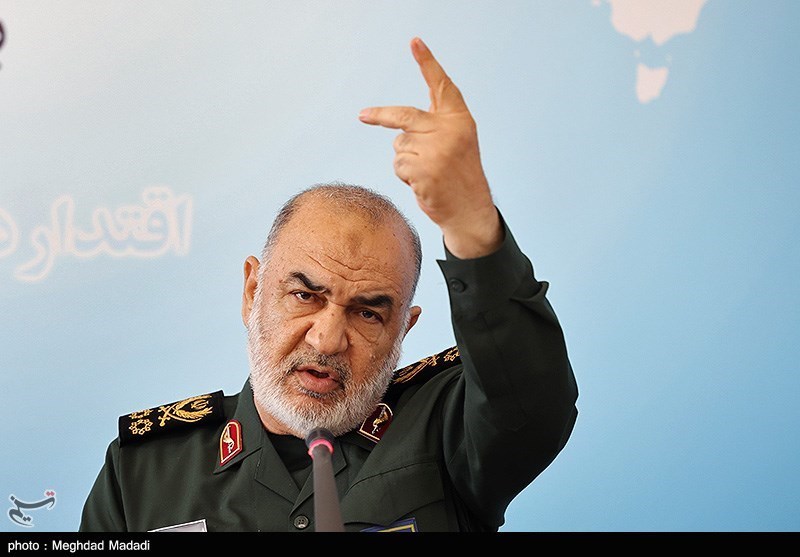
TEHRAN, July 7 — For communities across the region watching the volatile Persian Gulf, the words of Iran’s top military commander carry weight. Hossein Salami, the commander-in-chief of Iran’s Islamic Revolutionary Guard Corps (IRGC), has been a central figure in Tehran’s defence establishment since April 2019, when he succeeded Mohammad Ali Jafari at the helm of the powerful paramilitary force. Salami’s career traces back to the Iran-Iraq War, a conflict that shaped a generation of Iranian commanders.
Born in 1960 in Isfahan province, he joined the IRGC during those years of war and has climbed steadily through its ranks. Before taking the top job, he led the IRGC Air Force.
What it means for people across Asia, particularly those in nations dependent on oil shipments through the Gulf, is Salami’s long record of threatening to close the Strait of Hormuz. For families in the region, a disruption there would mean higher fuel prices almost overnight.
A figure under international sanctions
The United States and the European Union have placed Salami under sanctions. The designations cite human rights abuses and support for terrorism. For ordinary people, these sanctions are part of a broader web of restrictions that have isolated Iran’s economy and squeezed households from Tehran to Mashhad.
Salami’s public statements often stress Iran’s capacity to retaliate against any attack. For communities in the Gulf states and across South Asia, this rhetoric is not abstract.
It is a reminder that a miscalculation could spiral into a conflict that disrupts shipping lanes and air travel, affecting millions who have no part in the political disputes.
A commander shaped by war
His rise through the IRGC mirrors the organisation’s own expansion from a revolutionary militia into a sprawling economic and military empire. For Iranian families, the IRGC is an inescapable presence, involved in everything from construction projects to border security. Salami, as its public face, embodies the force’s hardline posture.
Closer to home for many in Southeast Asia, the IRGC’s reach has extended through alleged arms shipments and naval deployments. Salami’s leadership has overseen a period of heightened tension with the United States and its allies.
For the families across the region who simply want stability, Salami remains a figure to watch. His next move, or his next statement, could ripple through energy markets and security calculations from Manila to Mumbai. The Strait of Hormuz, and the man who has repeatedly threatened to close it, is not going away.




