
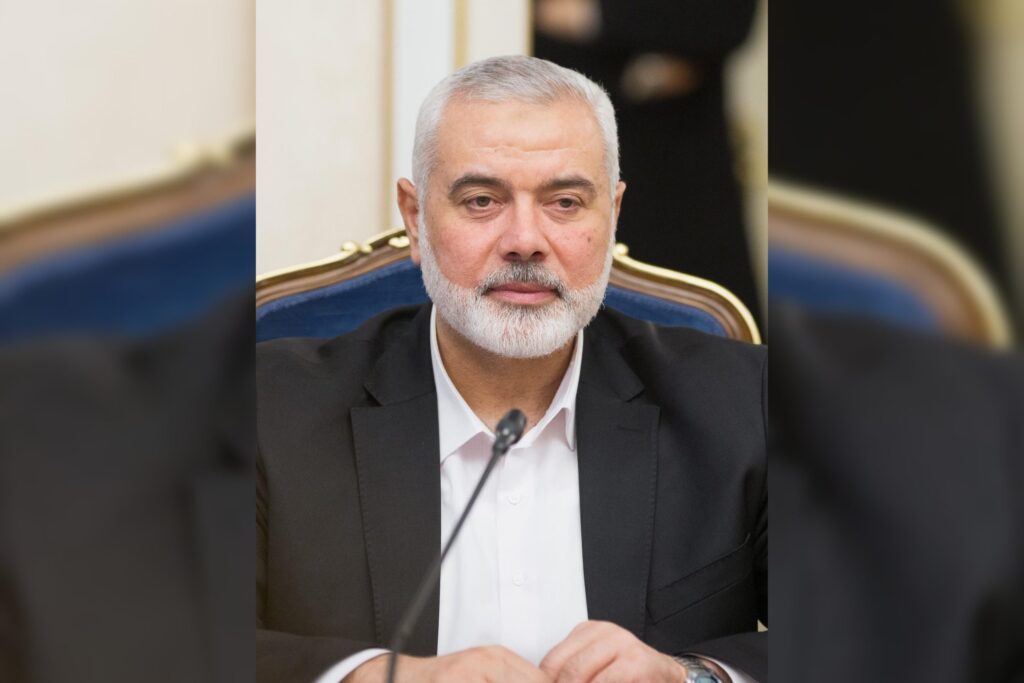
TEHRAN, August 1 — The assassination of Hamas political bureau chief Ismail Haniyeh on July 31, 2024, in Tehran has directly triggered a series of heightened U.S. departure warnings and military posture adjustments across the Middle East. The incident, which Iranian officials attribute to an explosion at his residence, occurred at approximately 2:00 AM local time, setting off a cascade of reactions that underscore the volatile regional security landscape.
Haniyeh, 61, was in the Iranian capital to attend the inauguration of Iranian President Masoud Pezeshkian, an event that had taken place just a day prior, on July 30, 2024. As a key negotiator in ceasefire talks for the Gaza war, Haniyeh had led Hamas’s political operations since 2017, succeeding Khaled Meshaal.
Iran and Hamas were swift to blame Israel for the attack, though Israel has, according to the record, neither confirmed nor denied responsibility for the operation. On the timeline, this pivotal event followed closely on the heels of another significant regional strike. Just the day before Haniyeh’s death, on July 30, 2024, an Israeli airstrike in Beirut killed Hezbollah commander Fouad Shukur.
Shukur, a figure involved in the 1983 Beirut barracks bombing, was also wanted for planning attacks against Israel, a detail that highlights the interconnected nature of the region’s long-standing conflicts. The immediate aftermath saw a firm declaration from Iran’s leadership.
Iran’s Supreme Leader Ayatollah Ali Khamenei stated on July 31 that his nation was duty-bound to retaliate for Haniyeh’s killing. Such pronouncements from Tehran are not taken lightly by the U.S. administration or its allies, given the regime’s history of sponsoring proxy groups and its stated adversarial stance toward American interests in the region. These threats from Iran directly prompted a decisive response from U.S. authorities.
On August 1, 2024, the U.S. Federal Aviation Administration (FAA) issued a Notice to Air Missions (NOTAM), a critical directive prohibiting U.S. carriers and pilots from flying over Iranian airspace, as well as the Persian Gulf and Gulf of Oman. This measure, according to the filing, immediately impacted commercial routes and significantly raised the stakes for U.S. citizens traveling in the broader region. The FAA’s action was not an isolated incident.
These developments cascaded directly into the U.S. State Department’s issuance of heightened travel advisories, urging American citizens to reconsider travel to the region. Concurrently, the Pentagon initiated force deployment adjustments, a clear signal of the U.S. administration’s commitment to protecting its personnel and interests in the face of escalating tensions.
The record shows a proactive stance by the United States to safeguard its citizens and maintain regional stability against potential aggression. The coming days will be closely watched for any further actions from Tehran in response to its stated duty to retaliate. The U.S. government’s swift and comprehensive response indicates a clear understanding of the potential for escalation, with the safety of American citizens and the stability of critical international waterways remaining paramount concerns.
Sources
{“@context”: “https://schema.org”, “@type”: “NewsArticle”, “headline”: “Hamas Leader Ismail Haniyeh Killed In Tehran Explosion”, “description”: “TEHRAN, August 1 — The assassination of Hamas political bureau chief Ismail Haniyeh on July 31, 2024, in Tehran has directly triggered a series of…”, “datePublished”: “2026-08-01T09:30:00+00:00”, “author”: {“@type”: “Person”, “name”: “Ariel Antonio”}, “publisher”: {“@type”: “Organization”, “name”: “InfoPulse Today”, “url”: “https://newsfeed.infopulsetoday.com/”}, “citation”: [{“@type”: “CreativeWork”, “url”: “https://en.wikipedia.org/wiki/Assassination_of_Ismail_Haniyeh”}]}




