
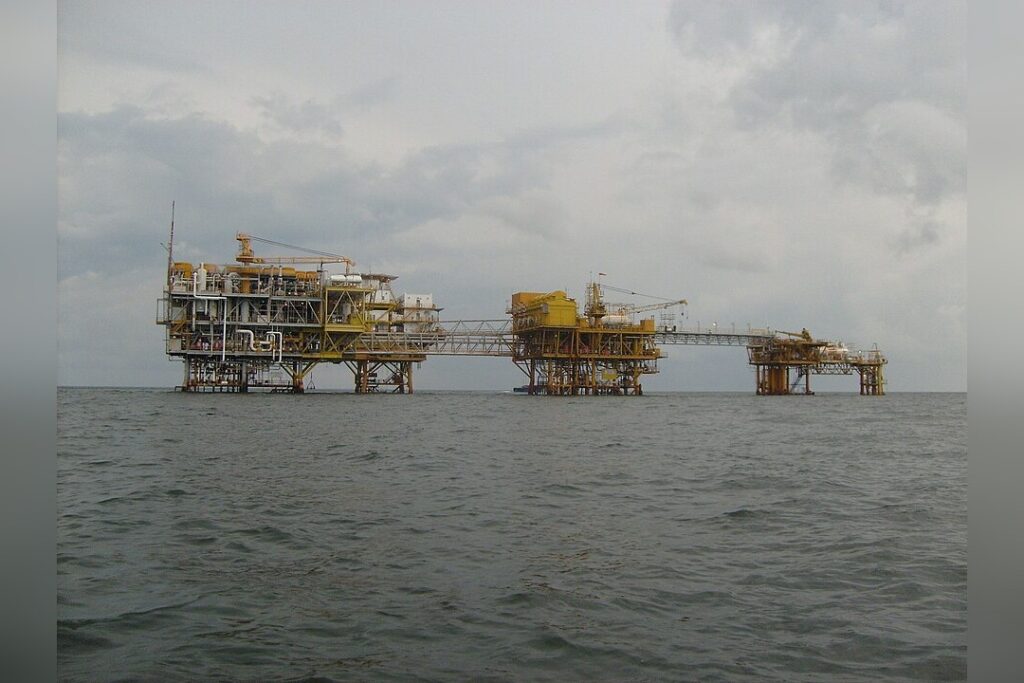
WASHINGTON, July 25 — An alleged leak of sensitive imagery that could help Iran target U.S. military assets in the Persian Gulf isn’t just a defense story. It’s an energy story, and the two are tangled tighter than most people realize. In plain terms, the Persian Gulf holds approximately 60% of the world’s proven oil reserves and roughly 40% of global natural gas reserves.
Any intelligence that sharpens Iran’s ability to strike U.S. forces in that neighborhood carries a price tag — one that shows up in crude prices and, ultimately, at the bottom of the global energy ledger. Think of the Strait of Hormuz like a single-lane bridge for oil tankers.
It is just 33-kilometer-wide at its narrowest point, yet about 20% of the world’s oil transits squeeze through it every day. Iran has threatened to close that strait during past confrontations. The practical upshot: if that chokepoint gets blocked — or even seriously threatened — the math on global supply changes instantly.
A recent reminder
The market has seen this movie before. In 2019, attacks on facilities reduced output by 5.7 million barrels per day. Crude prices spiked sharply.
A disruption in Gulf exports on that scale — or larger — is not a hypothetical in this context. The alleged imagery sharing, if confirmed, effectively gives Iran a clearer picture of where to aim.
That doesn’t just raise the risk of a military confrontation; it raises the odds of an energy supply shock. For the United States, the exposure is real but not total. The Gulf accounted for about 16% of total U.S. petroleum imports in 2022.
That is not a majority, but it is a significant slice, and a price spike from a Gulf disruption would ripple through global markets regardless of where American barrels come from.
Economic risk, not just military risk
The source material here is the alleged imagery sharing itself — the claim that intelligence has been passed in a way that enhances Iran’s ability to target U.S. military assets in the Gulf. The economic risk is the second-order effect: a destabilized energy market. The Strait of Hormuz, with its 33-kilometer width and 20% of global oil transits, is the lever.
Any credible threat to that lever moves prices. What to watch next: whether the intelligence community confirms or denies the sharing, and whether any subsequent U.S. posture change in the Gulf affects the risk premium baked into crude futures.
For now, the numbers on the page — 60% of reserves, 40% of gas, 16% of U.S. imports, one 33-kilometer strait — tell a story that every energy analyst is already reading.




