
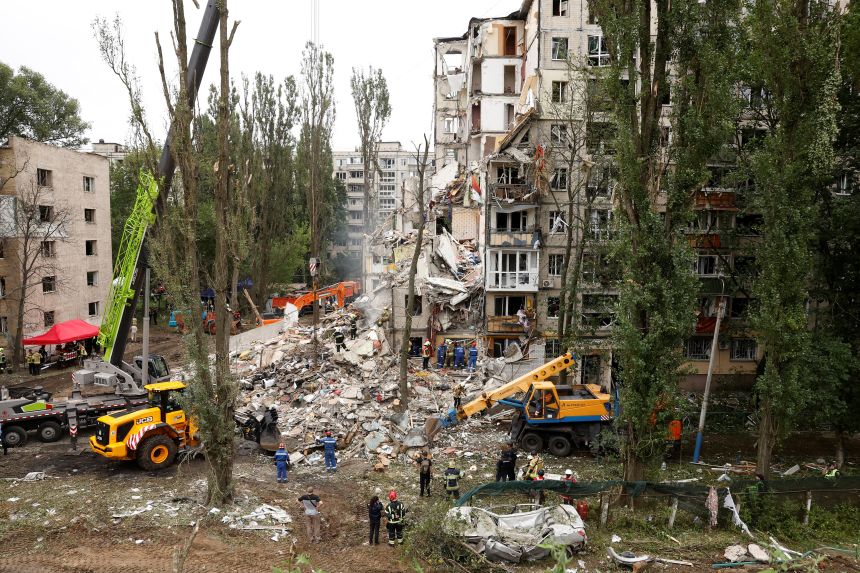
European Union officials touched down in Kyiv on Thursday, hours after a Russian missile hit an apartment block in the Donetsk‑province city of Kramatorsk. The strike, which occurred late on Wednesday, left at least three people dead and wounded roughly twenty others as rescue crews worked through the rubble through the night. The visit comes almost a year after Russia’s full‑scale invasion began on 24 February.
Despite Moscow’s repeated denials, attacks on civilian structures have remained a hallmark of the Russian campaign, underscoring the continuing human cost of the war for Ukraine’s population. Ukrainian President Volodymyr Zelenskyy is slated to meet the EU delegation ahead of a summit scheduled for Friday.
The group includes European Commission President Ursula von der Leyen and EU foreign policy chief Josep Borrell. In a statement, Borrell said the purpose of the trip is to deliver the EU’s strongest possible message of support to all Ukrainians defending their country. Von der Leyen highlighted that she has returned to Kyiv four times since the invasion began, noting her last major visit was in October 2021, just before hostilities escalated.
Two core topics dominate the agenda. First, Kyiv’s ongoing anti‑corruption drive, which Zelenskyy has pushed forward by dismissing officials he deems dishonest for a second time this week.
Reducing graft is a prerequisite for any future EU membership, making the issue a priority for both Kyiv and Brussels. Second, the discussion will address Ukraine’s long‑term path toward accession to the 27‑nation bloc, a goal that hinges on meeting the bloc’s political and economic standards. While political reforms are under the spotlight, military assistance remains a pressing concern as winter recedes and both sides anticipate new offensives.
Kyiv has asked for additional Western weapons, including fighter aircraft, to strengthen its defensive and offensive capabilities. The United States, however, has ruled out supplying F‑16s, focusing instead on artillery, armored vehicles, air‑defence systems and extensive training for Ukrainian troops.
U.S. Defense Secretary Lloyd Austin, speaking from the Philippines, said American aid aims to equip Ukraine with the tools needed for a spring counter‑offensive, stressing that the United States seeks to help without becoming a direct combatant.
Von der Leyen used her social‑media platform to reaffirm Europe’s unwavering backing of Ukraine, stating, “We are here together to show that the EU stands behind Ukraine as firmly as ever, and to strengthen even more our cooperation and assistance.” Since the war’s outset, the EU has allocated roughly €50 billion (about $55 billion) to Kyiv, funding both the war effort and reconstruction of damaged infrastructure. Borrell echoed this sentiment, emphasizing Europe’s solidarity with Ukraine from the beginning and its commitment to support the country’s victory and rebuilding.
The presence of top EU officials in Kyiv signals deepening ties between Europe and Ukraine, even as the conflict strains political and financial resolve across the continent. Both Kyiv and Brussels continue to stress that eliminating corruption and meeting EU standards are essential steps toward eventual membership, while also preparing for an expected intensification of fighting in the coming spring.




