
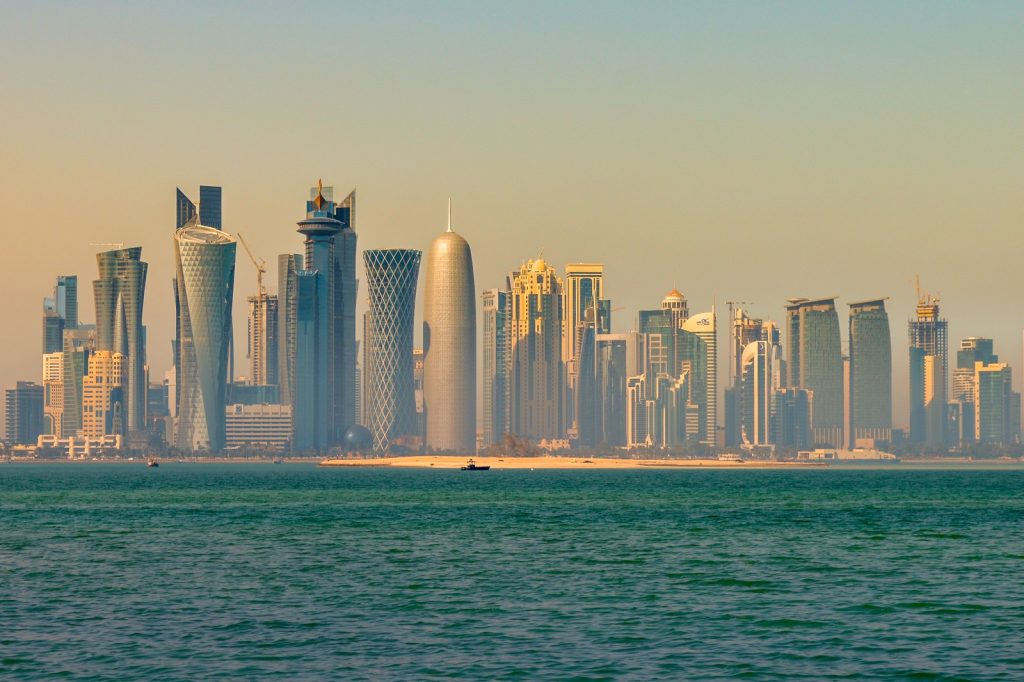
Doha Prepares for Talks as Oil Markets Eye Strait Reopening
DOHA — The Qatari capital is bracing for the arrival of Iranian and American technical teams. They are expected in the coming days to hash out the nuts and bolts of an interim peace deal. A source with knowledge of the discussions told Reuters on Monday that mediators have already set up communications channels.
The goal: keep any fresh incidents from blowing up the fragile accord. It was a near thing.
Tit-for-tat strikes over the weekend came close to derailing everything. Now, technical talks are set to continue — though a senior Iranian official cautioned that those meetings are not yet confirmed. The uncertainty hangs over a city accustomed to hosting high-stakes diplomacy.
The deal itself is a 14-point Memorandum of Understanding signed June 17. It aims to end four months of fighting.
Both sides agreed to stop hostilities and reopen the Strait of Hormuz. That narrow waterway carries a fifth of the world’s oil and liquefied natural gas. When it closed, oil prices shot above $100 a barrel.
Global inflation spiked again. For U.S. President Donald Trump, it meant rising prices at the pump months before midterm elections — a political headache. Iranian President Masoud Pezeshkian called the accord “a great victory for the Iranian people.” State media quoted him Monday saying $6 billion of $12 billion in frozen assets held in Qatar would be released and returned to Iran.
He also said the deal lifted sanctions on Iran’s oil and petrochemical sectors. A U.S. official confirmed Sunday that both sides had agreed to stop hostilities.
The 14-point pact lays out 60 days for deeper talks on harder issues. Iran’s nuclear program is at the top of that list. Both sides have given conflicting accounts of what was actually agreed.
That gap is why the technical meetings matter. They are where vague promises become concrete steps — or where they fall apart.
For now, the Strait of Hormuz remains the immediate focus. Reopening it would ease oil prices. That would calm global markets and give Trump some breathing room before the midterms.
The political stakes are plain. So are the economic ones. Oil above $100 a barrel feeds inflation everywhere.
It hits households at the grocery store and the gas station. The deal’s success or failure will ripple far beyond Doha.
The source said mediators have established channels to de-escalate any incidents. That suggests both sides know how fragile this is. One spark could undo weeks of work.
The weekend strikes showed how close that spark came. Now the technical teams have to prove they can turn a signed document into a functioning ceasefire.
Observers watching this closely see reason for caution. The conflicting accounts from Tehran and Washington are not a good sign. Neither is the Iranian official’s denial that technical meetings are confirmed.
But the fact that both sides are still talking — and that Qatar is hosting them — counts as progress. The alternative is a return to open conflict and a closed strait. For now, Doha waits.
The technical teams have their work cut out. The world’s oil supply hangs on what they decide.




