
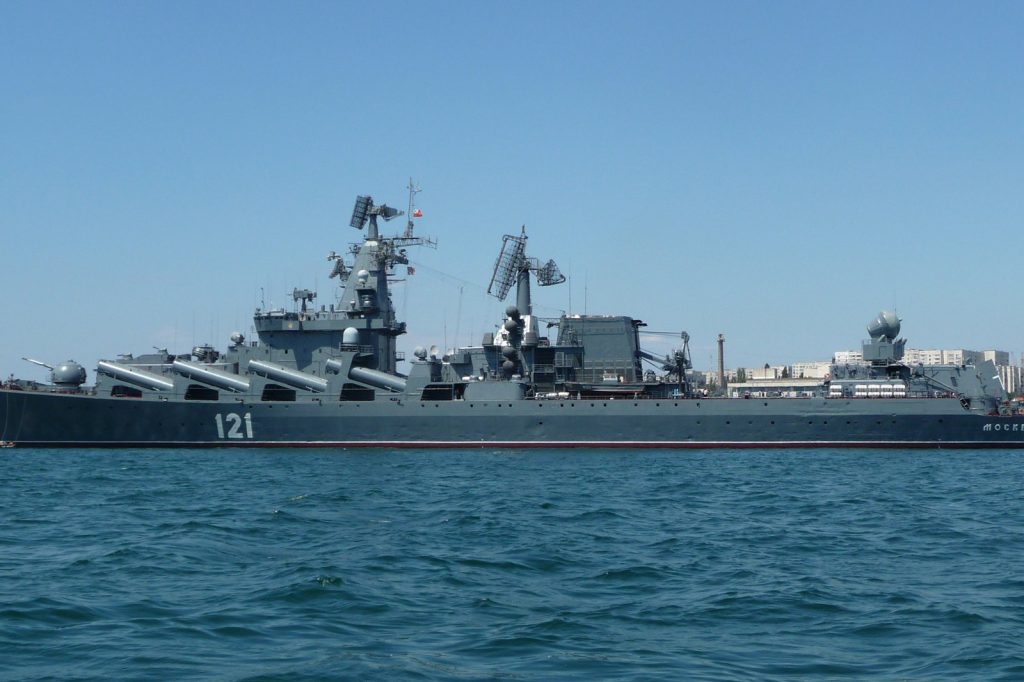
KIEV, July 9 — Ukraine claims to have destroyed or damaged at least 24 vessels of Russia’s Black Sea Fleet since the full-scale invasion began on February 24, 2022. The tally includes the fleet’s flagship, the Moskva, sunk on April 14, 2022. The claim is broad, and independent verification of all individual strikes is not possible.
The list of confirmed or claimed losses is specific. The landing ship Saratov was sunk on March 24, 2022.
The Caesar Kunikov went down on February 14, 2024. The Novocherkassk, another landing ship, was damaged on December 26, 2023. The submarine Rostov-on-Don was damaged on September 13, 2023.
Several patrol boats and missile corvettes are also among the losses. The catch is that these figures, while dramatic, represent a cumulative Ukrainian claim over more than four years of war.
On closer reading, the fleet has lost approximately one-third of its pre-war strength. That is a significant operational degradation for a force that was meant to project power across the Black Sea and support land operations in southern Ukraine. The mechanics here are straightforward.
The fleet has been forced to relocate most of its remaining major combatants from Sevastopol, its traditional home port in occupied Crimea, to Novorossiysk, a port in Russia’s Krasnodar Krai. The move is a direct response to Ukrainian drone and missile attacks that made Sevastopol untenable for high-value assets. Novorossiysk is less vulnerable to these attacks, but the relocation limits the fleet’s operational reach.
Ships based further east have longer transit times to potential engagement zones, reducing their ability to interdict shipping or support amphibious operations. The Ukrainian Navy has also claimed to have damaged the Kerch Strait Bridge on multiple occasions, including in July 2023 and August 2024.
The bridge is a critical logistics link for Russia’s military operations in Crimea and southern Ukraine, and its repeated targeting is part of a broader campaign to degrade Russian supply lines and naval basing infrastructure.
What the numbers mean
The claim of at least 24 vessels destroyed or damaged is a cumulative total. It includes combat vessels and support craft. The fleet’s losses are not just a matter of sunk ships; damaged vessels that require extended repairs also reduce the fleet’s effective strength.
The relocation to Novorossiysk is a defensive measure that acknowledges the vulnerability of the original basing arrangement. Independent verification of all claims is not possible.
This is a war zone, and both sides have incentives to inflate or downplay losses. What is clear from the pattern of Ukrainian strikes is that the Black Sea Fleet has been forced to operate under constraints it did not face at the start of the invasion. The loss of the Moskva, the flagship, was a symbolic and practical blow.
The sinking of landing ships like the Saratov and Caesar Kunikov reduces Russia’s ability to conduct amphibious assaults, a capability that was central to the initial invasion plans for the southern coast.
Operational consequences
The fleet’s reduced presence in Sevastopol has implications beyond the naval balance. The port is a key node for Russian logistics in Crimea. With major combatants moved to Novorossiysk, the fleet’s ability to protect shipping lanes and project power into the western Black Sea is diminished.
The Ukrainian Navy’s campaign against the Kerch Strait Bridge, if successful, would further complicate Russian logistics by threatening the only direct land link between Russia and Crimea. The fleet has lost approximately one-third of its pre-war strength.
That is a measurable degradation. The remaining vessels are now based further from the front lines, which limits their utility for close support of ground operations. The catch is that Novorossiysk, while safer, is not immune to attack.
Ukrainian long-range drones and missiles have demonstrated the ability to strike targets deep inside Russian territory.
What to watch next
The key question is whether Ukraine can sustain this tempo of strikes against the Black Sea Fleet and its supporting infrastructure. The fleet has been forced to adapt, but it retains a core of major combatants. The relocation to Novorossiysk buys time and reduces immediate risk, but it does not solve the underlying vulnerability.
The Ukrainian Navy has shown a capacity for innovation in targeting, using drones and missiles in ways that were not anticipated at the start of the war. The damage to the Kerch Strait Bridge, if confirmed, would represent a further escalation in the campaign to isolate Crimea.
The bridge is a strategic asset for Russia, and its repeated targeting suggests that Ukraine sees it as a priority. The fleet’s losses, combined with the bridge damage, would compound the logistical challenges facing Russian forces in southern Ukraine.
Independent verification of all claims is not possible. The numbers and specific vessel losses cited by Ukraine are consistent with the pattern of strikes that have been reported by open-source intelligence analysts and satellite imagery. The fleet has clearly taken significant losses. The extent of the damage and the operational impact are subjects of ongoing




