
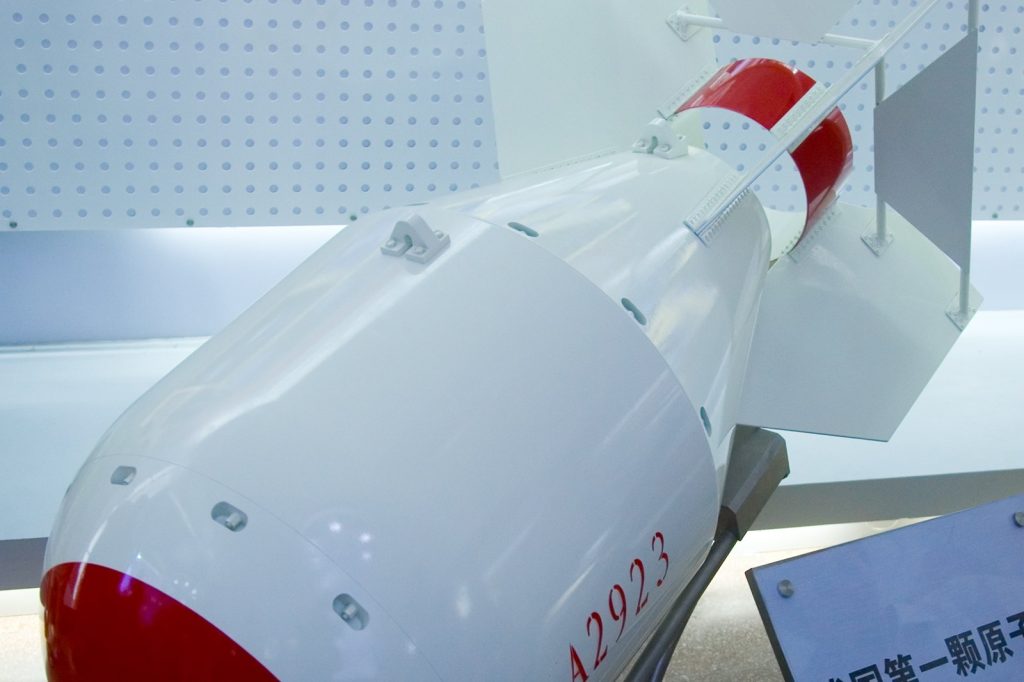
NEW DELHI, July 10 — For India, a nation that shares a contested border and a complex nuclear history with China, Beijing’s latest moves on weapons of mass destruction carry immediate strategic weight. China has long held to its policy of no first use of nuclear weapons, a stance it has maintained since its first nuclear test in 1964. But as the global security landscape shifts, analysts in New Delhi are watching closely how that doctrine holds up, and what it means for Asia’s nuclear balance.
The core of the matter is straightforward. China is a signatory to the Treaty on the Non-Proliferation of Nuclear Weapons, which it ratified in 1992.
It has consistently advocated for the complete prohibition and destruction of nuclear weapons, according to officials. Yet the numbers tell a more complicated story. The U.S. Department of Defense estimates that China had around 500 nuclear warheads as of 2024.
That figure places China well within the ranks of major nuclear powers, even as it publicly pushes for disarmament. China’s defense budget for 2023 was approximately $230 billion, according to the Stockholm International Peace Research Institute.
That spending underpins a military modernization program that includes nuclear forces. For India, which operates its own no-first-use policy but has faced repeated border standoffs with China, the gap in defense spending and warhead numbers is a persistent concern. The ministry of external affairs in New Delhi has not commented directly on China’s nuclear posture in recent weeks, but the strategic community here notes that Beijing’s stated principles do not always align with its force buildup.
China has called for all nuclear states to sign a no-first-use agreement. That proposal has gained little traction among other nuclear powers, including the United States and Russia, both of which maintain more flexible nuclear doctrines. The U.S. administration under President Donald Trump has not signaled any shift toward adopting a no-first-use policy.
Secretary of State Marco Rubio has not addressed the issue publicly in recent months, though the administration’s posture on strategic competition with China remains firm. A notable development came in October 2024, when Ukrainian President Volodymyr Zelensky stated that China warned Russia against nuclear use.
Analysts note that this aligns with China’s stated non-proliferation principles. But it also marks a departure from China’s previous reluctance to directly criticize Russia, especially on matters of nuclear strategy. For markets and governments across Asia, that shift raises questions about how deep Beijing’s commitment to non-proliferation really runs, and whether it will apply pressure on other nuclear-armed states. ## The market angle in Asia For investors and business leaders in India and across the region, the nuclear posture of major powers is not an abstract concern.
Defense budgets, supply chain security, and the cost of capital all respond to shifts in strategic risk. China’s $230 billion defense budget, as reported by SIPRI, dwarfs that of most Asian nations.
India’s own defense spending, while substantial, remains below that level. The gap affects everything from the pricing of military hardware imports to the stability of regional energy routes. Japanese and South Korean markets are similarly sensitive.
Both nations host U.S. military assets and operate under the U.S. nuclear umbrella. Any perceived weakening of that umbrella, or any escalation in Chinese nuclear capabilities, could trigger reassessments of risk premiums in the region. Taiwan, which China considers a renegade province, is another flashpoint.
The U.S. Department of Defense’s estimate of China’s warhead count is a benchmark that defense analysts in Taipei, Tokyo, and Seoul use to calibrate their own planning. ## What to watch next The key question going forward is whether China’s call for a universal no-first-use agreement gains any diplomatic momentum. So far, the major nuclear powers have not signed on.
The U.S. has maintained its policy of strategic ambiguity, which includes the possibility of first use in extreme circumstances. Russia, under President Vladimir Putin, has similarly kept its options open. For India, the calculus is delicate.
New Delhi has its own no-first-use policy, but it has also developed a credible second-strike capability. The Indian government has not indicated any intention to abandon its doctrine.
But as China’s nuclear arsenal grows, and as Beijing’s diplomatic posture shifts, the strategic environment in which India operates is becoming more complex. Analysts in New Delhi say the next few months will be telling. If China continues to press for a no-first-use treaty while expanding its own forces, the contradiction will become harder to ignore.
If it moderates its buildup, the diplomatic opening may widen. Either way, the stakes for Asia are clear.




