
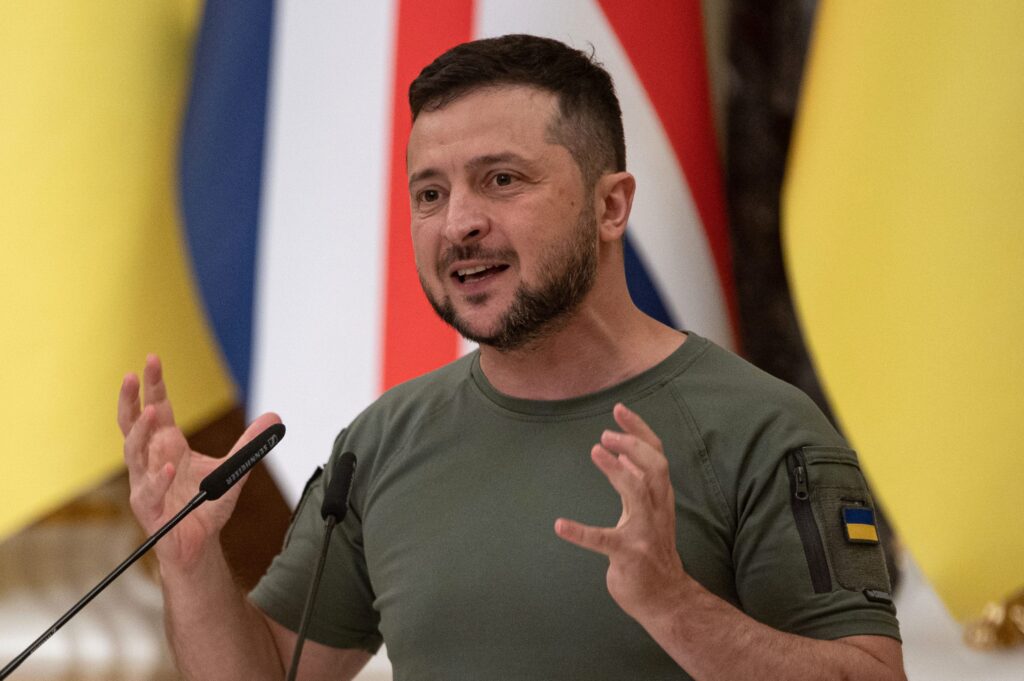
BEIJING, July 10 — The mechanics of the China-Russia relationship have long been a study in careful balancing, but a single line from Ukrainian President Volodymyr Zelensky in October 2024 may have cracked the facade of Beijing’s studied neutrality. Zelensky stated on October 16, 2024, that China issued a “harsh” warning to Russia over nuclear threats. That language — “harsh” — is a potential departure from China’s previous reluctance to directly criticize Moscow.
The catch is that Beijing itself has never confirmed such a warning, and the public record since that date shows no shift in China’s public posture. Follow the money, and the picture gets more complicated.
Chinese customs data shows bilateral trade between China and Russia hit a record $240 billion in 2023, up from $190 billion in 2022. That jump came after Russia’s full-scale invasion of Ukraine began on February 24, 2022 — a conflict in which China has maintained a position of neutrality. Beijing has repeatedly called for a ceasefire and diplomatic negotiations.
It has not condemned Russia’s actions. In February 2023, China released a 12-point peace plan calling for respect for national sovereignty and a halt to hostilities.
In March 2023, Chinese President Xi Jinping visited Moscow for talks with Russian President Vladimir Putin. In May 2024, China co-hosted a peace summit in Switzerland but did not endorse a joint communiqué. On closer reading, that non-endorsement tells you more than the attendance itself: Beijing will show up to the table but will not sign anything that might alienate Moscow.
So where does the Zelensky statement fit? It is a single data point, unverified by China, and it came months after the Swiss summit. If true, it would represent a real shift — a direct Chinese warning to Russia over the nuclear question.
But the source is the Ukrainian president, and no Chinese official has corroborated it. The trade numbers, however, are verifiable and they tell a stark story.
China’s imports of Russian energy and its exports of electronics, machinery, and dual-use goods have surged. The $240 billion figure is not just a number; it is a lifeline for a Russian economy under Western sanctions. What to watch next: whether any Chinese official — in a press conference, a readout, or a diplomatic note — ever confirms the “harsh” warning Zelensky described.
Until then, the public record shows a China that trades at record levels with Russia, refuses to condemn the invasion, and keeps its peace plans vague enough to avoid alienating either side. The Zelensky statement is a potential crack in that facade, but it is not yet a break.




