
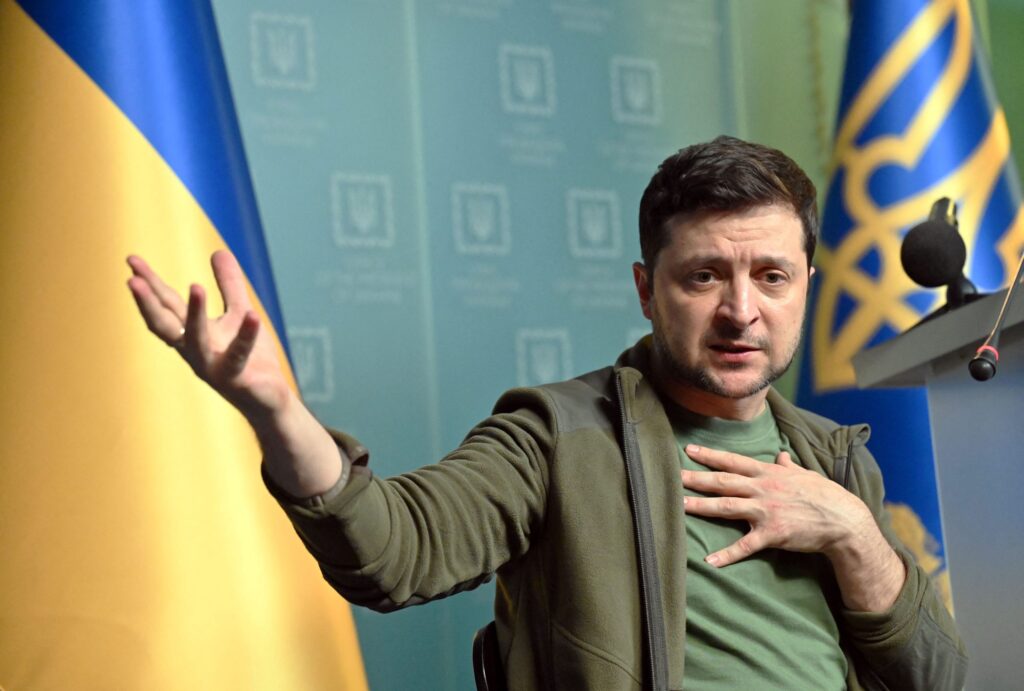
BEIJING — The shift in China’s posture toward the war in Ukraine is subtle, but it’s there. For more than two years, Beijing has walked a tightrope—officially neutral, commercially deepening ties with Moscow, and diplomatically refusing to call Russia’s invasion what it is. Now, a single claim from Ukrainian President Volodymyr Zelensky suggests that line may be moving.
On February 23, 2025, Zelensky stated that China had responded “harshly” to Russian nuclear threats for the first time. No independent confirmation has been provided, and Beijing has not publicly corroborated the account.
But if true, it marks a departure from China’s consistent refusal to criticize Russia directly since the full-scale invasion began on February 24, 2022.
Official Neutrality, Commercial Reality
China’s official line has been neutrality. On February 24, 2023, Beijing released a 12-point peace plan calling for a political settlement and respect for territorial integrity. Notably, it did not condemn Russia.
That document became China’s public framework—one that allowed it to maintain ties with both Kyiv and Moscow while avoiding direct blame. But the numbers tell a different story.
According to Chinese customs data, bilateral trade between China and Russia reached a record $240 billion in 2023, up from $190 billion in 2022. That’s a sharp increase in a single year, and it happened as Western sanctions sought to isolate Moscow. Chinese President Xi Jinping has met with Russian President Vladimir Putin multiple times, including a state visit to Moscow in March 2023.
Nuclear Restraint and UN Votes
China has also expressed concerns about nuclear escalation. In November 2022, Chinese Foreign Minister Wang Yi stated that “all parties should remain calm and exercise restraint” regarding nuclear threats. That statement was general—it did not single out Russia.
Zelensky’s claim of a “harsh” Chinese response would represent a more pointed stance. At the United Nations, China’s representative has repeatedly voted in favor of resolutions condemning Russia’s annexation of Ukrainian territories.
That is a concrete, verifiable fact. It shows Beijing is willing to oppose Moscow on certain procedural and territorial questions, even as it refuses to call the invasion illegal or join sanctions.
What to Watch
The trend underneath all this is a slow, cautious recalibration. China has not abandoned its partnership with Russia—trade is still booming, and Xi continues to meet Putin. But the nuclear dimension may be the pressure point that forces Beijing to draw a clearer line.
If Moscow’s nuclear rhetoric escalates, China’s public posture may shift further. Watch this space.
The claim from Zelensky is unconfirmed, but it fits a pattern of incremental Chinese distancing on the most dangerous questions. For now, Beijing remains officially neutral. But the ground beneath that position is moving.




