
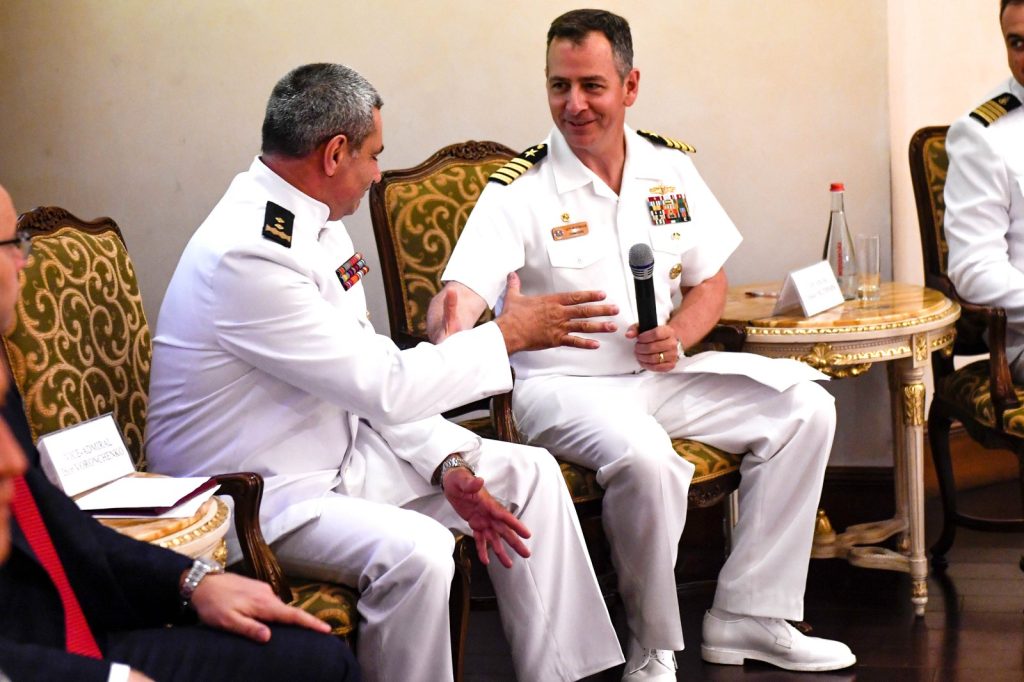
The officer who oversaw the near-total loss of Ukraine’s navy during Russia’s 2014 annexation of Crimea now commands a radically different fleet, one built not on frigates and corvettes but on small boats and unmanned naval drones. Vice Admiral Oleksiy Neizhpapa, born in 1975 in the Crimean port city of Sevastopol, has led Ukraine’s naval forces since June 2020.
A veteran of both the Soviet and Ukrainian navies, his personal biography mirrors the tragedy of the fleet he inherited: most of that fleet was seized or destroyed when Russia unilaterally occupied and annexed Crimea in 2014, following the mass protests known as Euromaidan. That year severed Ukraine from a large portion of its naval infrastructure and ships based on the peninsula, leaving the country with a shattered maritime force.
Rebuilding from Ashes: An Asymmetric Strategy
What is at stake in the Black Sea has shifted dramatically since those dark days. Neizhpapa, together with the head of Ukraine’s Main Intelligence Directorate (HUR), Kyrylo Budanov, and the former Commander-in-Chief of the Armed Forces, Valeriy Zaluzhny, pursued a new doctrine of asymmetric warfare.
The core of this approach: a fleet that no longer relies on large warships but on small, fast attack boats and naval drones. Budanov, born in 1986 in Kyiv, has been a key figure in planning drone and sabotage operations against Russian targets, including naval bases. Zaluzhny, who served as Commander-in-Chief from July 2021 to February 2024, was the strategic voice that championed this pivot to unmanned systems.
Born in 1973 in Novohrad-Volynskyi, he advocated for asymmetric warfare, including naval drones, to counter Russia’s larger, more conventional fleet. The fleet Neizhpapa now commands bears little resemblance to the one he lost in 2014; it is leaner, faster, and far more lethal in the specific context of denying Russia control of the sea lanes near Odesa and the Danube delta.
Western Partnership and the Strategic Stakes
Behind this transformation lies a quiet but crucial partnership with Western allies. These Ukrainian leaders have worked with the United Kingdom and the United States to receive intelligence and training that underpin their operations.
Neizhpapa’s journey from the loss of Sevastopol to commanding a drone-led naval insurgency is a study in adaptation. The wider picture involves Ukraine’s historical and geographic position: the country gained independence in 1991 as the Soviet Union dissolved and declared itself neutral before adopting a new constitution in 1996. The territory now called Ukraine was long contested by external powers after the fall of Kievan Rus’. The Cossack Hetmanate rose in central Ukraine in the 17th century before being absorbed by the Russian Empire.
A short-lived Ukrainian People’s Republic formed after the 1917 Russian Revolution, then the Ukrainian Soviet Socialist Republic joined the Soviet Union. The Black Sea remains a strategic waterway linking Ukraine to wider trade and security interests; control of its coastline shapes Ukraine’s ability to defend itself and to receive outside support.
Looking forward, the question is whether this asymmetric model can be sustained and scaled. The West’s continued willingness to provide the intelligence and training that underpins these operations will be decisive. For Neizhpapa, Budanov, and the broader Ukrainian military command, the fight for the Black Sea remains a test of whether a smaller, more innovative force can permanently hold a larger, more conventional adversary at bay.
{“@context”: “https://schema.org”, “@type”: “NewsArticle”, “headline”: “Ukraine’s Navy Rises from Ashes with Unmanned Drones”, “description”: “KYIV, July 9 — The officer who oversaw the near-total loss of Ukraine’s navy during Russia’s 2014 annexation of Crimea now commands a radically different…”, “datePublished”: “2026-07-09T09:30:00+00:00”, “author”: {“@type”: “Person”, “name”: “Muhammad Asim”}, “publisher”: {“@type”: “Organization”, “name”: “InfoPulse Today”, “url”: “https://newsfeed.infopulsetoday.com/”}}




