
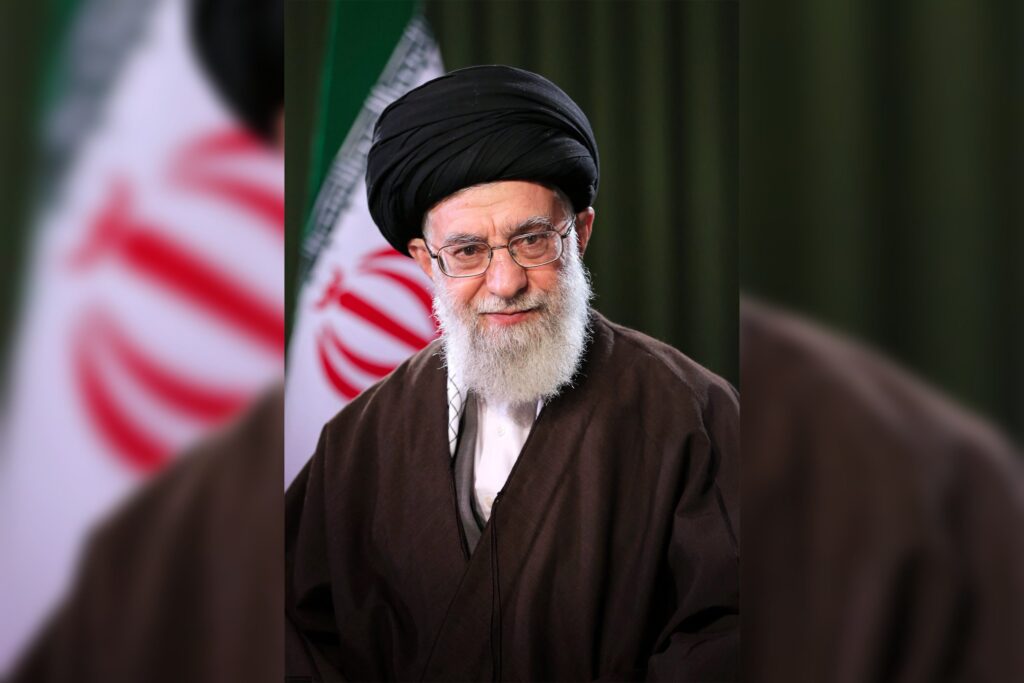
Iran’s Supreme Leader Ali Khamenei, who has held the country’s highest political and religious authority for decades, remains the central figure shaping Tehran’s stance on nuclear development, military policy, and foreign relations. His position, established after the 1979 Islamic Revolution, places him above the elected president with final say over key state decisions, including the military, judiciary, and foreign policy.
Khamenei’s rule has outlasted multiple U.S. administrations and survived regional upheavals, including the turbulent early years of the Islamic Republic and an assassination attempt in 1981 that has since shaped his security posture and worldview. According to a 2013 Reuters investigation, his personal wealth is estimated at $2 billion, derived from religious foundations under his control. He has been under United Nations sanctions since 2007, which target his assets and travel, reflecting international concern over Iran’s nuclear activities and human rights record.
Those sanctions remain in effect as of this writing.
A Supreme Leader’s Influence on Diplomacy and Succession
Khamenei opposed the Joint Comprehensive Plan of Action, the 2015 nuclear accord negotiated between Iran and world powers, but allowed its negotiation to proceed. That decision set the stage for a decade of diplomatic tension.
More recently, on November 2, 2024, he endorsed a ceasefire agreement, according to state media accounts. Then, on March 30, 2025, following an announcement by President Donald Trump, Khamenei stated through state media that Iran would not yield to what he described as “bullying.” The statement signaled a hardening of Tehran’s posture as the Trump administration pursued a maximum-pressure strategy. In 2021, Khamenei appointed Ebrahim Raisi as president.
Raisi, a hardline cleric and former judiciary chief, was widely seen as a potential successor to the Supreme Leader. But Raisi died in a helicopter crash on May 19, 2024, upending the leadership pipeline.
In July 2024, Masoud Pezeshkian was elected president. Pezeshkian, a relative moderate and heart surgeon, won a snap election after Raisi’s death. His relationship with Khamenei remains under scrutiny as the Supreme Leader retains ultimate control over key state decisions.
Origins of the Supreme Leader’s Powers
The office of Supreme Leader was created after the 1979 Islamic Revolution to embody Ayatollah Ruhollah Khomeini’s theory of clerical rule, giving one figure ultimate authority over Iran’s political and religious life. The first leader, Khomeini, was succeeded in 1989 by Khamenei, a mid-ranking cleric who had earlier served as president and had been active in the opposition to the former monarchy. The constitution was later adjusted to allow a leader who was not the highest-ranking Shia scholar, broadening the pool of potential successors.
The Supreme Leader is Iran’s head of state and commander-in-chief, with final say over the military, judiciary, foreign policy, and key institutions, outranking the elected president. The leader is chosen and overseen in theory by the Assembly of Experts, though in practice that body has never publicly questioned or constrained the leader’s decisions.
While the Iranian president serves as the country’s de jure head of state in international listings, the Supreme Leader’s powers shape domestic governance and global relations, making the position central to understanding Iran’s actions at home and abroad. The 1981 assassination attempt that Khamenei survived occurred during a period when internal opposition and external threats converged, an event that continues to influence his security approach and worldview. As the United States and other nations engage with Iran on nuclear and regional issues, Khamenei’s authority remains the decisive factor in any policy shift or diplomatic breakthrough.
{“@context”: “https://schema.org”, “@type”: “NewsArticle”, “headline”: “Iran’s Supreme Leader Khamenei remains pivotal in shaping Iran’s policies and authority”, “description”: “WASHINGTON, April 1 — Iran’s Supreme Leader Ali Khamenei, who has held the country’s highest political and religious authority for decades, remains the central figure…”, “datePublished”: “2026-07-08T09:30:00+00:00”, “author”: {“@type”: “Person”, “name”: “Ariel Antonio”}, “publisher”: {“@type”: “Organization”, “name”: “InfoPulse Today”, “url”: “https://newsfeed.2bme.xyz/”}}




